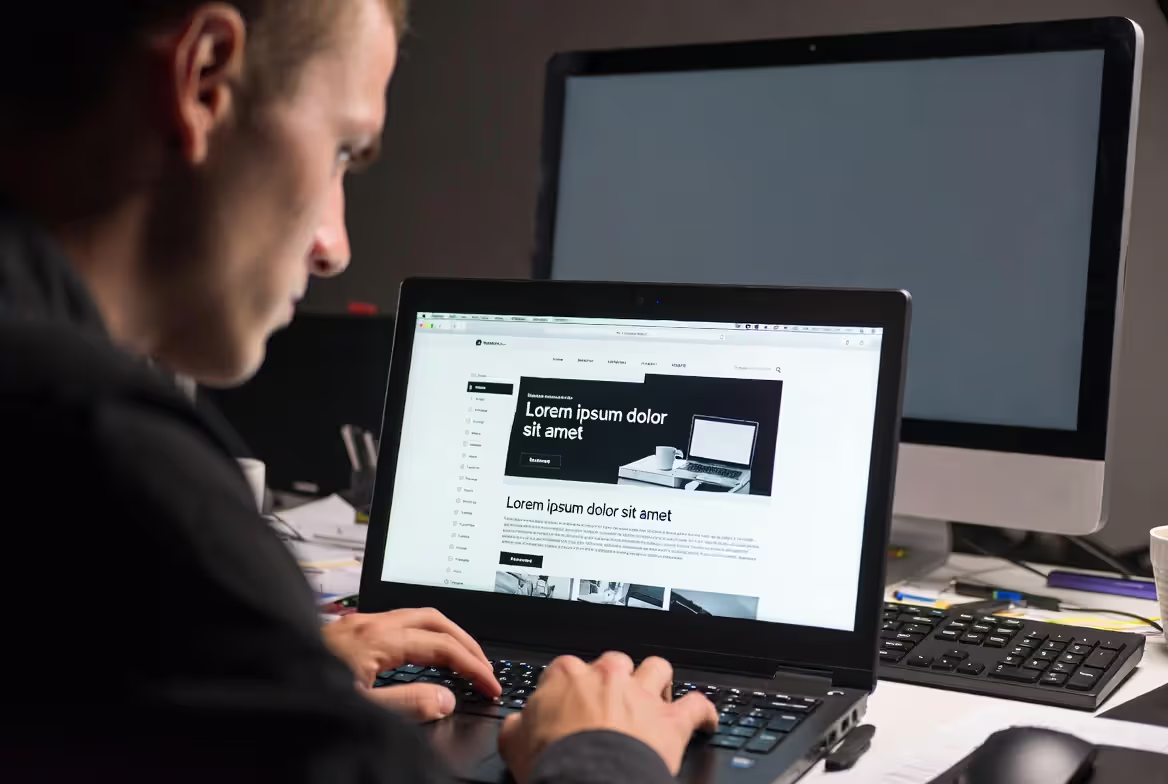
You've seen it before—those weird Latin-looking paragraphs starting with "Lorem ipsum dolor sit amet" scattered across website mockups and app wireframes. Every designer knows this scrambled text, though most couldn't tell you where it actually came from or whether we should still be using it in 2024.
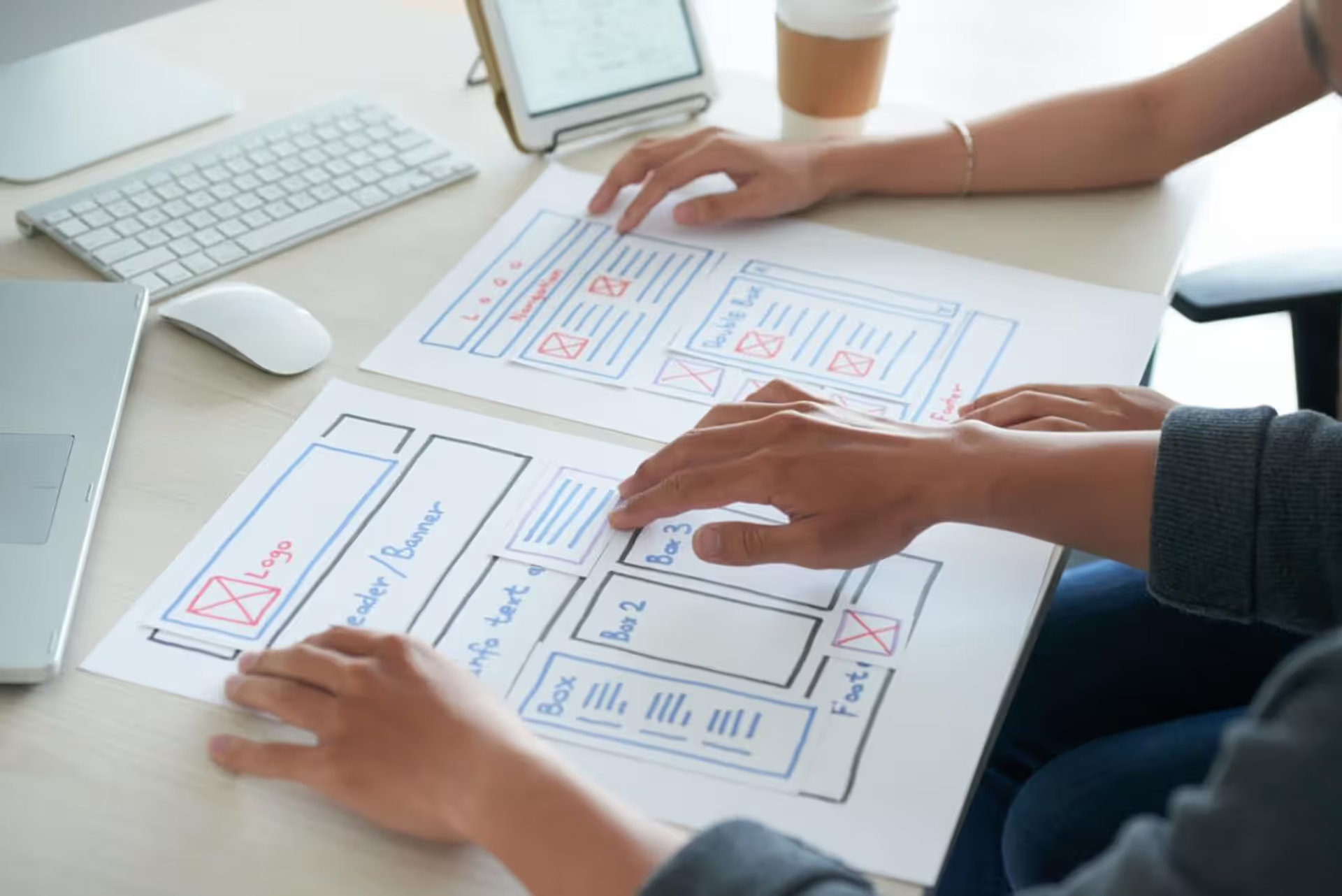
This placeholder convention solves a specific problem: it lets designers, clients, and stakeholders judge visual hierarchy and typography choices without getting hung up on what the words actually say. You can focus on spacing, font selection, and layout balance when your brain isn't busy reading actual content.
Still, this standard practice creates real problems that catch design teams off guard. Understanding both the benefits and the traps helps you decide when placeholder text serves your project—and when it sabotages it.
The Origins of Lorem Ipsum Dummy Text
Most designers assume lorem ipsum is just random Latin gibberish invented for the printing industry. The truth is weirder and more specific.
The scrambled passage actually pulls from Cicero's philosophical work about ethics and pain, written around 45 BCE. The original Latin discussed different schools of thought on pleasure and suffering—pretty heavy stuff for what became dummy text. But here's the twist: printers in the 1500s didn't just copy Cicero directly. Someone deliberately mangled the original text, chopping sentences and rearranging words until it stopped making coherent sense.
Why scramble perfectly good Latin? Printers creating font sample books needed text that looked realistic without creating readable content. If the sample text told an interesting story, customers would read the story instead of examining the letterforms. Nonsensical text forced attention onto the typography itself.
A Latin professor named Richard McClintock at Hampden-Sydney College actually tracked down the original source in the 1980s. Tracing "lorem ipsum" backward through obscure Latin texts, he identified the source passage from Cicero's "De Finibus Bonorum et Malorum." The phrase "lorem ipsum" itself comes from splitting "dolorem ipsum"—literally "pain itself"—out of a longer philosophical sentence about the nature of suffering.
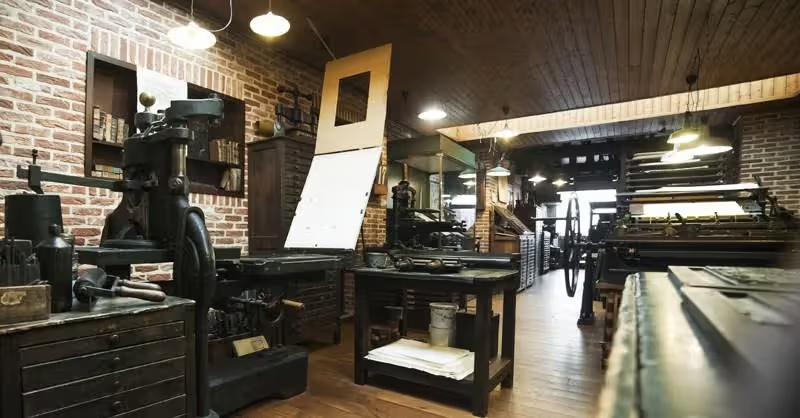
Letraset brought lorem ipsum into the modern era during the 1960s by printing those rub-on transfer sheets graphic designers used before computers. When Aldus PageMaker shipped in 1985 with lorem ipsum built in as default filler, the convention became unavoidable. Every web designer working in the 1990s inherited this tradition without questioning it, and now it's embedded in every mockup tool and design system.
Author: Olivia Hartwell;
Source: crafterholic.com
Why Designers Use Placeholder Text in Layouts
Look, placeholder text exists because design and copywriting happen on different timelines—and waiting for final copy before starting visual work would bring most projects to a standstill.
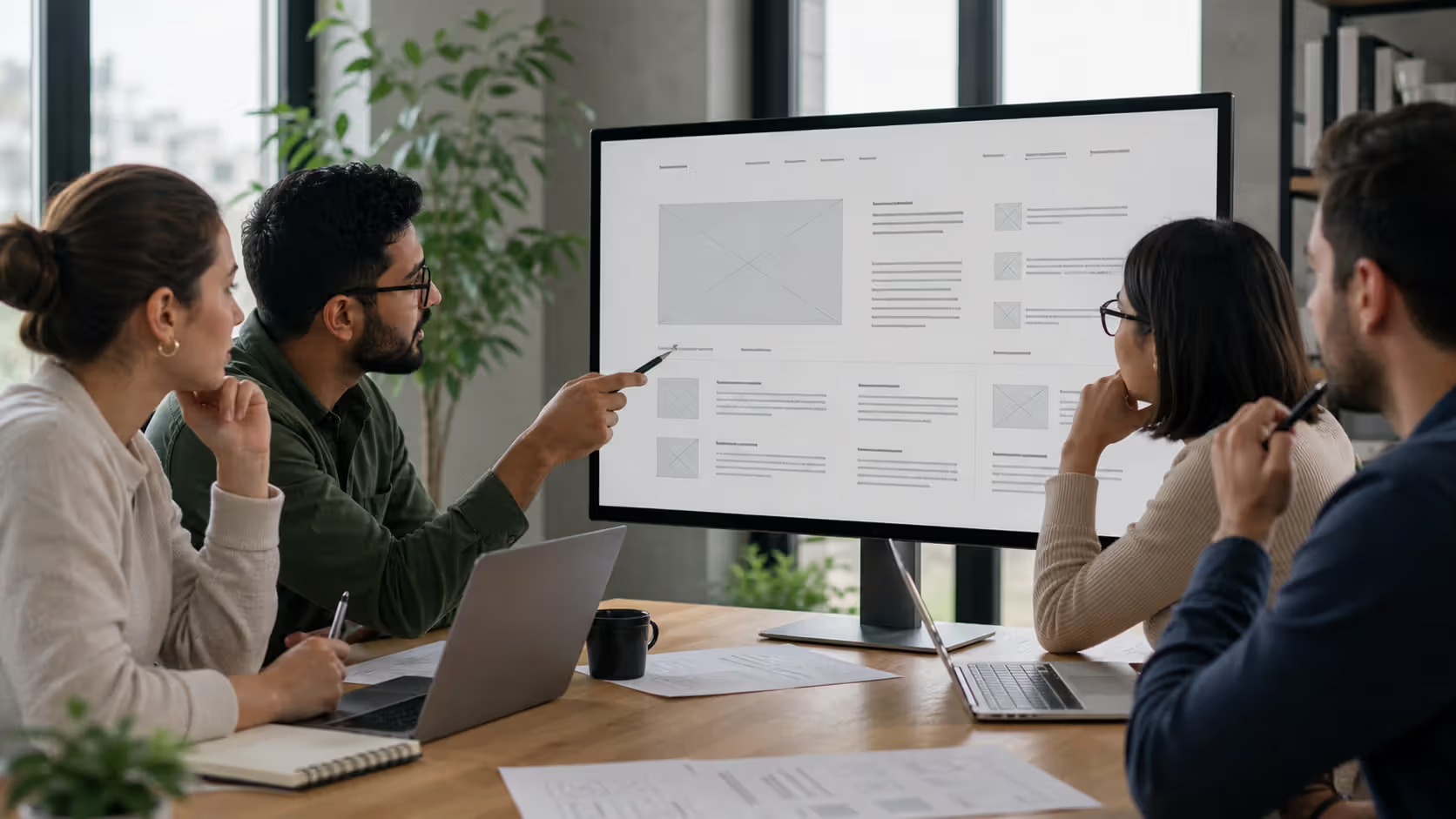
It keeps stakeholders focused on design, not messaging. Show a client a mockup with real product descriptions, and the meeting derails into debates about word choice, brand voice, and factual accuracy. Those conversations matter, but not during the "should the header be navy or teal?" phase. Nonsense text acts like a firewall separating visual decisions from content strategy discussions.
Real typography needs realistic text patterns. You can't properly set type with "text goes here" repeated fifty times. Actual paragraphs have varied sentence lengths—some short, some rambling. They include punctuation, capitalization patterns, and word shapes that affect how the text block looks. Proper dummy text in layouts reveals whether your line spacing works, whether columns feel too narrow, and how descenders interact with the following line.
Unfinished designs look unprofessional. Presenting wireframes full of "TK" (journalist shorthand for "to come") or "CONTENT GOES HERE" makes you look lazy. Lorem ipsum creates the illusion of completion while remaining obviously temporary—a neat psychological trick that keeps client confidence high.
Template builders can't predict future content. Agencies creating design systems or WordPress theme developers building products for thousands of users have no idea what content will eventually fill those layouts. Placeholder text lets them demonstrate how the design adapts to different content lengths without committing to specific messaging.
Plus, speed matters. Testing five layout variations with lorem ipsum takes an afternoon. Writing appropriate real content for five different approaches could take a week—time most projects don't have during initial exploration.
Author: Olivia Hartwell;
Source: crafterholic.com
How Greeking Works in the Design Process
"Greeking" means using meaningless or unreadable placeholder content in designs—named after the expression "it's all Greek to me" when something's incomprehensible. Lorem ipsum represents just one form of greeking.
Designers sometimes use solid gray bars to indicate text areas during rough wireframing. As fidelity increases, those bars become lorem ipsum paragraphs. Some teams blur real text into illegible shapes, creating the visual texture of typography without the distraction of readable words. Each approach serves the same purpose: showing where content lives without committing to specific words.
The critical question isn't whether to greek—it's when to stop.
User testing with greeked text produces garbage data. Participants can't tell you whether the instructions make sense or the call-to-action feels compelling when they're looking at "Lorem ipsum dolor sit amet, consectetur adipiscing elit." They might approve a layout that looks balanced with placeholder text but completely fails once you drop in the actual fourteen-word legal disclaimer that HR insisted on.
Smart teams use a three-stage approach. Pure gray boxes for initial wireframes. Lorem ipsum for refined comps during visual design. Real content—even rough drafts—for final validation and user testing. Skipping that third stage creates nasty surprises right before launch.
Some forward-thinking teams have abandoned placeholder text entirely, adopting "content-first" workflows where writers create actual copy before designers touch Figma. Radical idea: design around the content you actually need instead of making up content that fits the design you want.
Author: Olivia Hartwell;
Source: crafterholic.com
Common Problems With Using Lorem Ipsum in Mockups
Placeholder text causes predictable disasters that somehow still catch teams by surprise every single time.
Clients think it's a foreign language version. This sounds absurd until it happens to you. Stakeholders approve designs without realizing those Latin paragraphs are temporary, then act shocked when real English content appears and breaks the carefully balanced composition. I've watched clients ask "which market is this lorem ipsum version for?" with complete sincerity.
Content strategy gets pushed to the last minute. When every text block shows lorem ipsum, teams avoid hard questions about information architecture and messaging hierarchy. The actual product name might be three times longer than the placeholder headline. The legal disclaimer might need four lines instead of the two lines you allocated. Emergency contact details might include international phone numbers that wrap awkwardly. Nobody discovers these problems until two days before launch.
Accessibility gets tested with fake patterns. Lorem ipsum typically uses basic Latin characters without accents, symbols, or unusual capitalization. Your design might look perfect with placeholder text but completely fail when real content includes accented characters (Müller, São Paulo, Zürich), mathematical notation, or product codes that break differently across lines.
Launch disasters happen when placeholders go live. Every designer has horror stories. A Fortune 500 retailer published product pages with lorem ipsum descriptions. A government website sent newsletters with "dolor sit amet" in the body. These embarrassments occur because teams see placeholder text so constantly they stop noticing it—change blindness makes you literally unable to spot the lorem ipsum you've been staring at for six weeks.
Localization breaks designs built for Latin text. German compound words run twice as long as English equivalents. Arabic flows right-to-left. Chinese characters pack more information density. Japanese requires different line-breaking rules. Designs optimized for lorem ipsum often explode when translated, forcing expensive redesigns nobody budgeted for.
The worst part? Placeholder text enables procrastination. Instead of having difficult conversations about content strategy, teams slap in lorem ipsum and move on. Then they scramble to create proper copy during QA, without time for strategy or review.
Author: Olivia Hartwell;
Source: crafterholic.com
Popular Alternatives to Traditional Lorem Ipsum
Designers tired of classical lorem ipsum have created dozens of themed placeholder generators, some useful and some just silly.
Name
Style/Theme
Best Use Case
Generator Available
Hipster Ipsum
Ironic cultural references, artisanal buzzwords
Lifestyle brands, creative portfolios
Yes (hipsum.co)
Bacon Ipsum
Meat terminology throughout
Food industry mockups, BBQ restaurants
Yes (baconipsum.com)
Cupcake Ipsum
Baking and dessert vocabulary
Bakery websites, sweet-themed projects
Yes (cupcakeipsum.com)
Corporate Ipsum
Business jargon, synergy, paradigm shifts
Enterprise software, B2B presentations
Yes (cipsum.com)
Samuel L. Ipsum
Movie dialogue with optional profanity
Entertainment projects, internal tools
Yes (slipsum.com)
Lit Ipsum
Excerpts from classic literature
Publishing sites, literary journals
Yes (litipsum.com)
Beyond novelty generators, several serious alternatives deserve attention:
Real draft content from day one. Content strategists and UX writers create preliminary headlines, labels, and descriptions that designers actually use in mockups. Even rough, imperfect copy beats lorem ipsum because it reveals content-design conflicts immediately. That product description needs to mention three specific features? Better find out now than after you've built a layout with room for one sentence.
Industry-specific placeholder libraries use relevant terminology instead of generic Latin. Medical device companies might populate mockups with anatomical terms. Financial dashboards might use realistic ticker symbols and market data formats. E-commerce designs might show actual product category names even when specific products aren't defined.
Structured content templates replace lorem ipsum with explicit labels: "[Product Name: 3-5 words]," "[Feature description: 2-3 sentences]," "[CTA button: 2-4 words]." This approach makes content requirements visible and forces realistic planning instead of assuming any length text will magically fit.
Multilingual placeholder generators create realistic-looking text in target languages, helping teams catch layout problems before translation begins. If your design breaks when you switch from lorem ipsum to lorem ipsum in German, you'll definitely have problems with real German content.
Choose based on your audience. Internal tools and design team critiques can handle playful alternatives—bacon ipsum might actually improve morale. Client presentations for conservative industries probably need classical lorem ipsum's neutral professionalism.
When to Use Filler Text vs. Real Content in Design
The placeholder-versus-real-content decision depends on project stage, stakeholder sophistication, and content availability.
Stick with filler text when:
You're exploring five different layout concepts quickly and content would slow down iteration
Building reusable components or templates for undefined future content
Content strategy hasn't been defined yet and waiting would stall the entire project
Testing pure visual hierarchy where specific messaging doesn't matter
Creating speculative portfolio pieces or pitch decks
Switch to real content when:
Running usability tests or user research sessions
Designing content-heavy interfaces—news sites, documentation, data dashboards
Working with stakeholders who can't visualize final results (most clients fall here)
SEO requirements will affect layout decisions and hierarchy
Building components that must gracefully handle variable content lengths
Approaching accessibility compliance reviews that require realistic content patterns
Getting close to launch where final validation becomes critical
A hybrid strategy works for most projects: lorem ipsum for initial exploration, representative draft content for refinement, final copy for approval and testing. The mistake is staying in placeholder mode too long, then scrambling to accommodate real content that doesn't fit.
Content availability creates tough tradeoffs. Should design halt when copywriters are two weeks behind schedule? Sometimes placeholder text keeps momentum going—but you must reserve time for design adjustments once real content arrives. Pretending lorem ipsum and final copy will be interchangeable guarantees pain.
Client experience level matters more than designers admit. Sophisticated stakeholders who've shipped twenty products understand placeholder conventions and can evaluate layouts abstractly. First-time clients often need real content to judge whether designs actually work for their needs.
Lorem ipsum serves as a necessary evil sometimes, but it also becomes a crutch that lets us avoid hard conversations about content strategy. The best digital products emerge from designs built around real content from the start, not placeholder text swapped in at the end.
— Karen McGrane
That perspective reflects an industry shift toward content-first methodologies treating copy as equal to visual design rather than an afterthought tacked on during QA.
Frequently Asked Questions About Latin Placeholder Text
What does lorem ipsum actually mean in English?
The standard lorem ipsum passage doesn't translate to anything coherent because centuries of corruption scrambled the original Latin. Cicero's source text discussed philosophical ideas about pain and pleasure, but the mangled version designers use is basically nonsense. Individual words might translate—"dolor" means pain, "ipsum" means itself—but they don't connect into meaningful sentences. It's like taking Shakespeare, deleting random words, and rearranging what's left.
Is lorem ipsum really Latin or just gibberish?
Both answers are correct. Lorem ipsum descends from genuine classical Latin written by Cicero around 45 BCE, but centuries of modification turned it into pseudo-Latin gibberish. Some fragments would be recognizable to Latin scholars, while other chunks are mangled beyond recognition or include additions that never existed in classical Latin. An ancient Roman suddenly transported to modern times couldn't read it as coherent text—they'd be as confused as we are.
Can using placeholder text hurt SEO or accessibility?
Absolutely, if it reaches production. Search engines can't index lorem ipsum meaningfully—those pages might as well be blank from Google's perspective. Screen readers will read the nonsense aloud to blind users, creating frustrating experiences that violate accessibility standards. Even during development, placeholder text masks problems with heading hierarchy, link text clarity, or form label effectiveness that only become obvious with real content. Always swap in final copy before launch, and run accessibility audits with actual content, not lorem ipsum.
When should I stop using dummy text in a project?
Kill the placeholder text before usability testing starts—definitely before showing designs to actual users. For internal client reviews, switch to real content (even rough drafts) once you're refining a chosen direction instead of brainstorming options. Many teams set a hard deadline around 70-80% design completion, after which lorem ipsum is forbidden. This forces content creation to happen with enough lead time for design adjustments instead of frantic last-minute changes.
Are there copyright issues with lorem ipsum generators?
Traditional lorem ipsum text is public domain since it derives from ancient sources written two thousand years ago. Most generator websites provide output free for any purpose, including commercial work. However, some novelty generators that incorporate copyrighted material—movie quotes, song lyrics, recent book excerpts—may carry restrictions. Check each generator's terms before using output in client work. Creating your own placeholder text from public domain sources sidesteps any legal concerns entirely.
What's the best alternative to lorem ipsum for professional projects?
Real draft content beats every placeholder system. Period. If that's genuinely impossible, use structured content templates with explicit labels describing each element: "[Headline: 5-8 words focusing on primary benefit]," "[Body paragraph: 2-3 sentences explaining how feature works]." This approach clarifies content requirements and prevents the dangerous assumption that any random text will magically fit. For quick mockups where content truly isn't defined yet, traditional lorem ipsum remains the safest professional choice since everyone recognizes it as temporary—unlike novelty alternatives that might confuse stakeholders.
Latin text as lorem ipsum has earned its dominant position through centuries of evolution—from Renaissance print shops testing metal type to modern design systems testing responsive layouts. It solves real problems: enabling rapid visual exploration, providing realistic typography texture, maintaining professional polish during client presentations.
But convenience creates complacency. Teams leaning too heavily on placeholder text defer critical content strategy decisions, build designs that break when real copy arrives, and occasionally suffer the public embarrassment of lorem ipsum reaching production. Accessibility testing, internationalization planning, and user research all produce misleading results when conducted with nonsensical placeholder content.
The most effective approach balances speed with realism. Use lorem ipsum for early exploration and template development, but transition to actual draft content as designs mature. Establish clear project milestones when placeholder text must disappear, and build workflows integrating content creation with visual design rather than treating them as sequential phases that never overlap.
Whether you embrace classical lorem ipsum, experiment with themed alternatives, or adopt content-first methodologies from day one, use placeholder text intentionally rather than automatically. Understand exactly why you're using it, recognize its limitations honestly, and plan carefully for the transition to real content—because that real content ultimately determines whether your design succeeds or fails in the actual world.
Master yearbook spread design with expert guidance on layout planning, grid systems, photo composition, and text balance. Learn to create two-page layouts that tell compelling stories while avoiding common mistakes and maintaining visual consistency across your yearbook.
Timeline arrows guide viewers through chronological information, transforming static data into dynamic narratives. This comprehensive guide covers arrow styles, process visualization techniques, common design mistakes, and practical tools for creating effective directional elements in timelines and infographics.
Symbols compress complex creative concepts into instant visual recognition. This comprehensive guide explores the psychology behind creativity symbols, catalogs the most effective options from lightbulbs to geometric forms, and provides a practical framework for choosing the right symbol for your design, branding, or communication project.
Learn professional postcard design principles for print and direct mail. Covers standard formats, layout composition, visual hierarchy, style approaches, and proven strategies that increase response rates. Includes size comparison chart, expert insights, and common mistakes to avoid.
The content on this website is provided for general informational and educational purposes only. It is intended to explain concepts related to digital design, visual art, color theory, art techniques, design principles, and design history.
All information on this website, including articles, guides, and examples, is presented for general educational purposes. Creative outcomes may vary depending on individual skill, tools, and practice.
This website does not provide professional design services or guarantee results, and the information presented should not be used as a substitute for formal education or professional consultation.
The website and its authors are not responsible for any errors or omissions, or for any outcomes resulting from decisions made based on the information provided on this website.