You know that moment when you're watching your favorite animated series and a character's smile looks... off? Like, it's definitely the same person, but something about their face doesn't match what you saw two episodes ago? That's what happens when studios don't nail their expression sheets.
Think of these sheets as your character's emotional DNA. They're the reason SpongeBob's goofy grin stays consistent whether it's 1999 or 2024, even though hundreds of different animators have drawn him over the years.
What Is an Expression Sheet
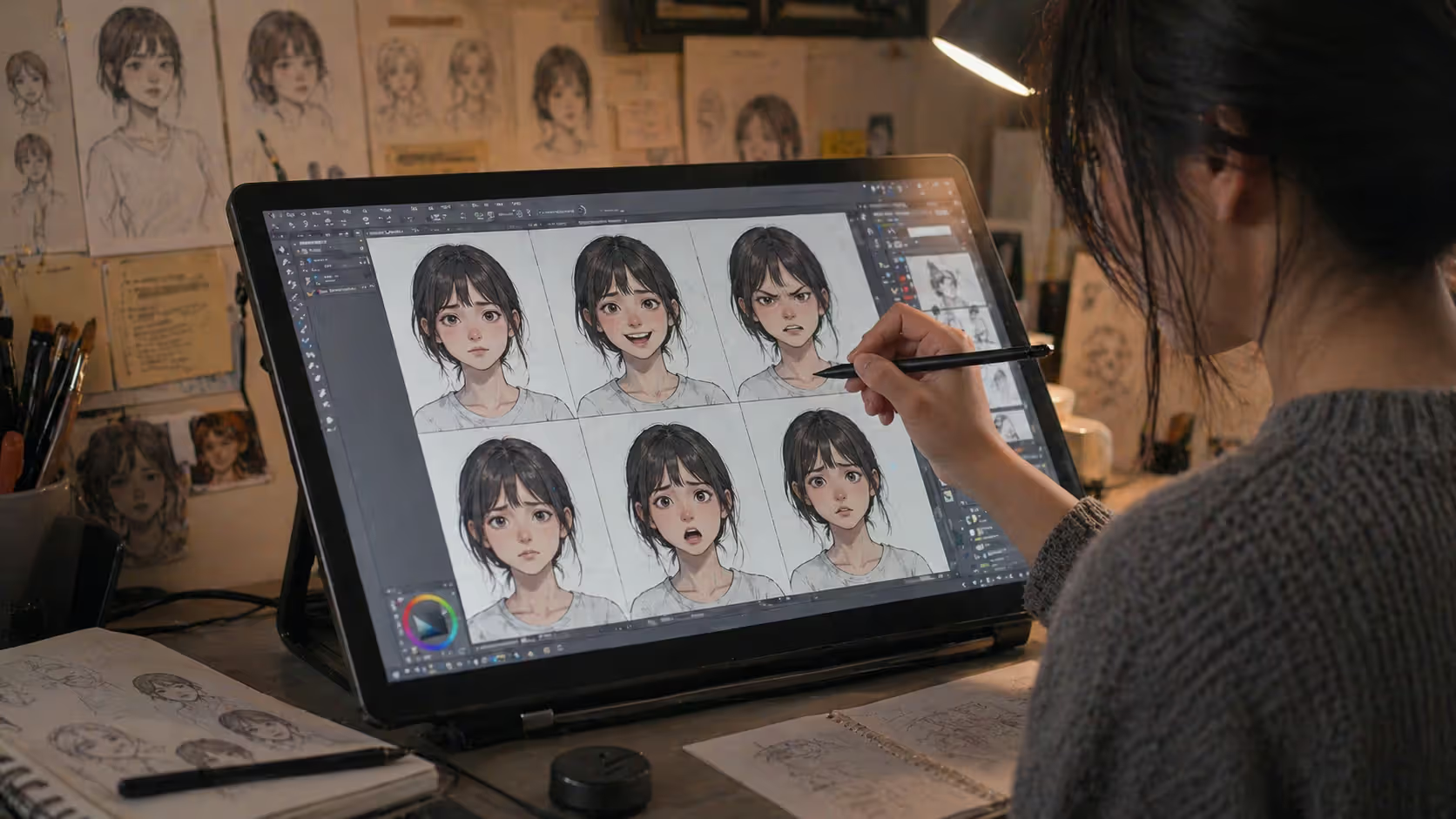
Here's the deal: an expression sheet shows one character pulling different faces—happy, angry, scared, whatever emotions matter for your story. Artists draw these before serious production starts, mapping out exactly how their character's face moves when feelings hit.
Why bother? Picture this. You're running an animation team with twelve artists. Episode five needs your main character celebrating a victory. Episode eight needs that same character devastated by loss. Without a reference showing both expressions, you've got twelve different interpretations of "happy" and twelve versions of "sad." Your character ends up looking like they have an inconsistent twin problem.
Most sheets stick to one viewing angle—that three-quarter turn showing both eyes and enough face structure to read dimension. Some productions go bigger, creating separate sheets for front view, side profile, and three-quarter angles. Studios like Pixar or DreamWorks might have five or six expression sheets per main character. Indie creators? Usually one solid sheet does the job.
The format's been around since Disney's early days. Those old-school animators figured out fast that drawing Mickey Mouse a thousand times across a feature film meant needing rock-solid references. They developed model sheets for body proportions, turnarounds for different angles, and expression charts for emotions. Digital tools changed how we make these sheets, but the core reason hasn't budged in ninety years.
Comic artists lean on these too. When you're drawing a webcomic that's been running for three years, you need to remember how your protagonist looks when surprised. Game developers use them for dialogue portraits—every conversation screen needs consistent character reactions. Even concept artists sketch these out early to test whether their character design has enough flexibility for good performance.
Author: Marcus Ellery;
Source: crafterholic.com
Core Components of a Character Expression Chart
Let's break down what actually goes on these sheets. You can't just slap random faces together and call it reference material.
Your emotion starter pack: Six to eight foundational feelings form the base—happy, sad, angry, surprised, scared, disgusted, neutral, plus maybe excited or contemptuous depending on the character. These aren't random picks. Psychologist Paul Ekman spent decades proving these expressions show up across every culture worldwide. Your anime protagonist and your realistic drama character both need clear versions of each.
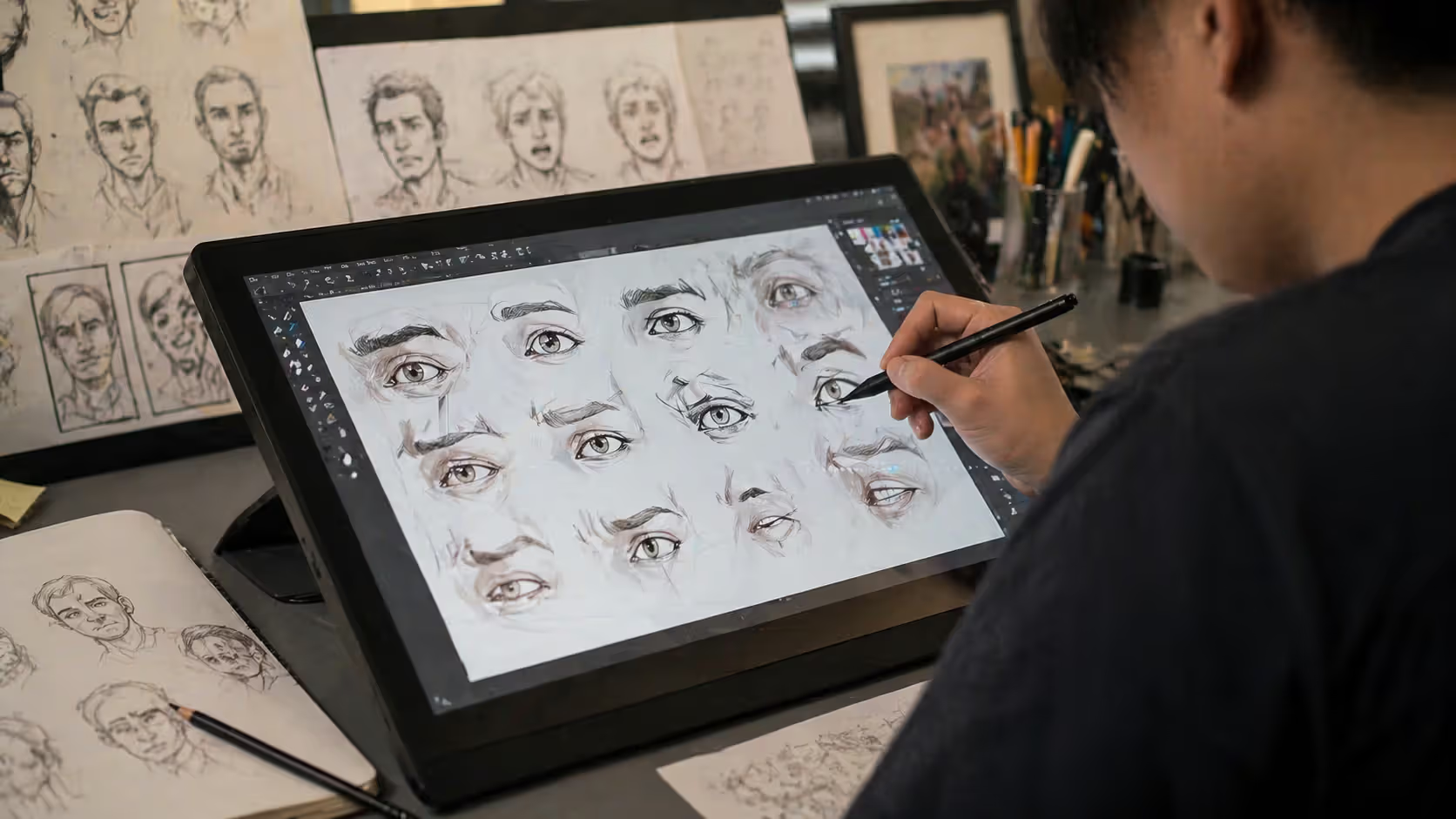
Eye engineering: Eyes do serious emotional heavy lifting. How wide do the lids pull when shocked? Where do pupils sit when suspicious? Does your character's gaze drift up when remembering something happy or down when ashamed? The gap between "content" and "thrilled" might live entirely in eye width. Document all of it.
Eyebrow architecture: Brows frame everything else happening on the face. Raised? That's surprise or fear talking. Squeezed together? Anger or deep focus. One eyebrow up while the other stays put? Classic skepticism. Map the angle, height, and curve for every emotion you're showing.
Mouth mechanics: Goes way beyond open versus closed. Real smiles engage cheek muscles and crinkle eye corners. Fake smiles? Just the mouth moves, everything else stays dead. Your sheet needs to capture that difference. Show teeth or hide them? Corners pulling wide or tight? Lips pressed thin or relaxed? Details matter.
Intensity ranges: Nobody performs at maximum emotion constantly. Include medium versions—annoyed versus furious, worried versus terrified, pleased versus ecstatic. This gives animators room to match the exact story beat. A character finding five bucks needs a different happy than a character winning the lottery.
Supporting features: Cheeks bunch during real happiness. Nostrils flare with disgust or rage. Some stylized characters—especially in anime or western cartoons—shift their whole head shape during extreme feelings. Don't ignore these secondary movements.
Consistency anchors: Whatever stays constant needs to stay constant everywhere. Scars, moles, wrinkle patterns, distinctive markings—these should appear identically across every single expression. They're your visual anchors keeping the character recognizable even when their face contorts dramatically.
Pro sheets often include notes like "use when character discovers betrayal" or "reaction to seeing dessert." These annotations turn simple drawings into actual production tools instead of just a portfolio piece.
Author: Marcus Ellery;
Source: crafterholic.com
How to Create an Expression Sheet for Your Characters
Making sheets that actually work requires strategy, not just drawing skill. Here's how to avoid wasting hours on unusable reference material.
Planning Your Emotion Reference Sheet
Start by listing every major emotional beat your character hits in the story. Comedy characters need variations of amusement—smirks, chuckles, belly laughs, smug grins. Drama characters need subtle gradations of concern, sadness, and contemplation. Write it all down before touching your stylus.
Study real faces. Seriously. Pull up actor headshots, watch yourself in a mirror making faces (your roommate will think you've lost it), or use apps like JustSketchMe that demonstrate facial mechanics. Even if you're drawing chibi characters with dot eyes, understanding actual anatomy prevents you from making physically impossible expressions.
Pick your primary angle. Three-quarter view wins for most projects—you see both eyes, the nose's profile, and enough face structure to read dimension. Need multiple angles? Start with three-quarter, nail it completely, then expand to front and profile. Don't spread yourself thin trying to do everything at once.
Scope matters. Simple web series? Eight basic emotions probably covers you. Feature film main character? Might need twenty expressions plus phoneme mouth shapes for dialogue. Match your ambition to your actual production needs. I've seen indie creators burn out making fifty-expression sheets for characters appearing in three scenes.
Drawing Face Expression Variations
Author: Marcus Ellery;
Source: crafterholic.com
Nail your neutral expression first. This becomes the template everything else modifies. Make absolutely sure this neutral face matches your established model sheet proportions exactly. If the neutral's head is 10% too big, every expression will inherit that error.
Work systematically through emotions instead of bouncing around randomly. Go happy, then sad, then angry. This progression shows you how features move in opposing directions—what lifts during joy drops during sadness. You'll spot patterns that make the whole process faster.
Digital workers, use layers strategically. Duplicate your neutral base for each new expression instead of redrawing from scratch. This keeps head size, feature spacing, and proportions locked in. Your character's eyes shouldn't mysteriously migrate closer together just because they're surprised.
Push harder than feels safe, then dial back. Animation thrives on exaggeration, but there's a sweet spot between "reads clearly" and "breaks the design language." Test by shrinking your expressions to thumbnail size. Can't read the emotion at small scale? It won't read in motion either.
Real faces rarely move symmetrically. One eyebrow slightly higher. One mouth corner pulled tighter. These tiny asymmetries inject life into even super cartoony designs. Perfect symmetry looks robotic and dead.
Some artists create mini-transition sequences showing how faces shift from neutral to extreme emotion. Not just the destination—the journey matters for animation. How does calm become furious? That progression teaches animators way more than static end states.
Organizing and Labeling Your Sheet
Arrange everything in a scannable grid. Most artists either use rows or circle expressions around a central neutral face. Random placement makes people hunt for what they need, which means they'll stop using your sheet.
Label specifically. "Happy" works okay. "Delighted," "Smug," or "Relieved" works way better. Add intensity markers: "Mildly annoyed," "Angry," "Absolutely livid." Give animators precision tools, not vague suggestions.
Production notes bridge gaps between static drawings and dynamic performance. "Use when tasting favorite food," "Reaction to seeing ex-boyfriend," "Discovering the plot twist"—this context helps artists match expressions to story moments.
Keep neutral visible on every sheet, even if you've got multiple sheets per character. Animators need that baseline constantly available for comparison. Don't make them flip between documents.
If you're creating multiple sheets per character, build a master index. "Sheet 1: Basic emotions, Sheet 2: Dialogue phonemes, Sheet 3: Combat reactions, Sheet 4: Romantic moments." Whatever organization system prevents people from getting lost in your files.
File formats matter. Studios want high-res PDFs for printing and native files (Photoshop, Clip Studio Paint, Procreate) for digital reference. Version numbers and dates save confusion—"Expression_Sheet_v3_2024-03-15" beats "final_FINAL_actualfinal_v2."
Common Mistakes in Character Emotion Design
Even artists with solid skills faceplant on these issues regularly. Learn from other people's pain.
Overbuilding early sheets: New designers create twenty-five expressions when eight would crush the actual need. Start lean. You can always add specialty expressions later when you discover gaps. Bloated sheets overwhelm people and collect dust.
Construction inconsistency: If your happy face shows a head that's 15% larger than your sad face, animators can't use either one reliably. Lock in your head size, angle, and feature placement. Every expression should look like you traced the skull structure, then modified only the surface features.
Ignoring personality in expressions: Shy characters and confident characters don't smile identically, even when both feel happy. Personality shapes how emotions surface. The shy character might show a small, contained smile hiding behind a hand. The confident character throws their whole face into it, teeth showing, eyes crinkling hard.
Symmetry overdose: Perfectly mirrored faces scream "artificial." Real expressions involve subtle left-right differences. If you're using digital symmetry tools, manually tweak after mirroring. Move one eyebrow 2 pixels higher. Adjust one mouth corner slightly tighter.
Forgetting the skull: Expressions don't stop at facial features. Ears pull back slightly during fear. Neck muscles tense in anger. Hair shifts with extreme emotions. Consider the complete head as a system, not just eyes-nose-mouth.
Cultural expression gaps: Basic emotions are universal, but intensity and appropriateness vary culturally. Japanese character designs often show emotions more subtly than American cartoon designs. Characters from specific cultural backgrounds might express feelings differently. Do your homework if you're designing outside your own cultural context.
Neglecting eye priority: Beginners obsess over mouths while phoning in the eyes. But eyes carry more emotional weight. An angry mouth paired with neutral eyes reads as confusion or deception, not genuine anger. Eyes have to fully commit to the emotion or the whole expression falls apart.
Author: Marcus Ellery;
Source: crafterholic.com
Static, lifeless poses: Real emotions involve muscle engagement—pull, squeeze, release. Your drawings should suggest that underlying tension. Flat, relaxed expressions lack the energy that makes animated performance pop off the screen.
Expression Sheets vs. Model Sheets vs. Turnarounds
Character documentation splits into three distinct reference types. Mixing them up creates production headaches.
Model sheets lock down canonical proportions and details from neutral standing poses. They show height relationships, body ratios, clothing construction, and drawing guides for maintaining consistency. Model sheets answer: "What does this character look like when standing normally?"
Turnarounds rotate the character through multiple angles—front, three-quarter, side, back three-quarter, rear—all in neutral poses. They reveal three-dimensional form, showing how features appear from different viewpoints. Turnarounds answer: "How do I draw this character from any angle?"
Expression sheets zoom in on facial emotions and reactions from locked angles. They demonstrate personality and performance range instead of physical construction. Expression sheets answer: "How does this character's face move when feeling things?"
Professional productions create all three. Model sheet establishes the character. Turnaround enables drawing them from anywhere. Expression sheet enables performing them with emotional authenticity.
Some studios combine everything into massive character bible pages, but separation keeps each reference focused. An animator checking an angry expression doesn't want to scroll past body proportion guides and turnaround views to find it.
Common beginner mistake: creating expression sheets before finalizing the actual character design. Bad sequence. If the base design changes after you've drawn fifteen expressions, you're redrawing everything. Lock down your model sheet and turnaround first, then tackle expressions.
The animator must know what the face is doing underneath, what muscles are pulling, even if they're drawing a simple cartoon. Expression sheets that show this understanding give animators a foundation to build believable performances, not just copy shapes.
— Glenn Vilppu
Using Expression Sheets for Character Acting in Animation
Expression sheets stop being pretty drawings and become production tools once animators integrate them into workflow. Understanding this shift improves how you build the sheets themselves.
Animators pull up expression sheets during thumbnailing and rough animation phases. Planning a scene where the character gets fired? The animator scans sadness variations, picks the right intensity level, and uses that as the target expression to animate toward.
Consistency across production: Episodic animation often splits scenes between different teams. Character A's smile in episode three needs to match their smile in episode nine, even though different artists drew each scene. Expression sheets make this possible. Without them, characters develop multiple personality disorder as their face shape drifts across episodes.
Story-specific adaptation: Sheets provide templates, not prison cells. Smart animators take the reference expression and adjust for story context. That baseline "angry" expression might intensify for a climactic fight or soften for minor frustration. The sheet gives the starting point. The story provides the adjustment vector.
Building emotional transitions: Characters rarely teleport from neutral to extreme emotion instantly. Animators use expression sheets to understand the full range, then create transitions hitting intermediate states. Seeing neutral, slightly worried, concerned, and terrified on the same sheet helps plan believable emotional arcs within single scenes.
Author: Marcus Ellery;
Source: crafterholic.com
Maintaining performance logic within scenes: Even inside one scene, characters cycle through multiple feelings. Expression sheets keep these shifts visually coherent—all recognizably the same person, just experiencing different emotions sequentially.
Reference for held frames: Limited animation and motion graphics often hold key expressions for multiple frames. Expression sheets provide clean, on-model drawings perfect for these holds, maintaining quality even with reduced frame counts.
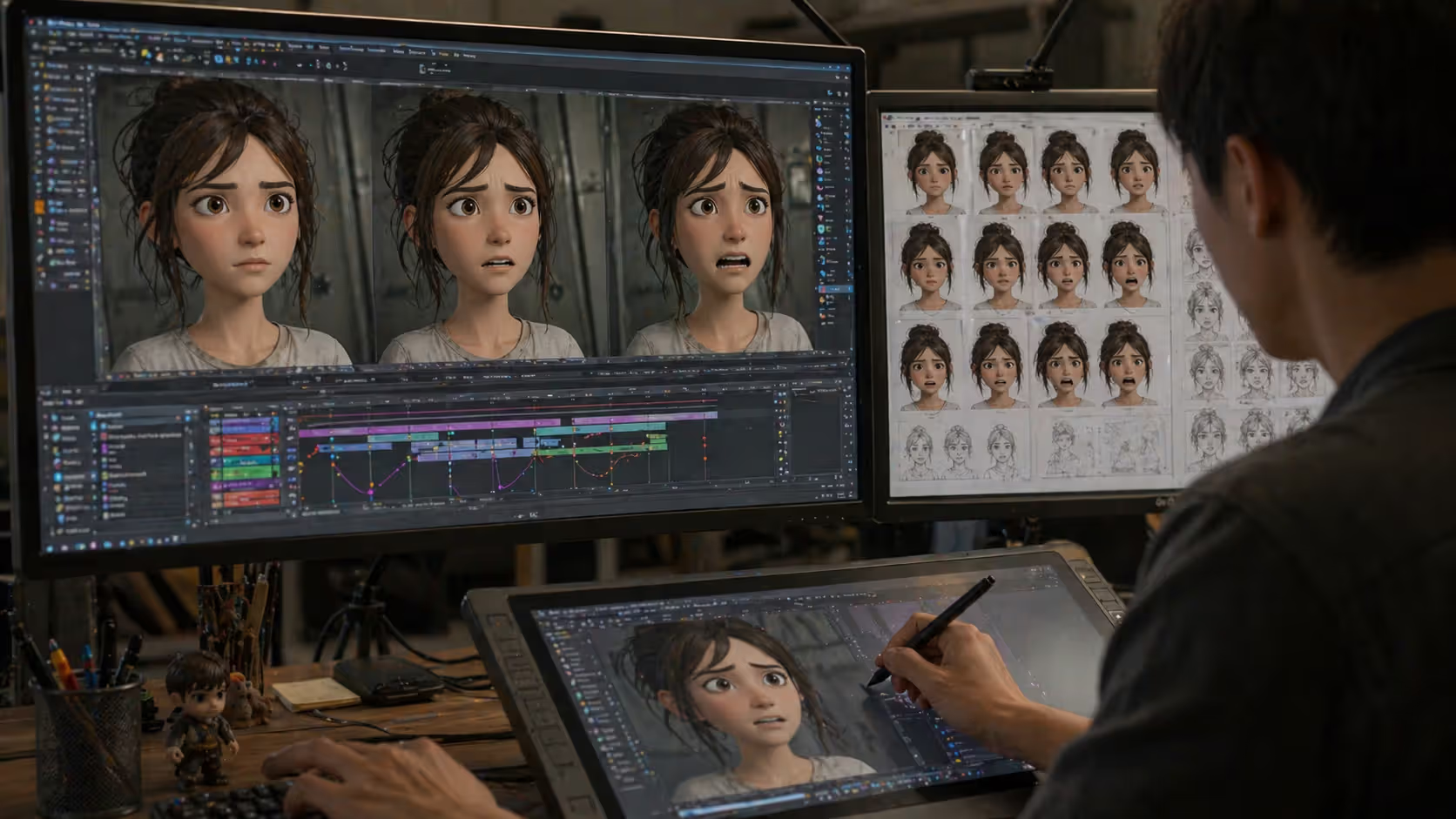
Studios increasingly go digital with expression libraries. Instead of printing references, animators keep expression folders in second monitors or reference panels, flipping between emotions while working. This digital integration makes sheets more accessible than traditional printed versions tacked to cubicle walls.
Comparison of Basic Emotions for Expression Sheets
Emotion
Eye Shape
Eyebrow Position
Mouth Shape
Common Animation Usage
Happy
Corners lifted, slightly narrowed from smile
Relaxed or gently raised
Corners turn up, teeth might show
Victory beats, greetings, pleasant surprises, achieving goals
Sad
Upper lids droop, gaze drifts down
Inner corners up, outer corners down
Corners turn down, lower lip may push out
Loss moments, disappointment, empathy responses, rejection scenes
This insight cuts to why effective sheets go beyond surface appearance. They document the underlying logic of how a character's face works—creating a system animators can extrapolate from instead of just tracing.
FAQ
How many expressions should be on an expression sheet?
Six to eight core emotions handle most characters: happy, sad, angry, surprised, scared, disgusted, neutral, plus one wildcard emotion matching your character's personality. Got a character with major screen time or complex emotional range? Push to twelve or sixteen expressions. But don't exceed twenty on a single sheet—you'll overwhelm people. Instead, create multiple themed sheets (basic emotions, intense reactions, subtle variations) so each one stays scannable. I've seen ambitious creators build thirty-expression mega-sheets that nobody actually uses because finding anything takes too long.
Do I need different expression sheets for different angles?
Depends on your production scope. Simple projects work fine with one solid three-quarter view sheet. Productions requiring characters to perform from multiple angles benefit from front, three-quarter, and profile expression sheets. Full-rotation sheets showing each emotion from every angle? That's high-budget territory reserved for characters with extensive screen time. Most indie and mid-level productions create one comprehensive three-quarter sheet and trust animators to extrapolate other angles using their turnaround references. Don't overcomplicate unless your actual production demands it.
What's the difference between an expression sheet and an emotion chart?
Honestly? These terms are basically interchangeable in professional environments. "Expression sheet" pops up more often in animation studios. "Emotion chart" shows up more in illustration and comic circles. Some artists make tiny distinctions—expression sheets show facial changes while emotion charts might include body language or compare multiple characters showing the same feeling. But in practice, both terms describe the same reference document type. Don't stress the terminology.
Can I use expression sheets for 3D character modeling?
Absolutely, and you should. 3D character artists use expression sheets as targets when creating blend shapes and facial rigs. The sheet shows what each extreme expression should look like, and technical artists build rigs to achieve those exact shapes. Lots of 3D pipelines actually start with 2D expression sheet approval before any modeling begins—locking in the character's emotional range before investing in technical setup. The sheet becomes quality control reference later: does the 3D model's angry face match the approved 2D angry face? If not, keep adjusting the rig.
Should I include dialogue mouth shapes on my expression sheet?
Keep dialogue phonemes (mouth shapes for speech sounds like "A," "E," "O") on a completely separate reference sheet. Mixing emotions and phonemes creates cluttered, impossible-to-scan references. Expression sheets focus on emotional states. Phoneme sheets focus on speech mechanics. These are different tools for different purposes. Some dialogue-heavy productions create combination sheets showing each phoneme with emotional overlays (happy "A" sound, angry "A" sound, sad "A" sound), but that's specialized territory. For most projects, keep them separated for clarity.
How do professional studios organize expression reference sheets?
Major studios typically use tiered systems. Tier 1 includes basic model sheet plus simple expression sheet with six to eight emotions. Tier 2 adds multi-angle expression sheets and phoneme charts. Tier 3 brings in specialty sheets for specific sequences, extreme reactions, or unique story moments. Every sheet gets numbered, dated, and version-controlled. Digital asset management systems tag sheets by character name, sheet type, and approval status. Animators access everything through production databases or shared drives with crystal-clear folder hierarchies. Smaller studios often compile everything into one comprehensive character bible PDF with bookmarked sections for quick navigation. The key is making references findable in under ten seconds.
Expression sheets create the emotional vocabulary powering character animation and illustration. They transform vague direction like "make them look happy" into concrete, repeatable visual targets maintaining consistency across teams, scenes, and entire production timelines. The gap between characters that feel genuinely alive and those that read as flat often traces directly back to whether someone thoughtfully documented and effectively communicated their emotional range.
Building sheets that actually work requires balancing artistic skill against production awareness. You're not creating portfolio pieces for Instagram. You're building tools other artists will reference hundreds or thousands of times under deadline pressure. Clarity beats beauty. Consistency beats complexity. Completeness beats rendering polish. A simple, clean expression that's easy to replicate destroys a gorgeously rendered expression that's too complex for practical use.
Start with your character's core emotions. Make sure each expression maintains identical construction. Organize everything for quick reference scanning. Dodge common traps like over-complication, symmetry overload, and personality-blind generic faces. Remember these sheets work alongside model sheets and turnarounds as parts of comprehensive character documentation, not replacements for them.
Whether you're a solo creator building references for your own consistency or part of a studio team maintaining quality across departments, well-crafted expression sheets elevate character performance from acceptable to memorable. They give characters the emotional range to react authentically to story moments, creating that connection between character and audience that makes animation stick in people's minds years later.
Master the wheatpaste street art technique with this complete guide covering adhesive recipes, poster installation methods, material selection, and legal considerations. Learn to create durable wheat paste art installations using affordable supplies and proven application techniques.
Perspective is the set of techniques artists use to represent three-dimensional space on a flat surface. It governs how objects appear smaller as they recede, how parallel lines converge toward a single point, and how atmospheric conditions affect color and clarity across spatial planes.
Learn to draw compelling three quarter view portraits with this comprehensive guide covering proportions, perspective, and step-by-step techniques. Discover why this angle creates depth and dimension, master foreshortening, and avoid common mistakes that flatten your portraits.
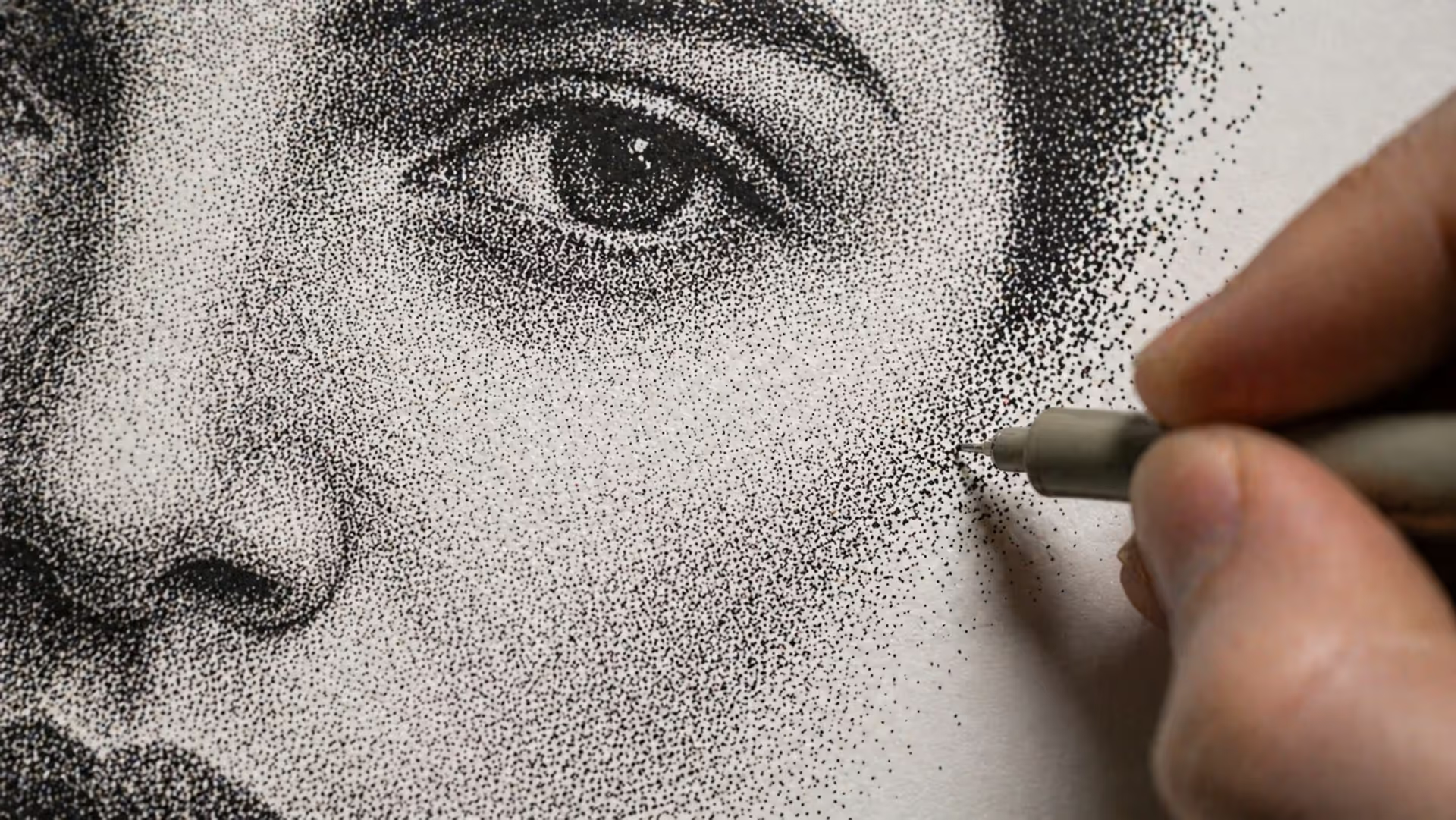
Stippling creates stunning artwork using only dots. This comprehensive guide covers everything from basic dot shading methods to advanced illustration techniques, including tool recommendations, step-by-step tutorials, and common mistakes to avoid.
The content on this website is provided for general informational and educational purposes only. It is intended to explain concepts related to digital design, visual art, color theory, art techniques, design principles, and design history.
All information on this website, including articles, guides, and examples, is presented for general educational purposes. Creative outcomes may vary depending on individual skill, tools, and practice.
This website does not provide professional design services or guarantee results, and the information presented should not be used as a substitute for formal education or professional consultation.
The website and its authors are not responsible for any errors or omissions, or for any outcomes resulting from decisions made based on the information provided on this website.