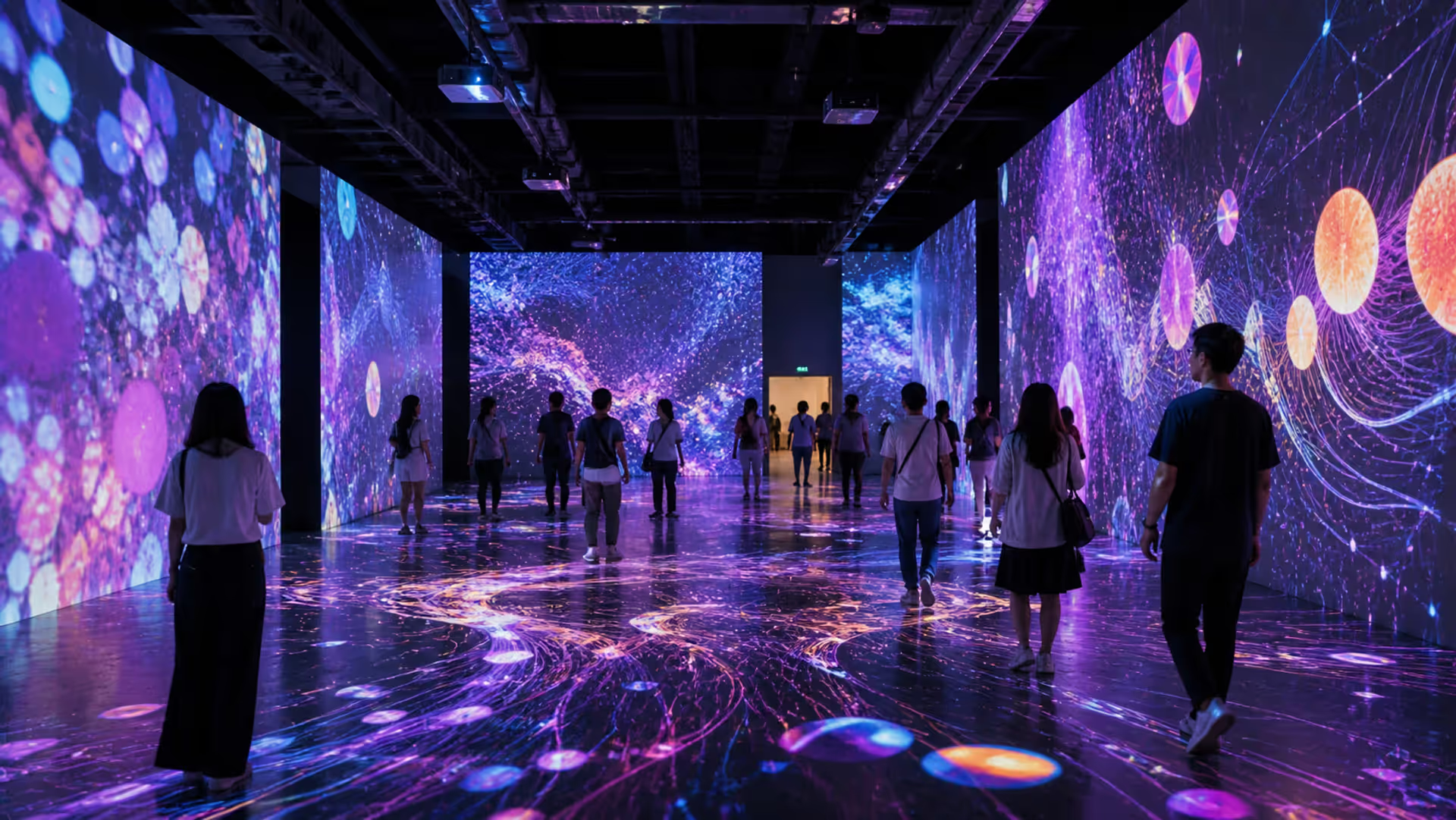
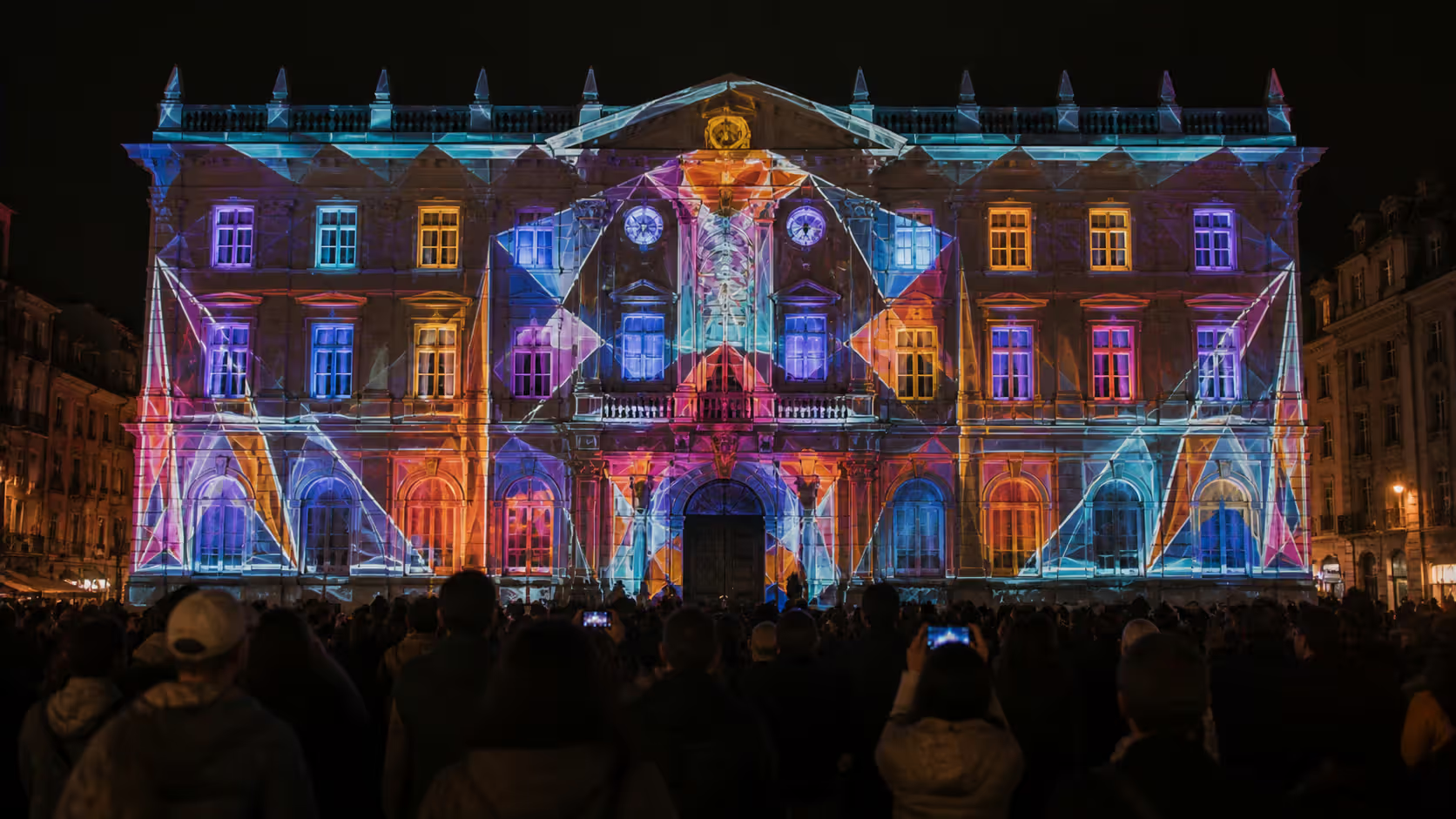
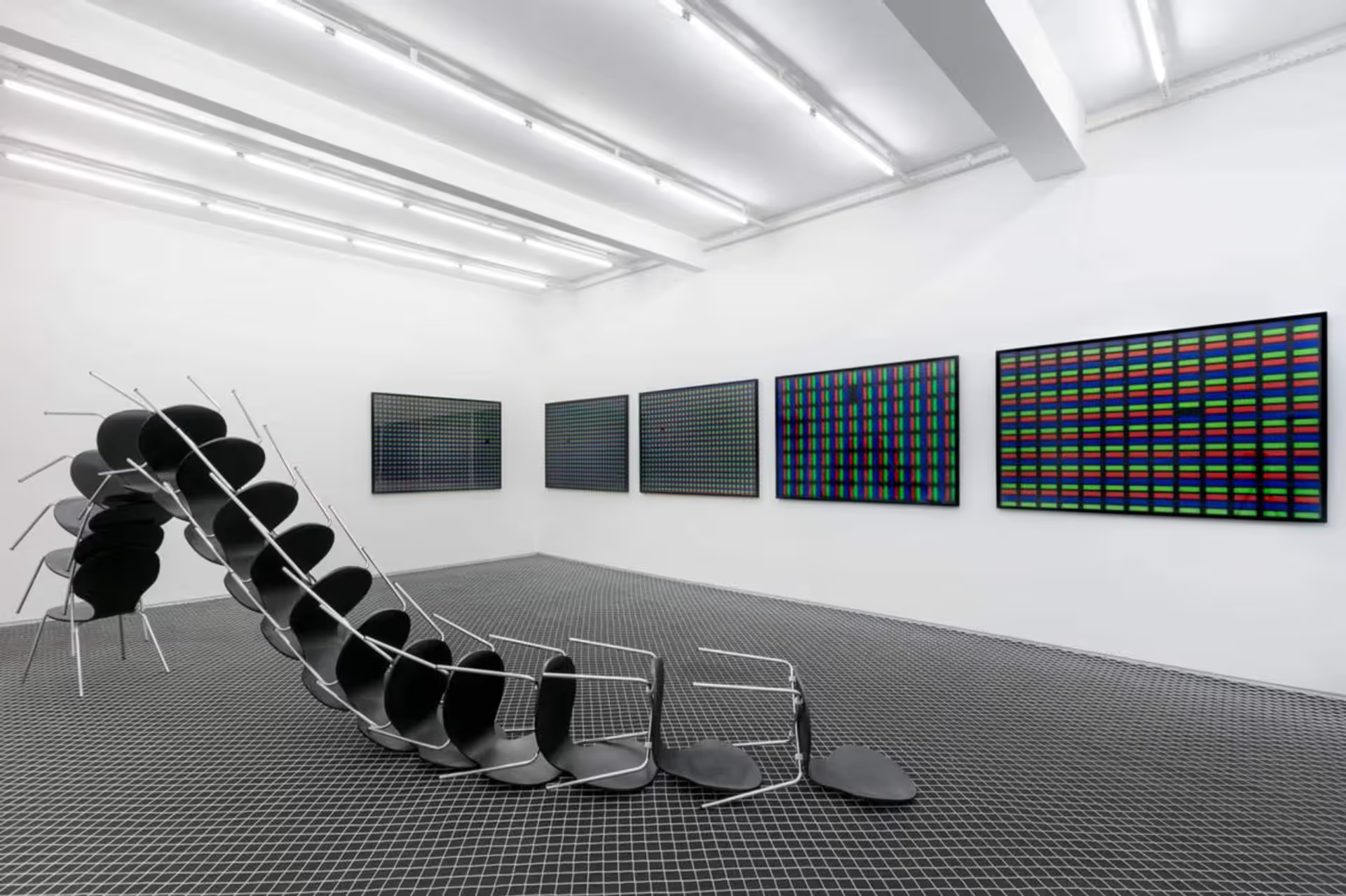
Walk into a darkened gallery and suddenly the walls pulse with color, responding to your footsteps. Stand before a building downtown and watch its facade seemingly melt and reform through projected light. Media arts doesn't hang quietly on walls—it surrounds you, reacts to you, sometimes even challenges you to complete it.
This creative field took off in the 1960s when artists first got their hands on video cameras and started experimenting with television signals. Today? It's exploded into everything from AI-generated installations to augmented reality pieces you can only see through your phone. Artists now code their own software, collaborate with engineers, and create experiences that couldn't exist without computers, sensors, and screens.
Here's what makes this interesting: as our daily lives get more tangled up with technology—smartphones, social media, algorithms deciding what we see—media artists are the ones asking hard questions about what all this means. They're not just using tech to make cool visuals. They're interrogating it, playing with it, sometimes breaking it on purpose to show us something we wouldn't otherwise notice.
Media Arts Definition and Core Principles
So what exactly counts as media arts? Think of it as creative work that needs electricity to exist. But that's too simple—it's really about artists who treat electronic and digital systems as their raw materials, the way a sculptor thinks about clay or a painter considers pigment.
The media arts definition goes deeper than "art made with computers." These practitioners fundamentally rethink what artwork can even be. A Renaissance portrait stays put for 500 years. A media piece might exist for three hours during a performance, or change every time someone walks past its sensors, or pull in live weather data and look different each morning.
Traditional fine arts gave us objects. Media arts gives us systems, processes, and time itself becomes part of the material. You can't experience most of these works by glancing at them for 30 seconds—many require you to move around, interact, or wait to see how they unfold.
The new media art overview starts with rebels in the 1960s. Nam June Paik bought some of the first consumer video equipment and immediately started hacking it, distorting TV signals to create abstract imagery. That same decade, engineers and artists formed E.A.T. (Experiments in Art and Technology), actually collaborating instead of staying in separate worlds. These pioneers saw that emerging tools—video, synthesizers, early computers—could do things painting and sculpture simply couldn't touch.
By the 1990s, everything accelerated. Personal computers got cheap. Video cameras went digital. The internet arrived. Suddenly artists everywhere could experiment with technologies that previously required institutional backing or corporate resources.
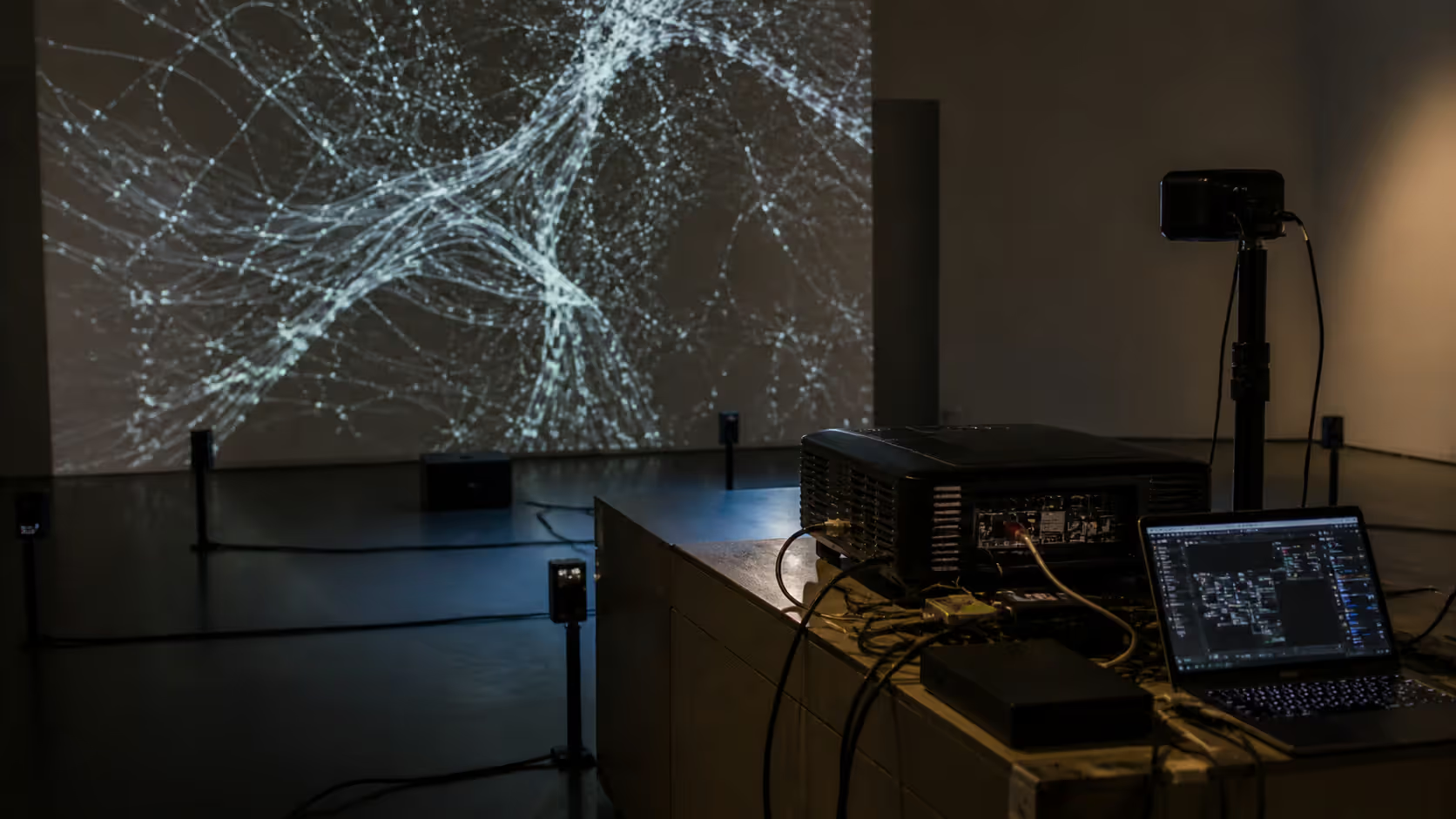
What connects all these diverse practices? First, artists approach technology experimentally, not just following the instruction manual. Second, they care more about processes and systems than finished products. Third, they're deeply engaged with how technology shapes culture—not just reflecting it but critiquing it. And fourth, many deliberately expose their technical apparatus rather than hiding it behind illusion. When you see the projector, the wires, the code running in the background—that's often intentional.
Author: Marcus Ellery;
Source: crafterholic.com
Major Disciplines Within Media Arts
The field breaks down into several distinct approaches, though plenty of artists mix and match across these categories.
Video Art as Discipline
Video art kicked off in 1965 when Sony released the Portapak, the first portable video recorder ordinary people (well, artists) could afford. Artists grabbed these cameras and started recording performances, making abstract compositions, exploring how the medium itself constructed meaning.
Joan Jonas used video's unique properties—the slight delay, the way it flattened space—to investigate identity and perception. Vito Acconci turned the camera on himself for uncomfortable, intimate performances. These early practitioners weren't trying to make television or cinema. They were figuring out what video could do that other media couldn't.
Bill Viola changed the game in the 1980s and '90s by going big—really big. His installations used multiple synchronized screens, sometimes filling entire rooms with slow-motion imagery of water, fire, bodies moving through space. Suddenly video wasn't just a documentation tool or a single monitor in the corner. It became environmental.
Today's video artists work across every format imaginable. Some create 30-second loops for Instagram. Others orchestrate ten projectors displaying synchronized footage across architectural spaces. The tools have evolved—4K resolution, sophisticated editing software, real-time compositing—but the core questions remain. How do moving images shape consciousness? What happens when we mediate reality through cameras and screens?
Interactive Art Media and Audience Participation
Here's where things get interesting: artwork that literally won't function without you. Interactive art media flips the traditional relationship on its head. Instead of contemplating someone else's finished vision, you become part of the system that generates the experience.
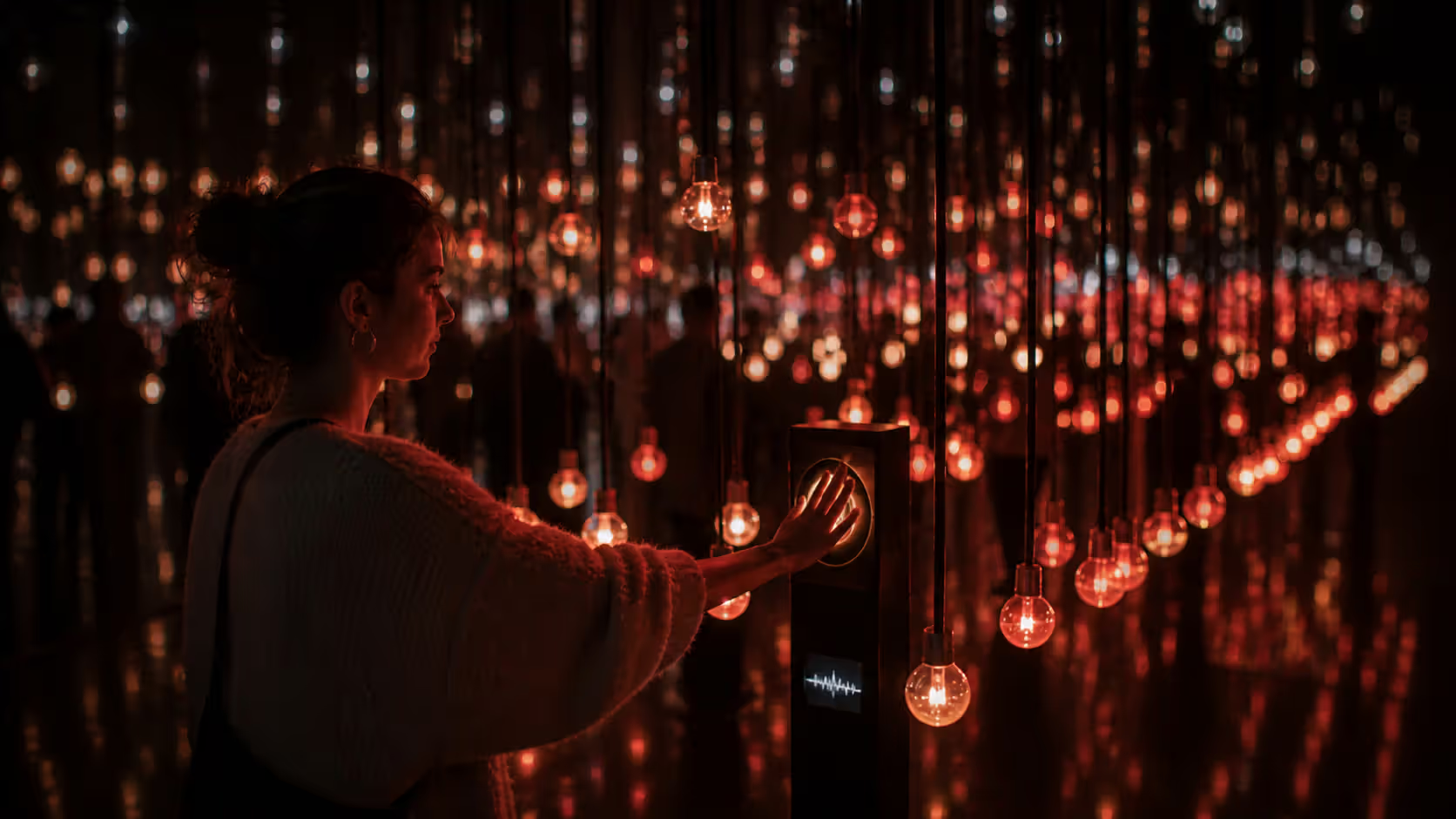
Early experiments were pretty simple—step on this pad, light turns on. But artists quickly got more sophisticated. Rafael Lozano-Hemmer created "Pulse Room" in 2006: you grab a sensor, it reads your heartbeat, then hundreds of light bulbs suspended from the ceiling flash in rhythm with your pulse. The next person's heartbeat replaces yours. It's beautiful, slightly eerie, and makes you hyperaware of your own physiology.
Contemporary interactive art media deploys some serious technology. Computer vision tracks how you move. Machine learning responds to patterns in visitor behavior over time. Biometric sensors capture heartrate, skin conductivity, even eye movements. Artists can network pieces across locations so someone in New York affects what someone in Tokyo experiences.
The tricky part? Designing interactions that aren't gimmicky. Just because something responds to motion doesn't make it meaningful. The best interactive work creates situations where participation reveals something—about yourself, about others, about the systems mediating our lives. When interaction feels natural and purposeful rather than "press button, get reward," that's when this discipline really sings.
Digital Performance Art
Take live performance—theater, dance, music—then weave in digital technologies as equal partners with human performers. That's digital performance art. Dancers trigger video projections with their movements. Musicians perform alongside AI systems that improvise in real time. Actors collaborate with remote performers through telepresence.
Troika Ranch, founded back in 1994, pioneered much of this territory. They built custom software letting dancers control projected visuals and soundscapes through motion. A leap became a visual explosion. A gesture shifted the audio landscape. The performers weren't just moving in front of screens—they were playing the technology like an instrument.
Recent work pushes further into weird territory. Motion capture creates digital avatars mirroring performers in real time. VR allows audiences to experience performances from impossible perspectives. Some artists use telepresence to put performers in different countries into shared virtual space, raising questions about what "presence" even means.
This discipline gets philosophical fast. When a performer's gesture controls digital elements through an algorithm, who authors the resulting moment? The dancer? The programmer? The machine? Digital performance art makes these abstract questions viscerally immediate.
Screen Based Art and Projection Mapping
Screen based art covers work designed specifically for display technologies, from the phone in your pocket to 50-foot LED walls covering buildings. This includes net art living in web browsers, projection mapping that transforms architecture into animated surfaces, and everything in between.
Projection mapping has become particularly spectacular. Artists use specialized software to precisely align video content with three-dimensional surfaces—buildings, sculptures, stages. Done well, it creates stunning illusions: solid structures appear to collapse, breathe, turn transparent. These pieces often attract thousands of viewers and demonstrate media art's capacity for public spectacle.
Jenny Holzer projects text—provocative statements, political slogans, poetic fragments—onto building facades. The architecture becomes a canvas, but also a context that adds meaning. Her words on a government building carry different weight than the same text in a gallery.
Screen based art also goes intimate. Artists create apps, websites, social media interventions reaching audiences who'd never visit a museum. This distribution flexibility is powerful, though it means competing for attention in already-oversaturated digital environments. How do you make artistic work visible when everyone's drowning in content?
Author: Marcus Ellery;
Source: crafterholic.com
How Electronic Art Forms and Digital Tools Work Together
Let's talk about what actually makes this stuff run. Understanding digital media art explained means looking under the hood at hardware and software working together.
Hardware includes cameras (everything from webcams to cinema-grade), projectors (from pocket-sized to 30,000-lumen beasts), sensors (motion, touch, biometric, environmental), computers (often multiple), displays (monitors, LED panels, phones), and sometimes custom electronics built specifically for one piece.
Software gets more varied. Some artists use commercial tools—video editors like Premiere, 3D programs like Blender, audio software like Ableton. But many learn to code, writing custom software that does exactly what they need. Processing, openFrameworks, TouchDesigner, and Python are popular choices. Why code from scratch? Because commercial software has predetermined behaviors. Custom code lets you build systems that behave in specific, unusual ways.
Want visuals that respond to Twitter sentiment analysis? You'll need to code that. Want sound generated by plant biofeedback? You're writing that yourself. Want imagery that evolves based on weather patterns over time? Yeah, custom software.
Electronic art forms typically combine multiple technologies into integrated systems. One installation might include: motion sensors tracking visitor positions, software processing that data through custom algorithms, projectors displaying generated imagery onto sculptural forms, speakers playing spatialized audio, and all of it running continuously for three months without crashing. Artists need to understand each component plus how they communicate—different protocols, data formats, timing issues.
Here's the important part: technical complexity should serve artistic ideas, not overshadow them. Skilled practitioners choose tools strategically. Sometimes older, simpler tech better suits the concept. A powerful computer running AI might be less appropriate than a cheap microcontroller and some LEDs. The technology is a means, not an end.
Collaboration has become standard as systems grow more complex. Many projects involve teams: artists providing vision, programmers handling code, engineers solving technical problems, designers refining interface and aesthetics. It's not unlike filmmaking—multiple specialists coordinating around shared goals. The difference? The artist maintains creative control rather than a commercial studio.
Media Art Installations in Galleries and Public Spaces
Media art installations immerse you in environments of light, sound, and responsive systems. Unlike standing at arm's length from a painting, you typically move through these spaces, navigating, exploring, discovering how elements respond and relate.
Exhibiting this work presents challenges. Projected imagery needs darkness, but museums traditionally favor natural light. Equipment requires reliable power, climate control (electronics hate heat and humidity), and often custom mounting. Installation crews need both artistic sensitivity and technical expertise—someone has to align eight projectors to sub-millimeter precision while understanding the artist's conceptual intent.
Site-specific works take this further, designed for particular locations. teamLab's permanent museum in Tokyo features dozens of digital environments flowing through uniquely designed architecture. No walls between pieces—you walk from one immersive zone into another. Jenny Holzer's projections choose building facades deliberately, letting architecture add meaning to text.
Public space installations democratize access. You don't need museum admission to encounter massive projections on buildings or interactive pieces in plazas. These works reach audiences who'd never visit galleries, bringing challenging contemporary art into everyday environments.
Preservation is genuinely difficult. Paintings remain stable for centuries. Media artworks depend on technologies that become obsolete within years. When a piece from 2008 needs a specific discontinued projector model or software that won't run on current operating systems, what do museums do?
Major institutions have developed specialized conservation departments. The Whitney Museum, SFMOMA, and Hirshhorn Museum employ conservators focused exclusively on time-based media. They document artists' intentions extensively, create detailed technical specifications, maintain relationships with artists for consultation. Some keep libraries of obsolete equipment—working computers from 2005, discontinued video formats, legacy software.
Strategies include migration (transferring works to current platforms while maintaining aesthetic qualities), emulation (running old software on new hardware through simulation), and documentation (capturing intent so future conservators understand acceptable changes versus essential elements). Before acquiring media works, museums negotiate with artists about what can change and what can't. Some pieces have built-in expiration dates—the artist knows technology will fail eventually and accepts that.
Author: Marcus Ellery;
Source: crafterholic.com
The Role of Technology in Contemporary Art Practice
Technology in contemporary art extends way beyond media specialists now. Painters use Photoshop for composition planning. Sculptors employ 3D printing. Photographers work with computational imaging that's barely "photography" in traditional terms. But media artists maintain particularly reflexive relationships with tech—it's simultaneously their medium and their subject.
AI has exploded recently. Artists train neural networks on thousands of images, then use those systems to generate new work. Refik Anadol feeds machine learning algorithms massive datasets—weather patterns, architectural archives, brain activity scans—producing dynamic visualizations no human could conceive alone. These pieces look spectacular but raise questions: who's the author when an algorithm generates imagery? The artist who trained it? The programmers who built the framework? The machine itself?
Virtual reality constructs entirely synthetic environments you explore through head-mounted displays. Artists create worlds that defy physics, manipulate scale impossibly, challenge spatial logic. You might walk through someone's memory, shrink to insect size, or experience impossible architectures. The immersion is powerful. The isolation is problematic—VR cuts you off from other viewers, eliminating the shared social experience traditional exhibitions provide.
Augmented reality overlays digital content onto physical environments viewed through phones or glasses. Artists add invisible layers to public spaces—sculptures that exist only in AR, texts appearing on walls when viewed through apps, animations triggered by specific locations. These pieces exist simultaneously in physical and digital dimensions, raising questions about public space and who controls our visual environment.
Artist-technologist collaborations have become essential as systems grow sophisticated. Memo Akten works with machine learning researchers, creating pieces that explore AI's creative potential while critiquing its limitations. These partnerships allow artists access to cutting-edge development while bringing critical perspectives to emerging systems.
Ethical considerations grow more urgent. When installations use facial recognition, collect biometric data, or deploy surveillance technologies, artists must consider privacy implications and power dynamics. The most thoughtful practitioners use these systems critically—revealing and questioning how they operate rather than simply reproducing them uncritically. An installation using facial recognition might deliberately misidentify people to expose algorithmic bias, for instance.
Future directions? Increasingly hybrid practices blurring physical and digital, human and machine, individual and collective authorship. As computational systems become more sophisticated and ubiquitous, media artists will keep questioning how technology shapes experience and imagining alternative relationships between people and machines. They're our canaries in the coal mine, testing emerging tech and reporting back on what it does to consciousness, community, and culture.
The future is not something to be predicted, but to be achieved. Art is a means to envision and create that future, not merely to reflect the present.
— Nam June Paik
How to Experience and Engage With New Media Art
Experiencing these works requires different strategies than traditional art viewing. Forget standing at respectful distance contemplating a canvas. You'll often need to move around, trigger interactions, or spend extended time observing how pieces change.
When you encounter interactive installations, look for instructional signage or ask staff how to engage. Some respond to movement. Others require touch, voice, or specific gestures. Don't hesitate to experiment—most interactive pieces are built tough enough for thousands of visitors. Watch others first if you're uncertain, see how the system behaves, then try your own approach.
For time-based works like video installations, timing matters. Many single-channel videos run 10-20 minutes. Multi-channel installations might have much longer cycles—I've seen pieces with 90-minute loops. Check timing information when available and budget more time than you'd spend with paintings. Arriving at the beginning of a loop helps you experience the full narrative or compositional arc.
Where can you find this work in the US?
The Hirshhorn Museum in Washington DC maintains strong collections and regularly presents large-scale media installations. Their building's round architecture suits immersive work particularly well.
MASS MoCA in North Adams, Massachusetts offers vast industrial spaces—some galleries are football-field sized—perfect for ambitious media projects that need room to breathe.
Museum of the Moving Image in New York focuses specifically on screen-based and interactive work, with permanent exhibitions about media's evolution alongside contemporary pieces.
LACMA in Los Angeles regularly features media art in contemporary galleries and hosts major installations in outdoor spaces.
The Walker Art Center in Minneapolis pioneered collecting and exhibiting new media, maintaining one of the field's strongest permanent collections.
Annual festivals provide concentrated experiences of diverse work. Ars Electronica brings its massive Austrian festival to various US cities. SIGGRAPH's art gallery showcases cutting-edge computer graphics and interactive work. SXSW in Austin includes interactive installations alongside music and film. Many cities host Nuit Blanche-style all-night events featuring media art in public spaces.
Online platforms have grown important for distribution, particularly post-pandemic. Artists create websites, apps, social media interventions, and virtual exhibitions reaching global audiences outside institutions. However, screen-based viewing can't replicate the spatial, bodily experience of installations designed for physical presence. Watching documentation of an interactive piece isn't the same as actually interacting with it.
When evaluating media artworks, consider more than visual aesthetics. Think about conceptual frameworks, technical execution, and how the work engages with its technological medium. Ask yourself: Does the technology serve the artistic concept or feel gratuitous? How does the work make you aware of systems mediating your experience? What questions does it raise about technology's role in life? Does it critique, celebrate, or complicate our relationship with digital tools?
Don't worry if you don't understand the technical details. You don't need programming knowledge to appreciate these works any more than you need chemistry knowledge to appreciate painting. Focus on your sensory and emotional responses, the ideas the work explores, and how it makes you think differently about technology's presence in daily life.
Not really, though they share some tools. Graphic designers create visual communication for clients—logos, posters, websites that need to convey specific messages and drive particular actions. They're solving problems, meeting briefs, serving audiences. Media artists pursue personal creative visions, conceptual explorations, and critical investigations of technology itself. A graphic designer makes a concert poster to sell tickets. A media artist might create an interactive installation questioning how digital interfaces manipulate behavior. Some practitioners bridge both worlds—plenty of designers have artistic practices on the side—but the core purposes differ fundamentally.
Do I need technical skills to appreciate media art?
Absolutely not. Artists handle the technical complexity specifically so you don't have to. You don't need to understand projection mapping software to feel the impact when a building's facade appears to dissolve through light. Focus on your experience—what you see, hear, feel, think. How does the work affect you emotionally? What ideas does it raise? How does it make you think about technology differently? Technical understanding can deepen appreciation (like knowing painting techniques enriches museum visits), but it's never required for genuine engagement.
Can media art be collected like traditional paintings?
Yes, though with different considerations. Collectors purchase media works as numbered editions with certificates of authenticity, similar to photography. The acquisition typically includes equipment specifications, detailed installation instructions, sometimes even the actual hardware. Major challenges? Technological obsolescence. A piece created for 2015 display tech might need migration to current systems within a decade. Collectors must budget for ongoing maintenance, potential technical updates, and relationships with conservators or the artists themselves. Some serious collectors maintain stockpiles of obsolete equipment to keep older works functional. It's more like collecting classic cars than paintings—beautiful but requiring ongoing care.
What's the difference between digital art and media arts?
Digital art is broader—basically anything created using digital tools. That includes digital painting in Photoshop, 3D modeling, computer-generated imagery, even digitally produced graphic design. Media arts specifically emphasizes works engaging with electronic media, time-based formats, installation-based experiences, and often participatory elements. All media arts uses digital tools, but not all digital art qualifies as media arts. A digital illustration is digital art. An interactive installation responding to visitors' movements through computer vision is media arts. The distinction centers on how technology and temporal/spatial/participatory experience factor into the work's concept and form.
Where can I study media arts in the United States?
UCLA's Design Media Arts department offers strong technical and conceptual foundations. Carnegie Mellon's School of Art emphasizes computation and interaction. NYU's Interactive Telecommunications Program (ITP) focuses on experimental applications of emerging technology. RISD's Digital + Media program balances technical skills with critical making. The School of the Art Institute of Chicago provides broad interdisciplinary approaches. Programs vary significantly—some emphasize installation and performance, others focus on interactive systems or computational approaches. Look for curricula balancing technical skills (programming, electronics, video) with conceptual development and critical theory. Many successful media artists also come from computer science, film, or traditional fine arts, later specializing through independent learning and collaboration.
How do museums preserve media artworks that use outdated technology?
Museums employ multiple strategies for time-based media conservation. First, extensive documentation captures the artist's intent in detail—how should the work look, sound, and function regardless of specific equipment? Second, emulation recreates obsolete systems on current hardware, allowing old software to run on new computers. Third, migration transfers works to contemporary platforms while maintaining original aesthetic qualities as closely as possible. Fourth, some institutions maintain "obsolete technology libraries"—working vintage equipment, legacy software, discontinued hardware. Before acquiring media works, conservators conduct detailed interviews with artists about acceptable changes versus essential elements that must remain unchanged. Organizations like the Variable Media Network and Matters in Media Art consortium have developed field-wide best practices. The challenge never ends—technology keeps evolving, requiring ongoing adaptation.
Media arts has fundamentally expanded what art can be and how we experience it. By treating electronic technologies, temporal formats, and participatory systems as primary materials, the field creates experiences impossible in traditional media while offering critical perspectives on increasingly technological culture. From video art's investigations of moving imagery to interactive installations responding to your physical presence, these practices transform passive viewing into active engagement.
The major disciplines—video, interactive, digital performance, and screen-based work—each bring distinct approaches to artistic expression through technology. Understanding how electronic art forms combine hardware, software, and conceptual frameworks helps you appreciate the sophisticated systems behind seemingly magical experiences. As AI, VR, and other emerging technologies continue developing, media artists will remain at the forefront of questioning how these systems shape human consciousness and culture.
Whether in major museums, public spaces, or online platforms, media art invites critical thinking about technologies mediating contemporary life. It demonstrates that technology isn't neutral or inevitable but shaped by human choices, values, and creative vision. Experience these works with curiosity and openness, and you'll gain fresh perspectives on both artistic possibility and technology culture's broader implications for how we live, communicate, and imagine collective futures.
A conceptual artist creates work where the underlying idea holds more importance than the finished physical object. Unlike traditional artists who focus on mastering materials, conceptual artists treat the concept itself as the artwork, with execution serving merely as documentation of the idea.
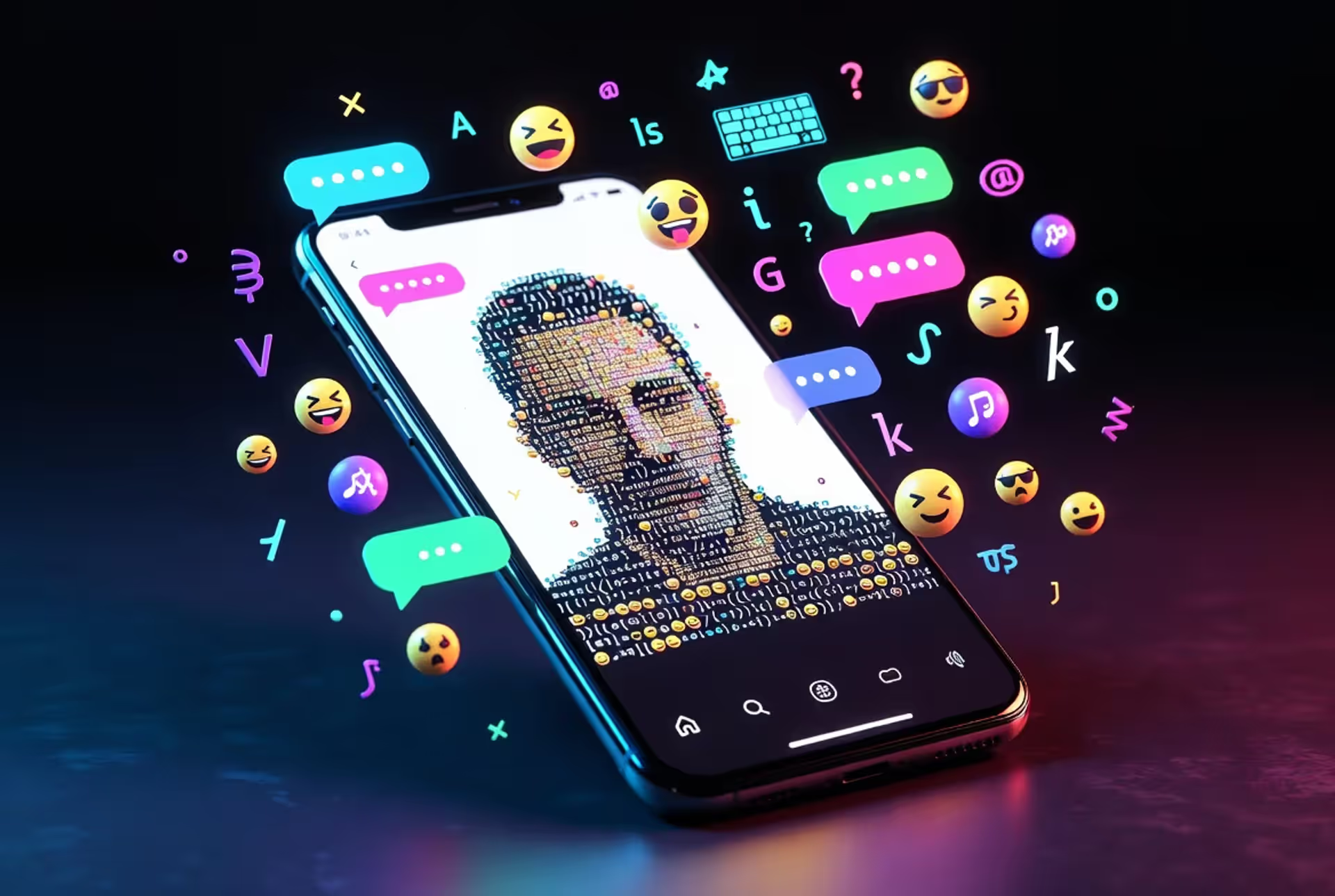
Text message art transforms written language into visual compositions. From ASCII characters to monumental installations, artists use typography, concrete poetry, and calligraphy to create work where words function as both message and image, challenging traditional boundaries between reading and viewing.
Writing about your artwork feels awkward at first. You're translating visual ideas into sentences that don't sound pretentious. Every art student faces this challenge for applications, portfolios, and exhibitions. See real examples and learn the structure that works.
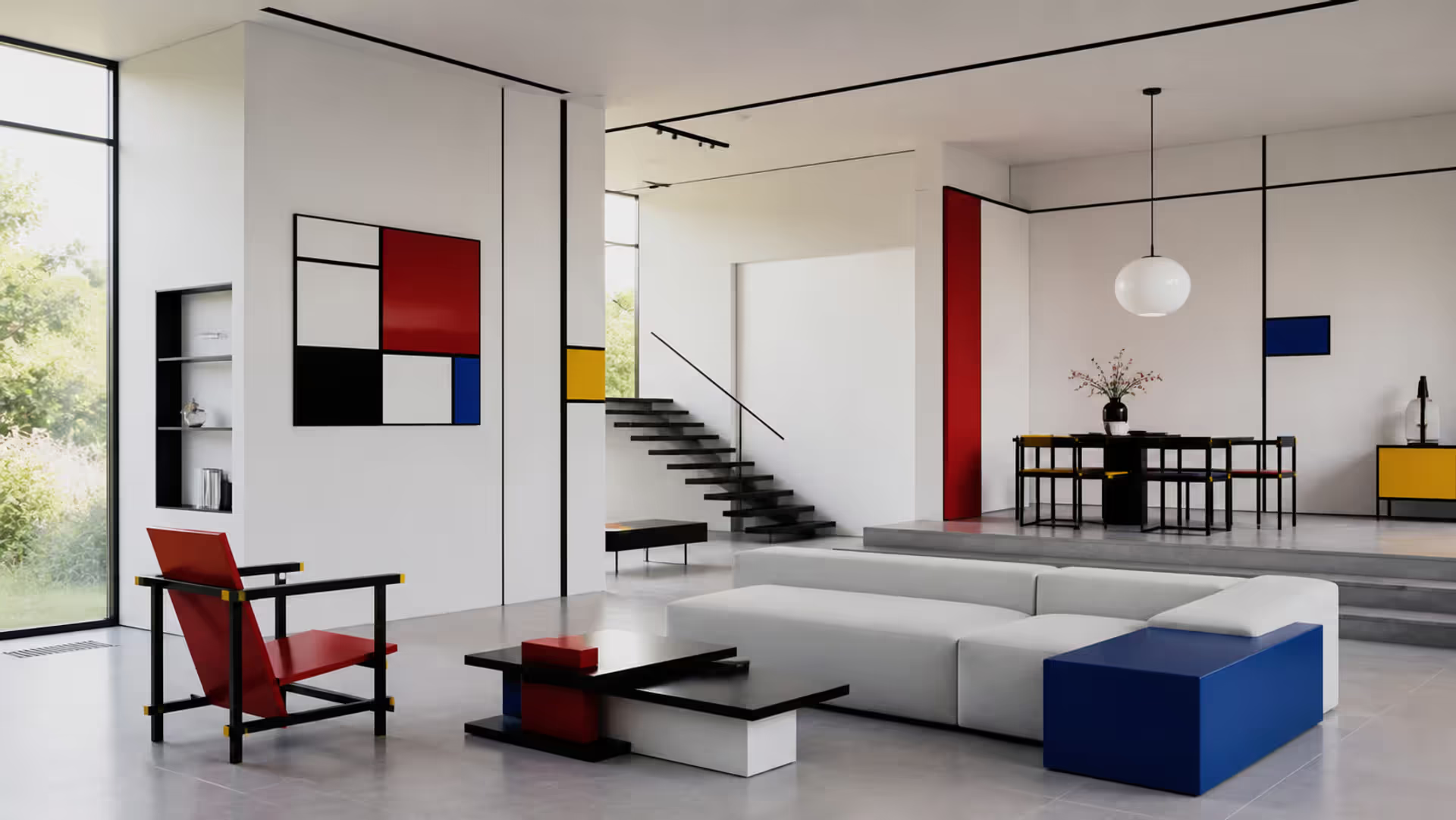
De Stijl emerged in 1917 Netherlands with a radical vision: reduce art to horizontal and vertical lines, primary colors, and geometric forms to reveal universal harmony. This Dutch abstract art movement transformed painting, architecture, and design, creating a visual language that still shapes our world.
The content on this website is provided for general informational and educational purposes only. It is intended to explain concepts related to digital design, visual art, color theory, art techniques, design principles, and design history.
All information on this website, including articles, guides, and examples, is presented for general educational purposes. Creative outcomes may vary depending on individual skill, tools, and practice.
This website does not provide professional design services or guarantee results, and the information presented should not be used as a substitute for formal education or professional consultation.
The website and its authors are not responsible for any errors or omissions, or for any outcomes resulting from decisions made based on the information provided on this website.