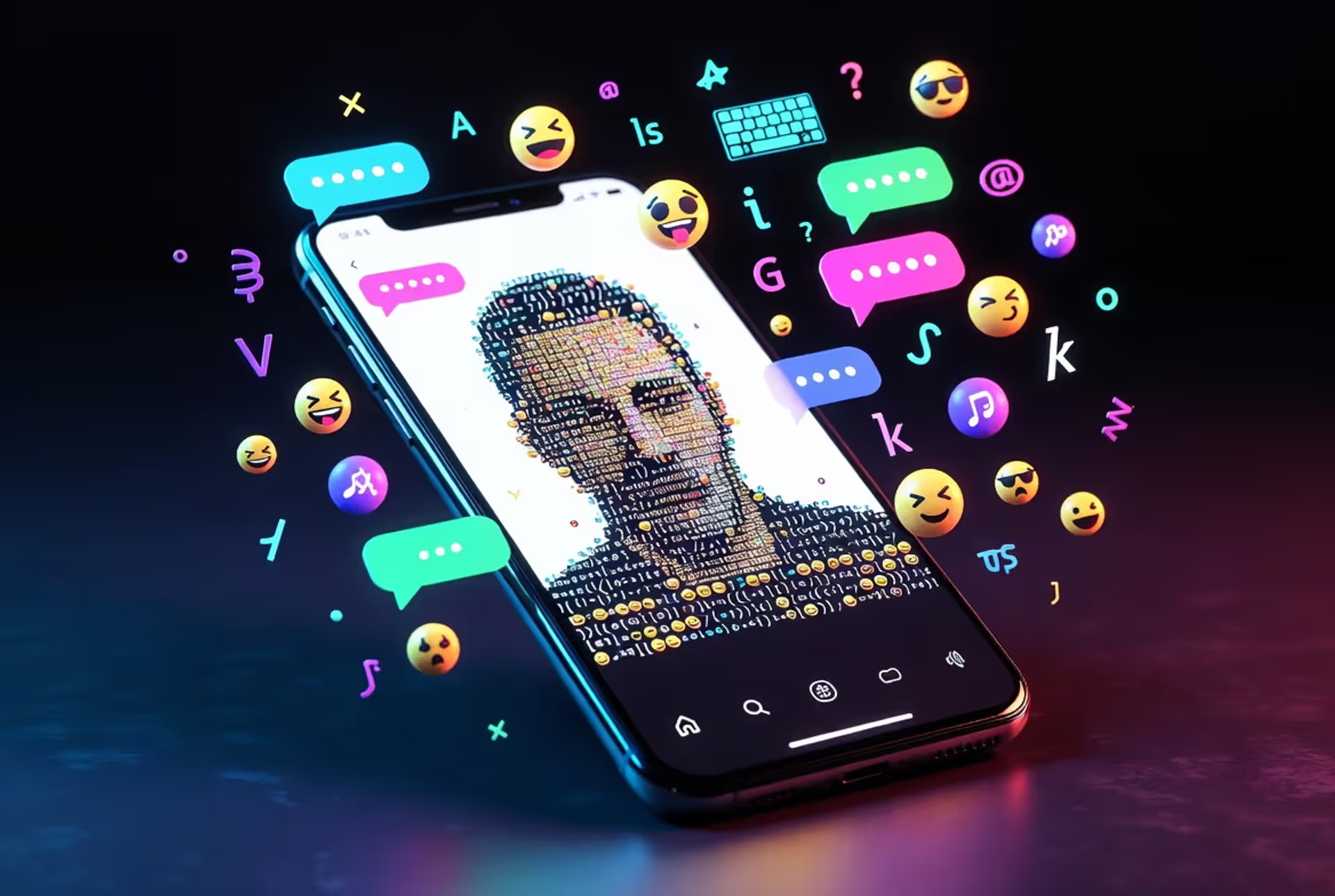
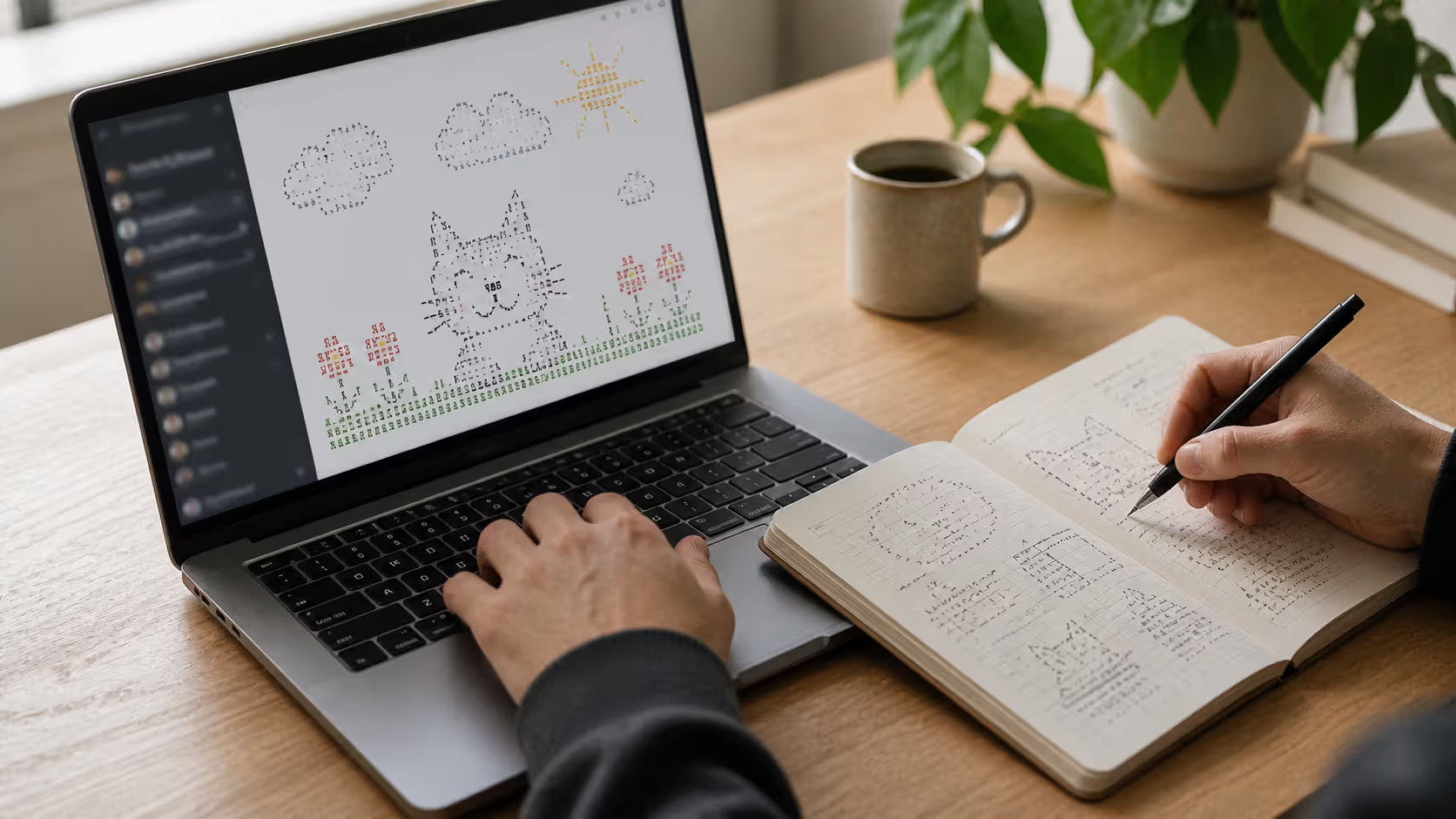
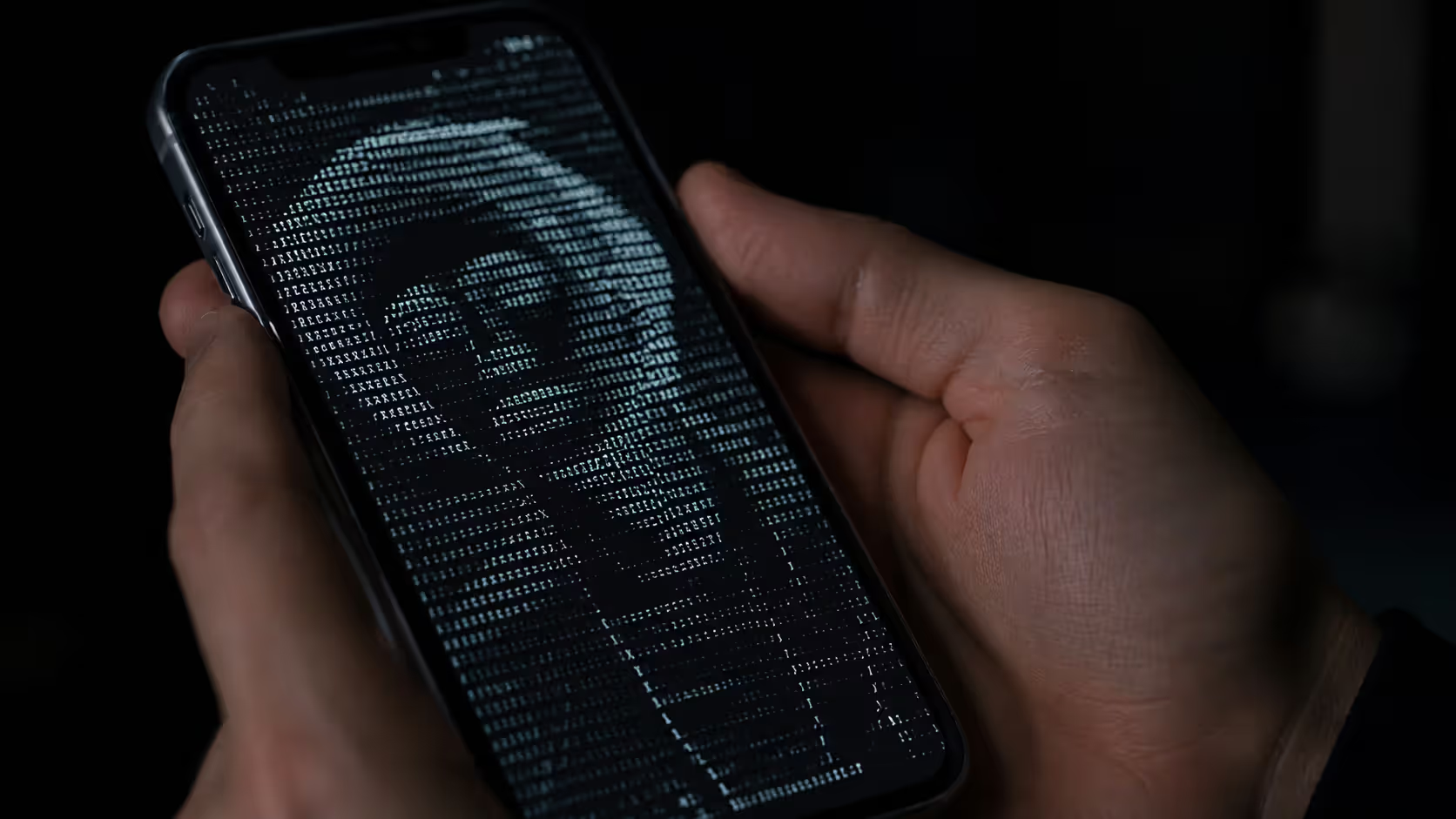
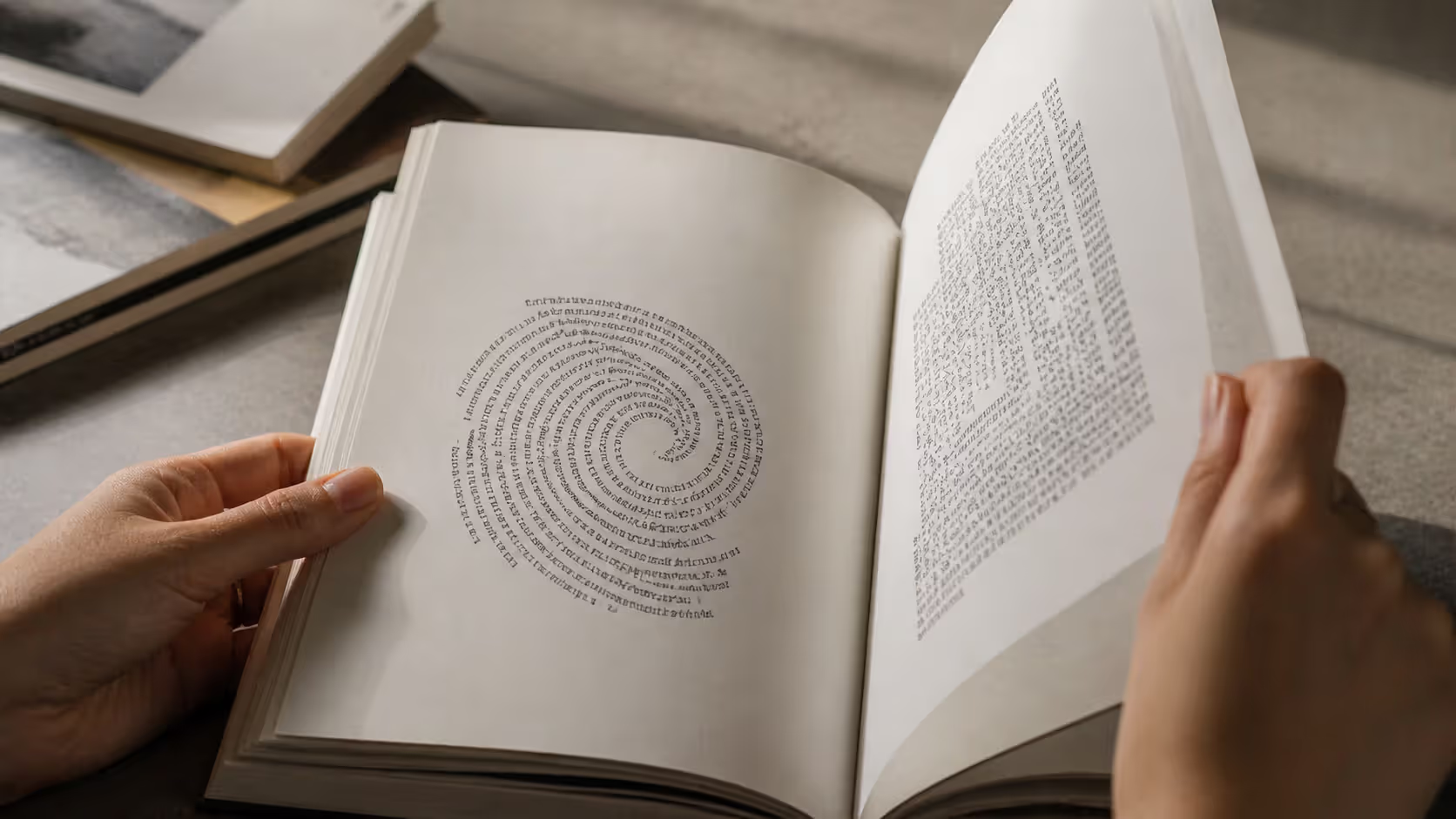
Text message art began as simple emoticons and ASCII characters arranged into pictures on early mobile phones. Today, it represents a far broader artistic practice where written language, letters, and words become the primary visual elements in artwork. Artists transform typography, phrases, and linguistic symbols into compelling visual compositions that challenge traditional boundaries between reading and viewing.
The integration of text into visual art stretches back centuries, from illuminated manuscripts to Renaissance paintings featuring inscribed scrolls. However, the 20th century brought unprecedented experimentation with language as a visual medium. Artists began questioning whether words could function simultaneously as linguistic signs and aesthetic objects. This dual nature—text as both message and image—defines the core tension that makes text-based artwork compelling.
Modern digital culture has accelerated this evolution. Social media graphics, meme culture, and smartphone communication have normalized the idea that words themselves can be visual content. What once seemed experimental now feels intuitive to audiences who encounter text as image dozens of times daily.
What Is Text Message Art
Text message art in its strictest sense refers to pictures and designs created using keyboard characters, emojis, and typographic symbols—the kind you might send through SMS or messaging apps. Think of kaomoji faces like (╯°□°)╯︵ ┻━┻ or elaborate ASCII art depicting landscapes, portraits, or objects using letters and punctuation marks.
This narrow definition, however, represents just one branch of a much larger artistic tradition. Text in visual art encompasses any work where written language serves as the primary visual element rather than merely labeling or explaining an image. The word as image in art concept recognizes that letterforms carry aesthetic weight independent of their semantic meaning.
Historical precedents include medieval illuminated manuscripts where calligraphers transformed letters into ornamental designs, and early 20th-century Cubist paintings that incorporated newspaper fragments and stenciled words. The Dadaists and Futurists experimented with typography as a dynamic visual force, arranging words to convey movement and energy beyond their literal meanings.
By the 1960s, Conceptual artists like Lawrence Weiner and Joseph Kosuth made language their exclusive medium, presenting text as the artwork itself rather than as description. This philosophical shift—treating words as visual objects worthy of gallery walls—legitimized text-based practices across contemporary art.
Author: Olivia Hartwell;
Source: crafterholic.com
Typography and Text as Artistic Mediums
Typography as art medium transforms functional letterforms into expressive visual statements. Every typeface carries cultural associations and emotional resonance. A blackletter font evokes medieval manuscripts or heavy metal aesthetics. Helvetica suggests modernist clarity and corporate professionalism. Hand-drawn letters feel personal and immediate.
Artists exploit these associations deliberately. They might pair contradictory messages with unexpected typefaces—romantic phrases in industrial sans-serif fonts, or aggressive statements in delicate scripts. This tension between form and content creates additional layers of meaning.
Lettering as artistic expression goes beyond selecting existing fonts. Many artists design custom letterforms specifically for individual artworks, where each character's shape reinforces the piece's conceptual framework. A word about fragmentation might feature letters that literally break apart. Text discussing fluidity could use letterforms that drip or dissolve.
Scale manipulation produces dramatic effects. Monumental text installations in public spaces command attention and transform architecture. Conversely, microscopic text requires viewers to approach closely, creating intimate viewing experiences. Artists like Barbara Kruger use bold, oversized typography to mimic advertising's visual language while subverting its messages.
Color, texture, and materiality add further dimensions. Neon text glows with urban energy. Carved stone letters carry permanence and authority. Projected text feels ephemeral and changeable. Each material choice affects how viewers perceive and interpret the linguistic content.
Author: Olivia Hartwell;
Source: crafterholic.com
Major Text-Based Art Movements and Styles
Movement/Style
Time Period
Key Characteristics
Notable Artists
Primary Medium
Concrete Poetry
1950s-1970s
Words arranged spatially; visual form reinforces meaning; reduction of syntax
Eugen Gomringer, Augusto de Campos, Ian Hamilton Finlay
Print, book pages, posters
Calligraphic Art
Ancient-Present
Expressive brushwork; letterforms as gestural abstraction; cultural traditions
Wang Xizhi, Hassan Massoudy, Xu Bing
Ink, paper, scrolls
Conceptual Text Art
1960s-1980s
Language as idea; text replaces objects; institutional critique
Lawrence Weiner, Joseph Kosuth, Jenny Holzer
Walls, printed statements, LED displays
Digital Text Art
1990s-Present
Algorithmic generation; interactive text; social media integration
Public interventions; stencils and wheat-paste; political messaging
Barbara Kruger, Jenny Holzer, Shepard Fairey
Billboards, buildings, stickers
Concrete Poetry and Visual Poetry
Concrete poetry in art emerged in the 1950s as poets and visual artists collaborated to create works where the spatial arrangement of words on the page became inseparable from their meaning. Unlike traditional poetry that flows linearly, concrete poems use positioning, size, repetition, and visual patterning to add semantic layers.
Brazilian poet Augusto de Campos created "Lygia Fingers" (1953), arranging the words to visually suggest piano keys. Swiss artist Eugen Gomringer reduced language to minimal elements, repeating single words in grid patterns that functioned as both text and abstract design. Scottish artist Ian Hamilton Finlay integrated concrete poetry into landscape installations, carving poems into stone and placing them within garden settings.
Visual poetry in design extends these principles into contemporary graphic design, where designers treat text as sculptural material. Words might follow curved paths, stack into towers, or scatter across pages in patterns that mirror their meanings. The reading experience becomes non-linear and exploratory.
Calligraphy as Fine Art
Calligraphy as art form has ancient roots in Islamic, Chinese, and Japanese traditions where beautiful writing was considered among the highest artistic achievements. In these cultures, the energy and rhythm of brushstrokes conveyed the calligrapher's spiritual state and mastery.
Contemporary artists revive and reinterpret these traditions. Hassan Massoudy combines classical Arabic calligraphy with modern color palettes and abstract compositions. Xu Bing invented thousands of fake Chinese characters that look authentic but carry no meaning, questioning the relationship between visual form and linguistic content.
Western calligraphers like Denis Brown and Brody Neuenschwander push beyond traditional letterforms into gestural abstraction where text becomes barely legible, prioritizing visual rhythm over readability. This approach positions calligraphy closer to abstract expressionist painting than to functional writing.
The medium is the message.
— Marshall McLuhan
Contemporary Text-Based Art
The text based art movement in contemporary practice encompasses diverse approaches. Artists like Jenny Holzer project provocative statements onto buildings, using the scale and public visibility of advertising to deliver poetic and political messages. Her "Truisms" series presents contradictory aphorisms that question authority and certainty.
Ed Ruscha pioneered the use of single words and short phrases in paintings, often depicting them as if they were three-dimensional objects casting shadows or floating in space. His work bridges Pop Art's engagement with commercial culture and Conceptual Art's focus on language.
Younger artists continue innovating. Hank Willis Thomas incorporates advertising slogans into photographs and sculptures, exposing how commercial language shapes identity and desire. Shirin Neshat overlays Persian calligraphy on photographs of women's bodies, creating dialogues between image, text, and cultural meaning.
How Artists Use Written Language in Visual Composition
Language in visual composition operates through several key techniques. Layering creates depth by overlapping text with images or other text elements. Transparent words might float above photographs, creating palimpsest effects where multiple meanings coexist. This approach appears frequently in graphic design and mixed-media artwork.
Repetition transforms words from carriers of meaning into visual patterns. When you see the same word dozens or hundreds of times, it begins to lose semantic content and function purely as shape and rhythm. Artists exploit this phenomenon to comment on propaganda, advertising, or obsessive thought patterns.
Abstraction pushes letterforms toward illegibility. Artists might distort, fragment, or dissolve text until it hovers at the boundary between language and pure visual form. This technique appears prominently in written language in abstract art, where viewers experience the tension between trying to read and simply looking.
Scale manipulation changes relationships between text and viewer. Monumental letters become architectural elements that viewers can walk around or through. Tiny text requires close examination, rewarding patient viewers with hidden messages. Artists choose scale strategically based on whether they want text to dominate, integrate with, or hide within compositions.
Contrast and color direct attention and create hierarchies. Bold text against plain backgrounds commands immediate attention, while subtle tonal variations reward careful looking. Color choices carry cultural associations—red suggests urgency or danger, blue evokes calm or corporate professionalism.
Integration with imagery creates complex relationships. Text might describe what images show, contradict visual content, or exist in productive tension with pictures. Barbara Kruger's work exemplifies this approach, pairing provocative phrases with found photographs to create feminist critiques of power and representation.
Creating Your Own Text-Based Artwork
Start by choosing words that carry personal significance or conceptual weight. Single powerful words work differently than complete sentences. Short phrases create rhythm and pacing. Longer texts might become texture or pattern. Consider whether you want viewers to read every word or experience text as visual element.
Typography selection dramatically affects meaning. Experiment with contrasts—pair aggressive messages with delicate fonts, or gentle phrases with bold industrial typefaces. Download free font libraries or learn basic hand-lettering techniques. Each typeface carries associations, so choose deliberately.
Digital methods offer flexibility and experimentation. Adobe Illustrator, Photoshop, or free alternatives like GIMP and Inkscape provide tools for manipulating text. You can distort letterforms, apply effects, layer transparencies, and iterate quickly. Procreate on iPad enables hand-drawn digital lettering with natural brushstroke qualities.
Traditional approaches include hand-lettering with markers, pens, or brushes; stenciling; stamping; collaging printed text from magazines; or carving letters into linoleum blocks for printing. These methods produce unique textures and imperfections that digital work sometimes lacks.
Composition tips: Create focal points through size or color contrast. Use alignment and spacing intentionally—tight letter spacing feels urgent and compressed, while generous spacing suggests calm or isolation. Consider negative space as actively as the letters themselves. Test readability by viewing from different distances.
Common mistakes include overcrowding compositions, using too many different typefaces, or letting technical execution overshadow conceptual clarity. Start simple. A single well-chosen word in the right typeface and position often communicates more effectively than complex arrangements.
Experiment with contradictions. Pair unexpected words with images, or arrange cheerful phrases in ominous compositions. The tension between form and content generates interest and invites interpretation.
Where to See and Collect Text Art
Author: Olivia Hartwell;
Source: crafterholic.com
Major museums regularly feature text-based work. The Museum of Modern Art in New York holds significant pieces by Barbara Kruger, Ed Ruscha, and Jenny Holzer. The Tate Modern in London includes conceptual text works by Lawrence Weiner and Joseph Kosuth. The Hirshhorn Museum in Washington, DC, has installed permanent text-based public artworks.
Contemporary galleries specializing in conceptual and language-based art include Lisson Gallery (London/New York), Sprüth Magers (Berlin/London/Los Angeles), and Paula Cooper Gallery (New York). These spaces represent artists working at the intersection of language and visual art.
Online platforms democratize access and collecting. Instagram hosts countless artists sharing text-based work daily. Websites like Sedition and Artsy offer digital editions and prints at accessible price points. Print-on-demand services enable artists to sell text-based designs on various products.
Art fairs like Frieze, Art Basel, and the Armory Show feature galleries presenting text-based artists. These events offer opportunities to see diverse approaches and speak directly with dealers about emerging artists.
For beginning collectors, consider limited edition prints, artist books, or digital works. Many established text artists produce affordable multiples alongside unique pieces. Artist-run spaces and university galleries often price work accessibly while maintaining quality.
Notable contemporary artists to follow include Hank Willis Thomas, Glenn Ligon, Shirin Neshat, Mel Bochner, and Christopher Wool. Each brings distinct approaches to incorporating language into visual practice.
Frequently Asked Questions About Text Message Art
What is the difference between text message art and ASCII art?
Text message art broadly refers to any artwork using written language as the primary visual element, from ancient calligraphy to contemporary installations. ASCII art specifically uses characters from the ASCII character set (letters, numbers, punctuation) to create pictures, typically in monospaced fonts. ASCII art represents one subset of text-based artistic practice, originating in early computer culture and continuing in digital contexts. The confusion arises because both involve text, but ASCII art has technical constraints (limited character sets, fixed spacing) while text message art encompasses unlimited approaches to using language visually.
Who are the most famous text-based artists?
Barbara Kruger gained prominence in the 1980s with bold red-and-white text over photographs, creating feminist critiques of consumerism and power. Jenny Holzer projects provocative statements onto buildings and creates LED installations with scrolling text. Ed Ruscha pioneered incorporating single words into paintings with deadpan precision. Lawrence Weiner presents language itself as sculpture through wall-painted statements. Christopher Wool creates large-scale paintings with stenciled text, often fragmenting words across canvases. Glenn Ligon explores race, identity, and American history through text-based paintings and neon works. Each artist demonstrates distinct approaches to language as visual medium.
Is concrete poetry the same as visual poetry?
Concrete poetry represents a specific historical movement from the 1950s-1970s with defined principles: reduction of language to essential elements, spatial arrangement as meaning-maker, and rejection of traditional linear reading. Visual poetry serves as a broader umbrella term encompassing any poetry where visual presentation significantly affects meaning, including concrete poetry but also calligrams, typographic experiments, and contemporary hybrid forms. All concrete poetry is visual poetry, but not all visual poetry follows concrete poetry's specific aesthetic and philosophical principles. The distinction matters when discussing historical movements versus contemporary practices.
What tools do I need to create text message art?
Beginners can start with free software like GIMP, Inkscape, or Canva for digital work, or simply use pen and paper for hand-lettering. Intermediate creators benefit from Adobe Creative Suite (Illustrator for vector text, Photoshop for image integration) or Procreate for iPad-based creation. Traditional materials include quality markers, calligraphy pens, stencils, or printing equipment. The essential "tool" is conceptual clarity about what you want to communicate. Technical execution matters less than thoughtful integration of form and content. Many powerful text artworks use minimal tools but strong ideas. Start with whatever you have access to and let conceptual development drive technical skill acquisition.
How did calligraphy evolve into a contemporary art form?
Traditional calligraphy in Islamic, East Asian, and Western cultures prioritized legibility, adherence to classical letterforms, and technical mastery within established systems. Contemporary calligraphic art maintains respect for these traditions while embracing experimentation. Artists began abstracting letterforms, inventing new writing systems, applying calligraphic techniques to non-traditional materials, and integrating calligraphy with other media. Xu Bing's invented characters and Hassan Massoudy's colorful compositions exemplify this evolution. The shift reflects broader art world movements toward conceptualism and cross-cultural exchange. Contemporary calligraphic artists balance reverence for historical practice with permission to innovate, question, and hybridize.
Can text-based art be abstract?
Absolutely. Artists frequently push text toward abstraction by distorting letterforms until they become barely legible, repeating words until they lose semantic meaning and function as pattern, or fragmenting language across compositions. Glenn Ligon's paintings use overlapping text that becomes increasingly obscured and abstract. Christopher Wool fragments words across multiple canvases, emphasizing visual rhythm over readability. This approach explores the boundary between text as language and text as pure visual form, asking viewers to experience letters as shapes and marks rather than only as carriers of meaning. The tension between reading and looking creates productive ambiguity central to much contemporary text-based practice.
Text message art and the broader practice of using written language as visual medium continues evolving as artists discover new ways to exploit the dual nature of words—their capacity to communicate meaning and to function as aesthetic objects. From ancient calligraphic traditions through 20th-century concrete poetry to contemporary digital experiments, artists have consistently found fresh approaches to making language visible.
The accessibility of text-based practices invites participation. Unlike art forms requiring specialized equipment or years of technical training, anyone literate can begin experimenting with words as visual elements. The challenge lies not in execution but in developing conceptual clarity about what you want to communicate and how form can reinforce content.
As digital culture increasingly collapses distinctions between reading and viewing, text-based art feels more relevant than ever. We navigate daily environments saturated with words functioning as images—social media graphics, memes, advertising, user interfaces. Artists working with text help us see this landscape more critically, revealing how language shapes perception, identity, and power.
Whether you approach text art as creator or viewer, the fundamental question remains: How do words change when we experience them as images rather than simply reading them? The answer lies in sustained looking, thoughtful experimentation, and willingness to let language surprise you with its visual possibilities.
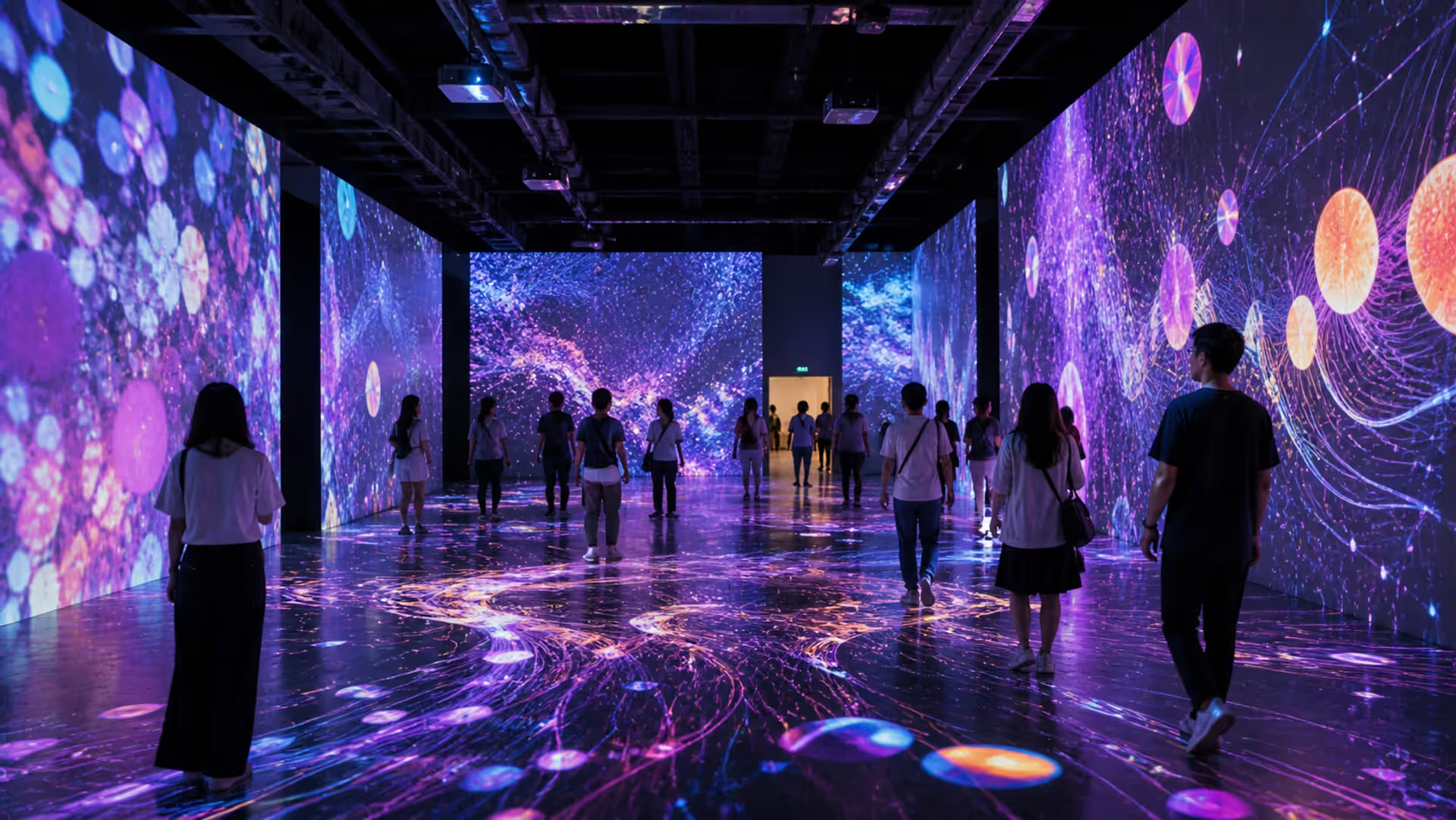
Media arts harnesses electronic technologies and digital tools to create experiences that challenge traditional art forms. From immersive installations to interactive environments, this dynamic field transforms how we perceive and engage with contemporary artistic expression through video, performance, and screen-based work.
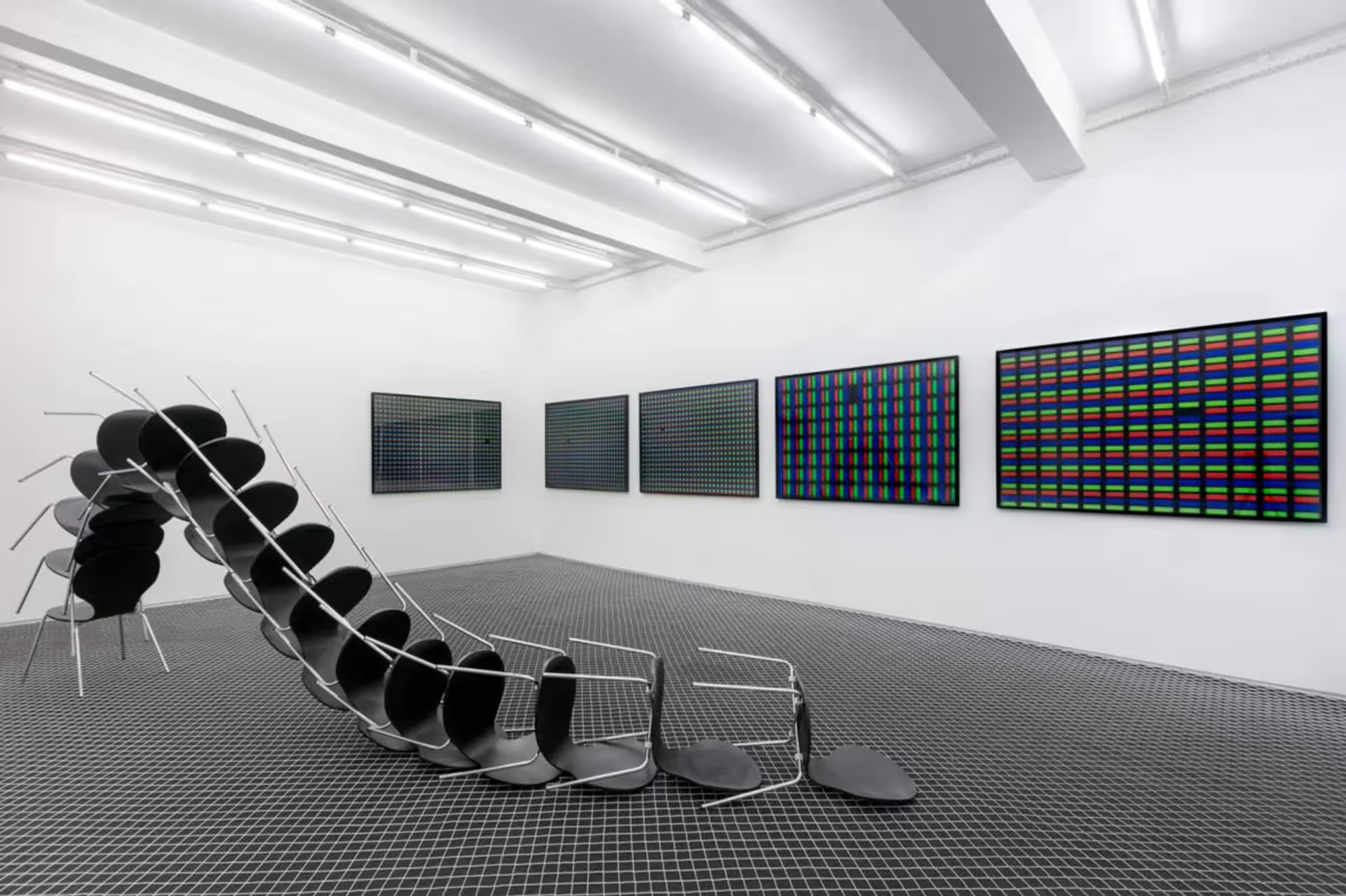
A conceptual artist creates work where the underlying idea holds more importance than the finished physical object. Unlike traditional artists who focus on mastering materials, conceptual artists treat the concept itself as the artwork, with execution serving merely as documentation of the idea.
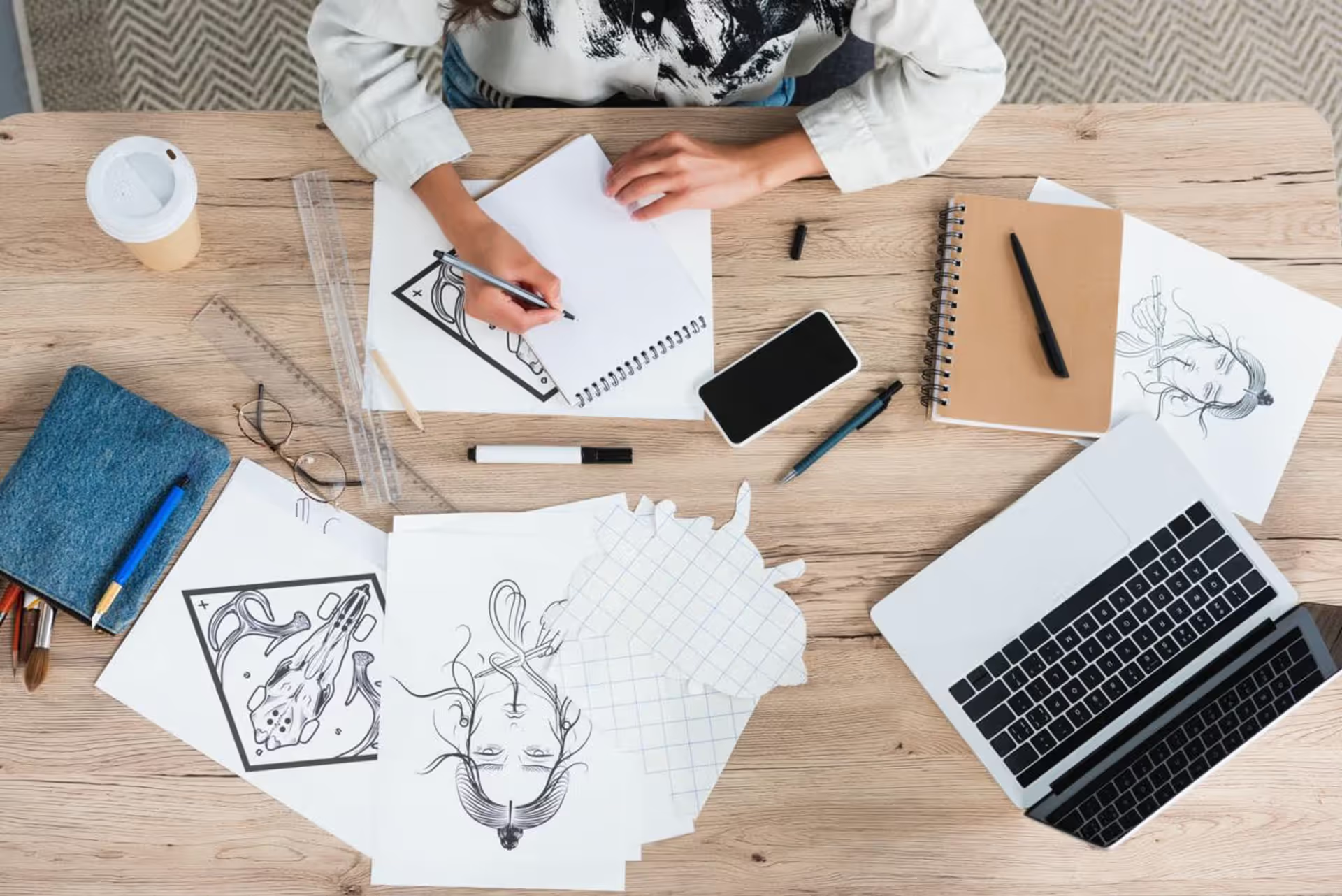
Writing about your artwork feels awkward at first. You're translating visual ideas into sentences that don't sound pretentious. Every art student faces this challenge for applications, portfolios, and exhibitions. See real examples and learn the structure that works.
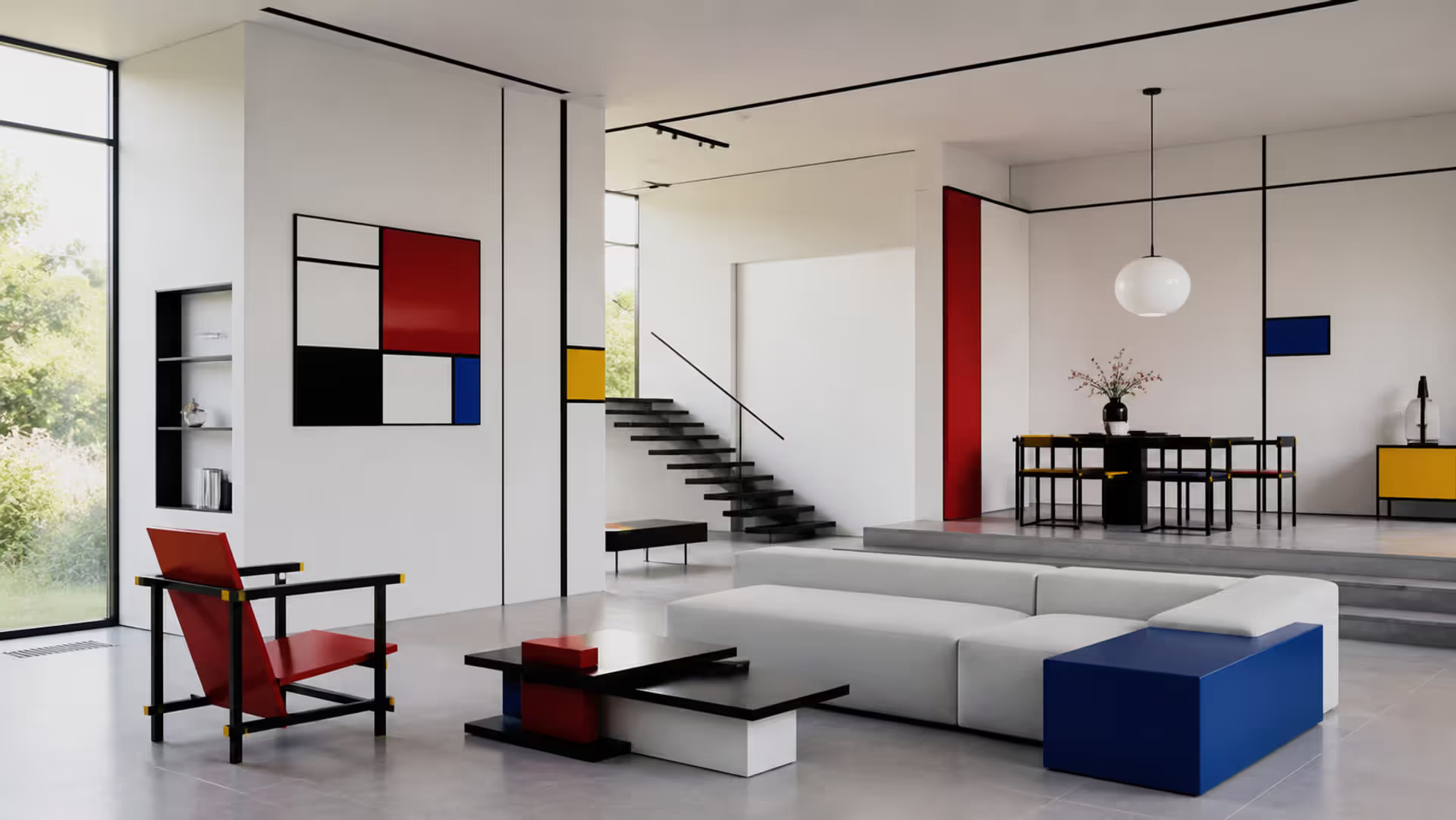
De Stijl emerged in 1917 Netherlands with a radical vision: reduce art to horizontal and vertical lines, primary colors, and geometric forms to reveal universal harmony. This Dutch abstract art movement transformed painting, architecture, and design, creating a visual language that still shapes our world.
The content on this website is provided for general informational and educational purposes only. It is intended to explain concepts related to digital design, visual art, color theory, art techniques, design principles, and design history.
All information on this website, including articles, guides, and examples, is presented for general educational purposes. Creative outcomes may vary depending on individual skill, tools, and practice.
This website does not provide professional design services or guarantee results, and the information presented should not be used as a substitute for formal education or professional consultation.
The website and its authors are not responsible for any errors or omissions, or for any outcomes resulting from decisions made based on the information provided on this website.