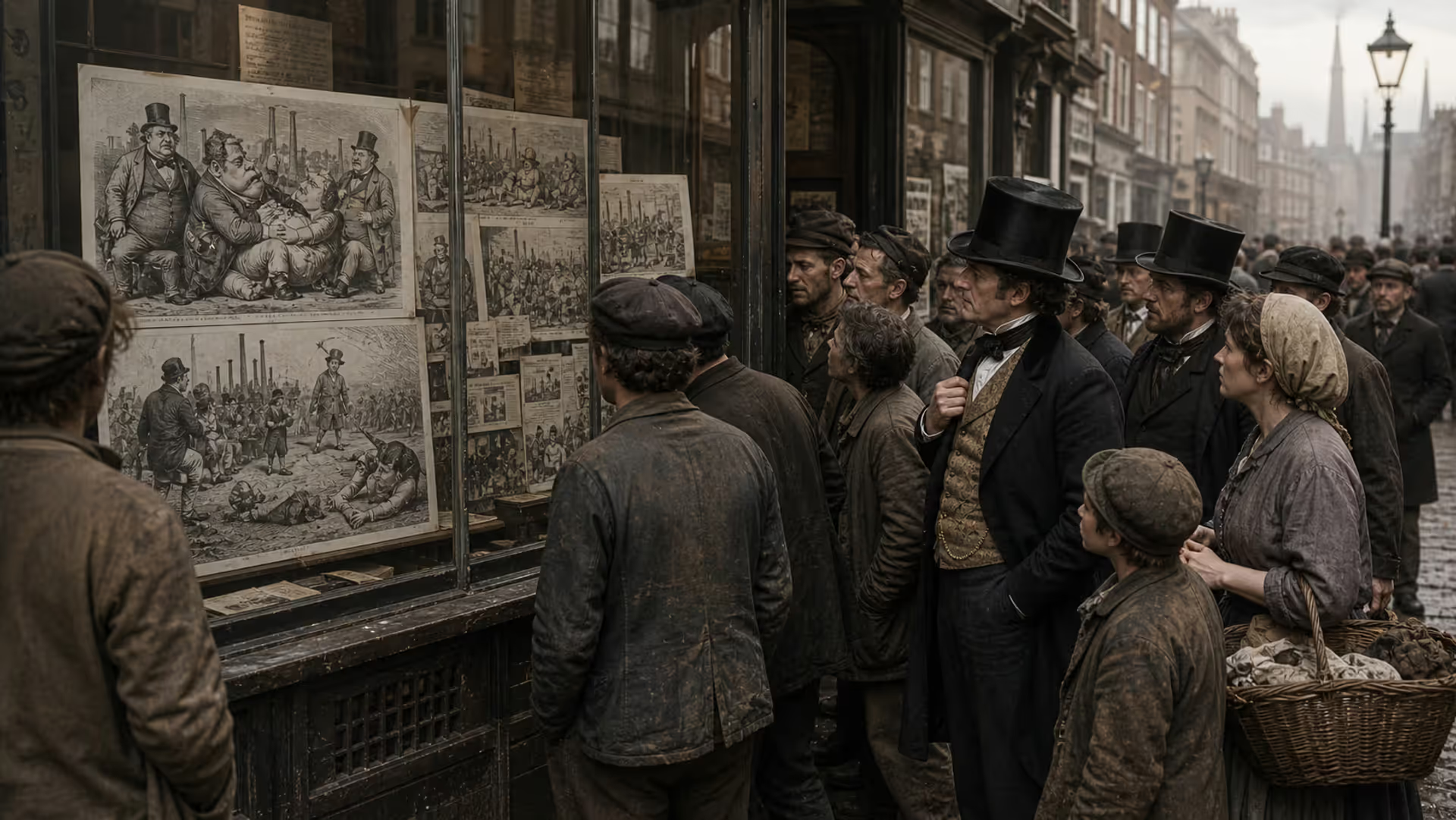
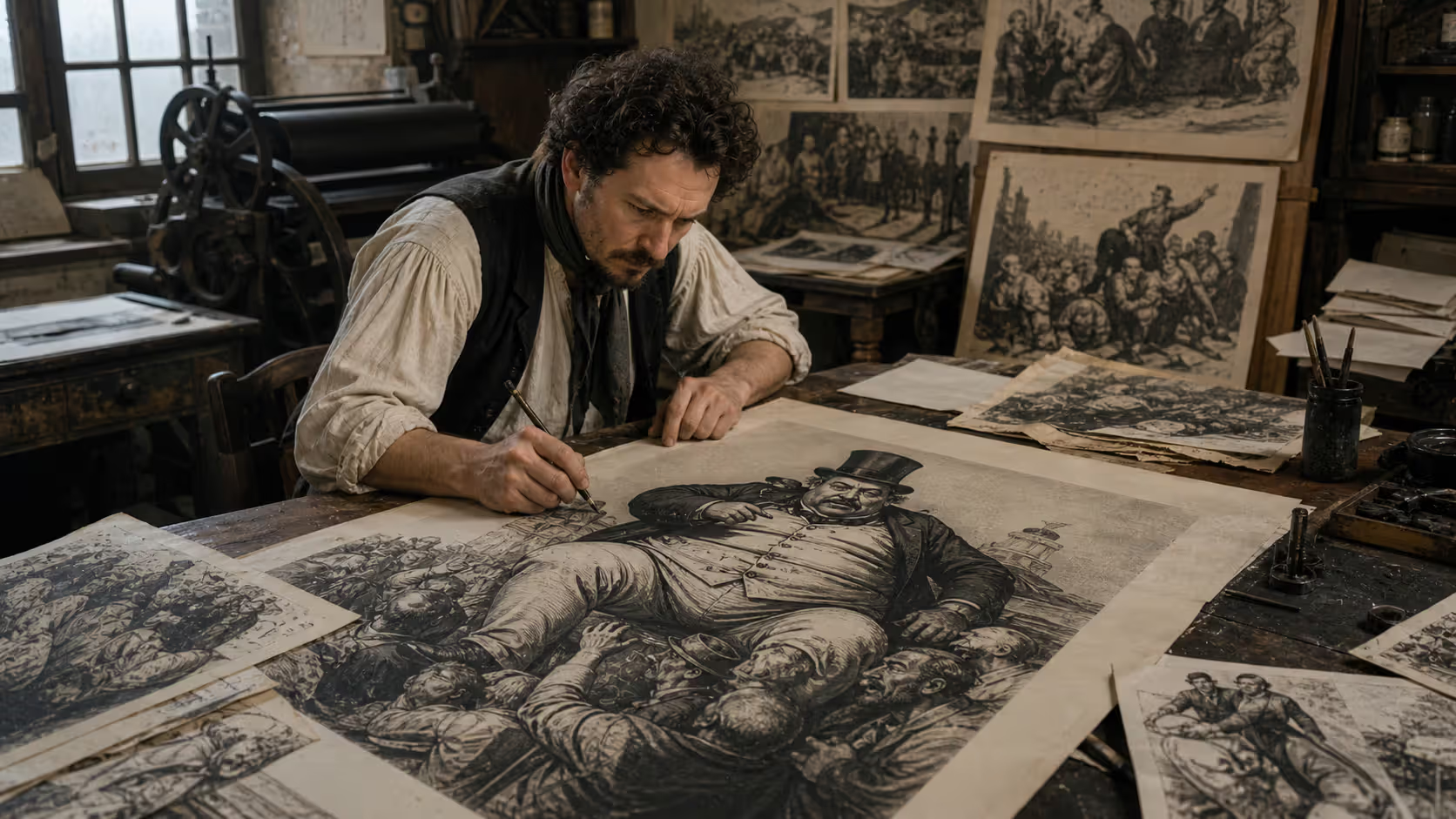
Walk into a London print shop in 1843 and you'd find crowds blocking the window. What drew them? A fresh lithograph showing factory owners as bloated pigs feasting while skeletal workers collapsed at their feet. These weren't just pictures—they were arguments, provocations, sometimes calls to action. And here's what made them revolutionary: the woman selling fish on the corner could grasp the message as quickly as the Member of Parliament riding past in his carriage.
Between 1760 and 1900, political cartoons evolved from gentleman's amusements into weapons that actually wounded. They got cartoonists jailed. They sparked riots. They changed laws. The technology that made this possible—lithography—mattered less than what artists chose to do with it.
Origins of Political Satire During the Industrial Revolution
Political caricature didn't suddenly appear when the first steam engine coughed to life. Satirical prints existed for centuries. But something shifted dramatically between 1760 and 1840. Britain's transformation from agricultural society to industrial powerhouse created both the audience and the ammunition for a new kind of visual attack.
London became the epicenter. By 1820, dozens of print shops lined the Strand and Fleet Street, their windows displaying the latest savage commentary. You'd see crowds gathered there at all hours—apprentices on lunch breaks, clerks heading home, even ladies in carriages slowing down for a peek (though they'd never admit it).
James Gillray figured out the formula before industrialization really accelerated. Working through the 1780s and 1790s, he proved you could make grotesque exaggeration both hilarious and politically devastating. His "Fashionable Contrasts" from 1792 showed the Prince of Wales as obscenely fat while ordinary Britons starved. Subtle? No. Effective? Absolutely.
But Gillray worked primarily with hand-engraved copper plates—slow, expensive, limited. The real explosion came after 1820 when lithography made everything faster and cheaper. William Hogarth had pioneered narrative sequences earlier in the century ("A Rake's Progress," "Marriage A-la-Mode"), showing that images could tell complex moral stories. Industrial Revolution cartoonists grabbed his techniques and weaponized them.
France developed parallel traditions with their own flavor. Charles Philipon launched La Caricature in 1830, then Le Charivari in 1832. Both publications existed specifically to skewer the government. Philipon spent six months behind bars for transforming King Louis-Philippe's face into a pear through four progressive sketches—a visual joke that became a national symbol of contempt. The French authorities kept prosecuting him. He kept publishing. The circulation numbers kept climbing.
Here's why cartoons exploded between 1830 and 1860: traditional politics happened in spaces most people couldn't access. Parliament debates, gentlemen's clubs, university halls. A Manchester textile worker had zero chance of reading transcripts from the House of Commons. But hang a cartoon in a pub or paste one on a wall? Instant political education.
Author: Adrian Lowell;
Source: crafterholic.com
Common Themes in Industrial Revolution Political Cartoons
Child labor haunted these images relentlessly. You'd see drawings of six-year-olds dwarfed by machinery, children with ancient faces, families torn apart by sixteen-hour factory shifts. George Cruikshank's 1832 "Triumph of Steam and Electricity" showed gleaming technology alongside human wreckage—a duality audiences recognized immediately from their own streets.
The wealth gap became visual shorthand. Fat versus thin. That's it. That's the whole argument, and it worked. Honoré Daumier perfected this approach. His factory owners looked ready to explode from gluttony while workers appeared skeletal. No caption needed. His 1834 "Rue Transnonain" showed something different—a murdered working-class family sprawled in their bedroom after government troops massacred protesters. Raw. Unglamorous. People couldn't look away.
Urban squalor gave cartoonists material for decades. Overcrowded tenements where ten families shared one privy. Rivers turned black from factory discharge. Skies permanently gray with coal smoke. These weren't exaggerations—they documented what audiences saw daily in Birmingham, Manchester, Lyon, or Newark.
Labor conditions got specific. Miners trapped in collapsed shafts. Textile workers missing fingers (machinery didn't have safety guards). Children asleep under looms because they couldn't afford to leave. Statistics about industrial accidents numbed readers. A drawing of a specific crushed hand? That stuck in memory.
Political corruption appeared through crude visual metaphors. Politicians literally in bed with industrialists. Government officials as puppets dancing on strings held by factory owners. The cartoonists weren't aiming for subtlety—subtlety got ignored.
Artistic Techniques Used by Political Cartoonists
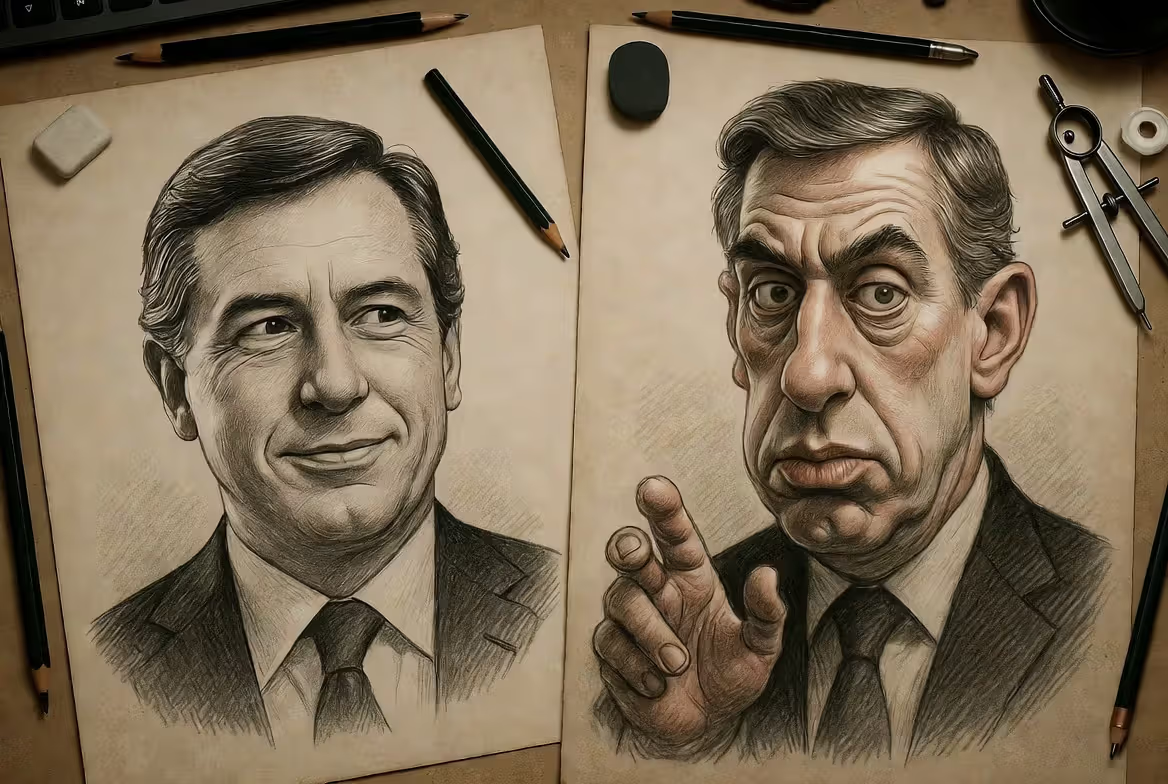
Exaggeration drove everything. Want to show someone's greedy? Make their hands twice normal size, grasping at coins. Need to illustrate powerlessness? Shrink the figure to child-sized proportions. These weren't just stylistic choices—they were rhetorical strategies.
Symbolism worked on multiple levels if you did it right. A broken chain could reference literal slavery, wage slavery, or political bondage depending on context. The skilled cartoonists layered meanings. Surface-level viewers got the basic message. Close observers found additional commentary embedded in background details.
Text appeared everywhere—way more than modern editorial cartoons use. Speech bubbles, labels, explanatory paragraphs surrounding the central image. Why so wordy? Cartoonists wanted zero ambiguity about who they were attacking and why. Also, they were hedging bets against future misinterpretation. A cartoon from 1835 might circulate for years. Context got lost. Labels helped.
Composition mattered enormously. Important figures got placed centrally or elevated. Villains often appeared larger than victims (though sometimes cartoonists reversed this for ironic effect). Background details provided context without overwhelming the main point. The best artists understood you had maybe three seconds to grab attention before viewers moved on.
Author: Adrian Lowell;
Source: crafterholic.com
Lithography and Print Distribution Methods
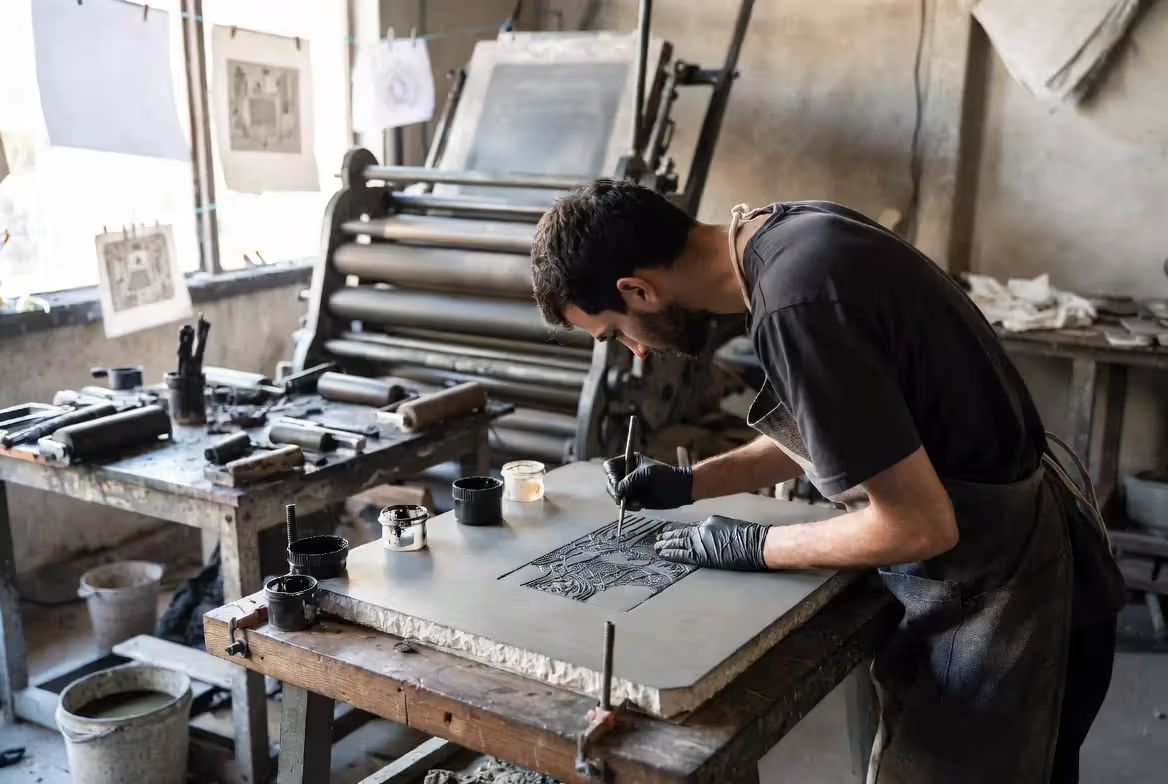
Alois Senefelder invented lithography in 1796, probably not imagining it would become a revolutionary political tool. The process worked through chemical principles: oil and water repel each other. Artists drew on smooth limestone slabs using greasy crayons. Water applied to the stone stuck to unmarked areas. Oily ink rolled across the surface adhered only to the drawn marks. Press paper against the stone and you got a perfect reproduction.
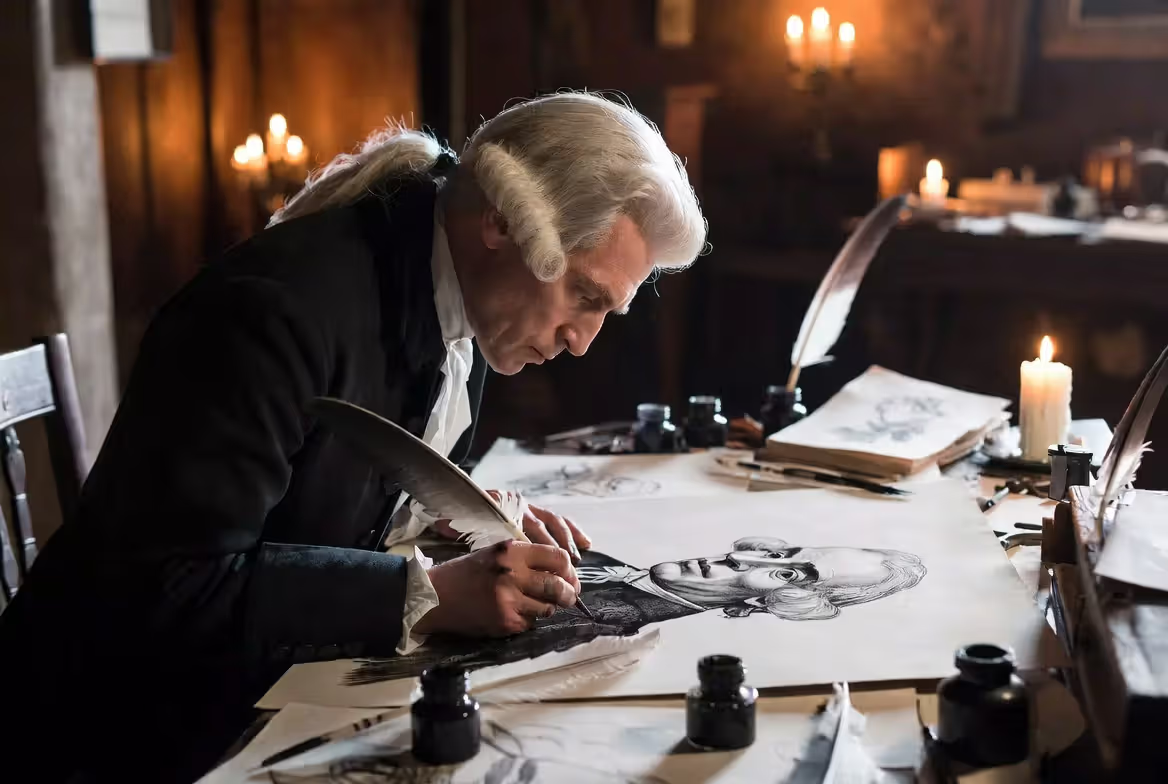
This changed everything about cartoon production. Copper engraving required specialized training and took days per plate. Lithography? An artist could finish a stone in a few hours. Print runs reached thousands from a single stone. Costs dropped from shillings to pennies per copy.
Distribution networks developed quickly. Print shops displayed cartoons in street-facing windows—free viewing for passersby. Street vendors sold individual prints for prices even laborers could afford (though many just memorized the images from window displays). Periodicals incorporated cartoons, reaching subscribers across entire countries. Some publishers created subscription services specifically for political prints, delivering fresh satire weekly.
Speed mattered tremendously. Parliament passes a terrible factory bill on Monday? Cartoon attacking it appears Thursday. This immediacy gave lithographic satire genuine political power. Earlier technologies couldn't match it. By the time an engraved response appeared, the political moment had passed.
Author: Adrian Lowell;
Source: crafterholic.com
Visual Symbolism and Metaphor in Satirical Illustrations
Industrial Revolution cartoonists built a shared symbolic language. Audiences learned to decode it automatically. Factory chimneys meant progress or pollution—you determined which from surrounding context. Chains always meant bondage, whether literal slavery or economic coercion. Scales represented justice, often shown broken or tipped unfairly.
Animals carried specific associations. Lions = Britain. Bears = Russia. Eagles = America or France (depending on era). Pigs = greed. Snakes = treachery. Octopuses became shorthand for monopolies, their tentacles reaching into government, finance, press, everything.
Personification turned abstractions into characters. Justice appeared as a blindfolded woman (often with the blindfold askew, suggesting corruption). Death stalked factory floors as a skeleton. Industry flexed muscles as a powerful laborer. These personifications let cartoonists stage symbolic dramas—Justice confronting Greed, Death claiming Child Laborers, Industry crushed by Monopoly.
Clothing communicated instantly. Top hat = wealthy elite. Rags = poverty. Workers' caps, military uniforms, clerical collars—all identified social position before viewers read anything. Smart cartoonists used clothing to pack extra meaning into every figure.
Position within the frame carried argument. Top = dominance. Bottom = subjugation. Center = importance. Edges = marginalization. These weren't accidents—they were deliberate rhetorical choices reinforcing the cartoon's message through visual grammar.
Notable Political Cartoonists of the Industrial Era
James Gillray (1756-1815) died before industrialization peaked, but his influence shaped every cartoonist who followed. His exaggerations were fearless—King George III got lampooned as savagely as Napoleon. Technical skill in etching set standards that later lithographers would democratize. He proved satirical art could be both commercially successful and politically dangerous.
George Cruikshank (1792-1878) bridged eras and styles. Early work followed Gillray's bawdy, savage approach. Later pieces evolved toward serious social reform advocacy. His illustrations for Dickens blurred boundaries between literary art and political commentary. The 1848 series "The Drunkard's Children" used sequential images to construct narratives about industrialization's social costs—alcoholism, prostitution, suicide.
Honoré Daumier (1808-1879) remains the era's artistic giant. Over 4,000 lithographs for French periodicals combined technical mastery with savage critique. Authorities jailed him for depicting Louis-Philippe as Gargantua devouring France's wealth. Released, he kept attacking. His series on lawyers, politicians, and the bourgeoisie created an unmatched visual record of 19th-century French society.
What separated Daumier from contemporaries? Range. He could produce simple, bold images for immediate impact or complex compositions rewarding sustained examination. His understanding of anatomy and movement brought unusual sophistication. Museums now display his lithographs alongside paintings and sculptures—recognition of their artistic merit beyond historical documentation.
Thomas Nast (1840-1902) transplanted European techniques to American soil. Working primarily for Harper's Weekly, he created symbols we still use: Democratic donkey, Republican elephant, modern Santa Claus. His campaign against Boss Tweed's political machine demonstrated cartoons' power to destroy corruption. Tweed allegedly said, "Stop them damn pictures. I don't care what the papers write about me. My constituents can't read. But damn it, they can see pictures."
Nast mastered wood engraving rather than lithography—more laborious but better suited to newspaper reproduction. His Civil War and Reconstruction work applied satirical illustration to uniquely American conflicts. Technical skill produced remarkably detailed images that maintained impact even when printed small.
John Tenniel (1820-1914) created over 2,000 cartoons as Punch magazine's principal political cartoonist from 1850 to 1901. Five decades documenting Victorian Britain's industrial and imperial expansion with consistent quality. Tenniel favored clarity over exaggeration, making his work accessible while maintaining dignity. His most famous non-political work—illustrations for "Alice in Wonderland"—used similar visual logic.
John Leech produced gentler satire for Punch, reaching middle-class audiences uncomfortable with Daumier's savagery. Gustave Doré's London slum illustrations combined artistic ambition with social documentation, though he's better remembered for literary illustrations.
Author: Adrian Lowell;
Source: crafterholic.com
How Political Cartoons Influenced Public Opinion and Reform
Political cartoons functioned as democracy's most accessible form during this era. Their influence worked through overlapping mechanisms that amplified each other.
Visual accessibility bypassed literacy barriers completely. A woman who couldn't read pamphlets about factory reform instantly understood a cartoon showing children crushed by machinery. This democratic quality gave cartoons unique power—everyone got the message simultaneously, regardless of education.
Emotional impact exceeded written arguments. A well-executed cartoon provoked visceral reactions: fury at injustice, sympathy for victims, contempt for villains. These emotional responses motivated action better than rational debate. Reformers understood this instinctively, commissioning cartoons to support legislative campaigns.
Britain's 1832 Reform Act benefited from sustained cartoon campaigns depicting rotten boroughs and parliamentary corruption. Did cartoons alone pass the legislation? No. But they shaped discourse and created pressure politicians couldn't ignore. Abstract constitutional issues became concrete and urgent through visual commentary.
Labor movements embraced cartoons as organizing tools. Union publications featured illustrations contrasting solidarity's strength with isolation's weakness. These images reinforced verbal arguments at meetings and rallies. A worker might forget wage theft statistics but remember the cartoon showing a fat capitalist's pockets overflowing with coins stolen from empty-handed laborers.
Child labor reforms in Britain and America gained momentum partly through sustained visual campaigns. Cartoons showing children maimed by machines or aged by exhaustion created moral urgency that dry reports couldn't match. Combined with investigative journalism and personal testimony, these images helped shift public opinion toward regulation.
Cross-class reach gave cartoons unusual influence. A single image might appear in an expensive periodical, a cheap broadsheet, and a union newsletter—reaching aristocrats, reformers, and workers simultaneously. This circulation created shared visual vocabulary for discussing industrial society's problems.
Censorship attempts paradoxically increased impact. When governments prosecuted cartoonists, they confirmed the images' power and generated publicity. Daumier's imprisonment made him a martyr and boosted demand for his work. Publishers learned to navigate censorship creatively, using symbolism and indirection when necessary.
Comparing Industrial Revolution Cartoons to Modern Editorial Cartoons
Potentially millions through viral sharing and reposting
Production time
Several hours to days for creation, hours for printing
Minutes to hours for creation, instant global distribution
The comparison reveals continuity alongside transformation. Core purposes remain consistent—criticize power, advocate reform, make complex issues accessible. Technology has fundamentally altered how cartoonists work and reach audiences.
Industrial Revolution cartoonists needed technical skills in lithography or engraving. Modern cartoonists work primarily digitally, though some maintain traditional techniques for aesthetic reasons. Entry barriers have dropped—anyone with illustration software can create and distribute political cartoons globally.
Distribution speed represents the most dramatic shift. A 19th-century cartoon might take days to reach audiences across a city, weeks to cross oceans. Modern cartoons achieve global reach within minutes through social media. This immediacy increases relevance but shortens lifespan—yesterday's viral cartoon is today's forgotten scroll.
Editorial cartooning as an art form faces different challenges now. Digital abundance means individual images compete with millions of others. Standing out requires exceptional quality or algorithmic luck. Industrial Revolution cartoons benefited from relative scarcity—fewer images meant each received more attention.
Censorship evolved rather than disappeared. Direct government prosecution is rarer in democracies (though the 2015 Charlie Hebdo massacre showed cartooning still carries genuine risks). Economic pressure, platform policies, and self-censorship create new constraints. Getting fired is more common than getting jailed.
Artistic techniques show both continuity and innovation. Exaggeration, symbolism, visual metaphor remain central. But modern cartoonists incorporate photography, animation, interactive elements impossible in print-only eras. Some blend traditional drawing with digital tools, maintaining hand-drawn aesthetics while exploiting digital efficiency.
The political cartoon during the Industrial Revolution became the first truly democratic art form, speaking simultaneously to the illiterate factory worker and the educated parliamentarian. These images didn't merely reflect social tensions—they actively shaped public discourse and contributed materially to reform movements that transformed industrial society.
— Dr. Patricia Anderson
Frequently Asked Questions About Industrial Revolution Political Cartoons
What was the purpose of political cartoons during the Industrial Revolution?
Multiple purposes operated simultaneously. Cartoonists documented social conditions while criticizing powerful institutions. They advocated for specific reforms—factory regulations, voting rights, welfare programs—while entertaining audiences who bought prints or magazines. Reform movements deployed cartoons as propaganda tools to build public support. Commercial publishers sold cartoons for profit, creating economic incentives that aligned with social criticism. The most effective cartoons balanced artistic quality, political impact, and commercial viability. Unlike written arguments requiring literacy and sustained attention, cartoons communicated instantly to viewers across all educational backgrounds—illiterate workers absorbed the same messages as educated parliamentarians.
Who were the most famous political cartoonists of the Industrial Revolution?
Honoré Daumier stands above the rest for artistic achievement and social impact. His 4,000+ lithographs documented French society during rapid industrialization with technical mastery and fearless criticism. Authorities jailed him—he kept publishing. George Cruikshank bridged Georgian and Victorian eras, evolving from crude satire to serious reform advocacy. Thomas Nast transplanted European traditions to America, creating enduring political symbols (Democratic donkey, Republican elephant) while exposing Tammany Hall corruption. James Gillray, working primarily before peak industrialization, established techniques everyone else adopted. John Tenniel spent five decades at Punch magazine, creating an unmatched visual record of Victorian Britain. Each developed distinctive styles while sharing commitment to social commentary through accessible visual language.
How were political cartoons printed and distributed in the 1800s?
Lithography dominated after 1820. Artists drew directly on smooth limestone slabs using greasy crayons. The chemical process—based on oil and water repelling each other—enabled printing thousands of copies from a single stone. Earlier copper engraving methods required more specialized skills and took much longer, limiting production. Print shops displayed cartoons in street-facing windows where anyone could view them without buying. Street vendors sold individual prints for pennies, prices affordable even to workers (though many just memorized images from free window displays). Periodicals incorporated cartoons, reaching subscribers through postal distribution networks. Some publishers ran subscription services specifically for political prints, delivering fresh satire weekly or monthly. The combination of cheap production, multiple distribution channels, and strategic placement in high-traffic areas maximized audience reach across social classes.
What symbols were commonly used in Industrial Revolution political cartoons?
Cartoonists built a shared symbolic vocabulary audiences learned to decode. Chains represented bondage—both literal slavery and wage labor's economic constraints. Factory chimneys symbolized industrial progress or environmental destruction depending on surrounding context. Animals carried specific associations: British lions, Russian bears, greedy pigs, grasping octopuses (representing monopolies with tentacles reaching everywhere). Personified abstractions appeared as recognizable characters—Justice as a blindfolded woman, Death as a skeleton stalking factories, Industry as a muscular laborer. Clothing instantly communicated social position: top hats signaled wealth, rags indicated poverty, specific uniforms identified occupations. Scales suggested justice or its corruption. Broken machinery indicated industrial accidents. Overflowing moneybags represented greed. Physical position within frames reinforced hierarchies—figures on top dominated those below. These symbols allowed complex political commentary through immediately recognizable visual shorthand.
Were political cartoonists censored during the Industrial Revolution?
Censorship was common and often brutal. Honoré Daumier served six months in prison for depicting King Louis-Philippe as Gargantua devouring public wealth. Charles Philipon faced constant prosecution for his French satirical publications. British cartoonists navigated complex libel laws and potential prosecution for sedition or obscenity charges. Governments used licensing requirements, publication taxes (designed to price out working-class audiences), and direct legal action to suppress critical cartoons. Publishers developed evasion strategies—using symbolism instead of direct representation, publishing anonymously, operating from jurisdictions with fewer restrictions. Paradoxically, prosecution often increased cartoons' impact by generating publicity and confirming their power to wound. Censorship threats shaped artistic choices, encouraging clever indirection that sometimes proved more effective than blunt criticism.
How did political cartoons contribute to labor reform movements?
Labor movements adopted cartoons as essential organizing tools. Visual images communicated exploitation's reality to workers with limited literacy while also reaching middle-class reformers and politicians whose support mattered for legislative change. Union publications featured cartoons contrasting solidarity's strength with isolation's weakness, reinforcing verbal arguments with memorable images. Campaigns for specific reforms—limiting work hours, banning child labor, improving factory safety—deployed cartoons to create moral urgency that statistics couldn't generate. An image of children maimed by machinery provoked emotional responses facts alone never matched. Cartoons appeared at rallies, in pamphlets, on posters, maintaining visibility for reform causes between major events. They simplified complex economic arguments into clear moral narratives: greedy owners versus suffering workers. This emotional, visual approach complemented factual investigations and personal testimonies, creating multi-faceted campaigns that gradually shifted public opinion and enabled legislative victories.
Industrial Revolution political cartoons represent a moment when art, technology, and social criticism converged to create unprecedented democratic discourse. Lithography's invention provided technical means for mass distribution. Rapid industrialization supplied urgent subject matter and concentrated urban audiences. Cartoonists developed visual languages that transcended literacy barriers, making complex political and economic issues accessible to everyone.
The legacy extends beyond historical documentation. These cartoons established techniques and traditions still shaping political communication in 2025. Modern editorial cartoonists continue employing exaggeration, symbolism, visual metaphor—tools refined during the Industrial Revolution. The fundamental purpose persists: translating abstract issues into concrete images that provoke emotional responses and motivate action.
Understanding this history enriches appreciation for contemporary political cartoons while illuminating how visual communication shapes democratic societies. Those factory workers who studied cartoon-filled print shop windows in 1840s London participated in political discourse previously reserved for elites. That democratization of political conversation—facilitated by skilled artists and new technologies—represents one of the Industrial Revolution's most significant but underappreciated transformations. The images these cartoonists created continue speaking across centuries, documenting both the era's brutal inequalities and the persistent human impulse to challenge injustice through art.
Media arts harnesses electronic technologies and digital tools to create experiences that challenge traditional art forms. From immersive installations to interactive environments, this dynamic field transforms how we perceive and engage with contemporary artistic expression through video, performance, and screen-based work.
A conceptual artist creates work where the underlying idea holds more importance than the finished physical object. Unlike traditional artists who focus on mastering materials, conceptual artists treat the concept itself as the artwork, with execution serving merely as documentation of the idea.
Text message art transforms written language into visual compositions. From ASCII characters to monumental installations, artists use typography, concrete poetry, and calligraphy to create work where words function as both message and image, challenging traditional boundaries between reading and viewing.
Writing about your artwork feels awkward at first. You're translating visual ideas into sentences that don't sound pretentious. Every art student faces this challenge for applications, portfolios, and exhibitions. See real examples and learn the structure that works.
The content on this website is provided for general informational and educational purposes only. It is intended to explain concepts related to digital design, visual art, color theory, art techniques, design principles, and design history.
All information on this website, including articles, guides, and examples, is presented for general educational purposes. Creative outcomes may vary depending on individual skill, tools, and practice.
This website does not provide professional design services or guarantee results, and the information presented should not be used as a substitute for formal education or professional consultation.
The website and its authors are not responsible for any errors or omissions, or for any outcomes resulting from decisions made based on the information provided on this website.