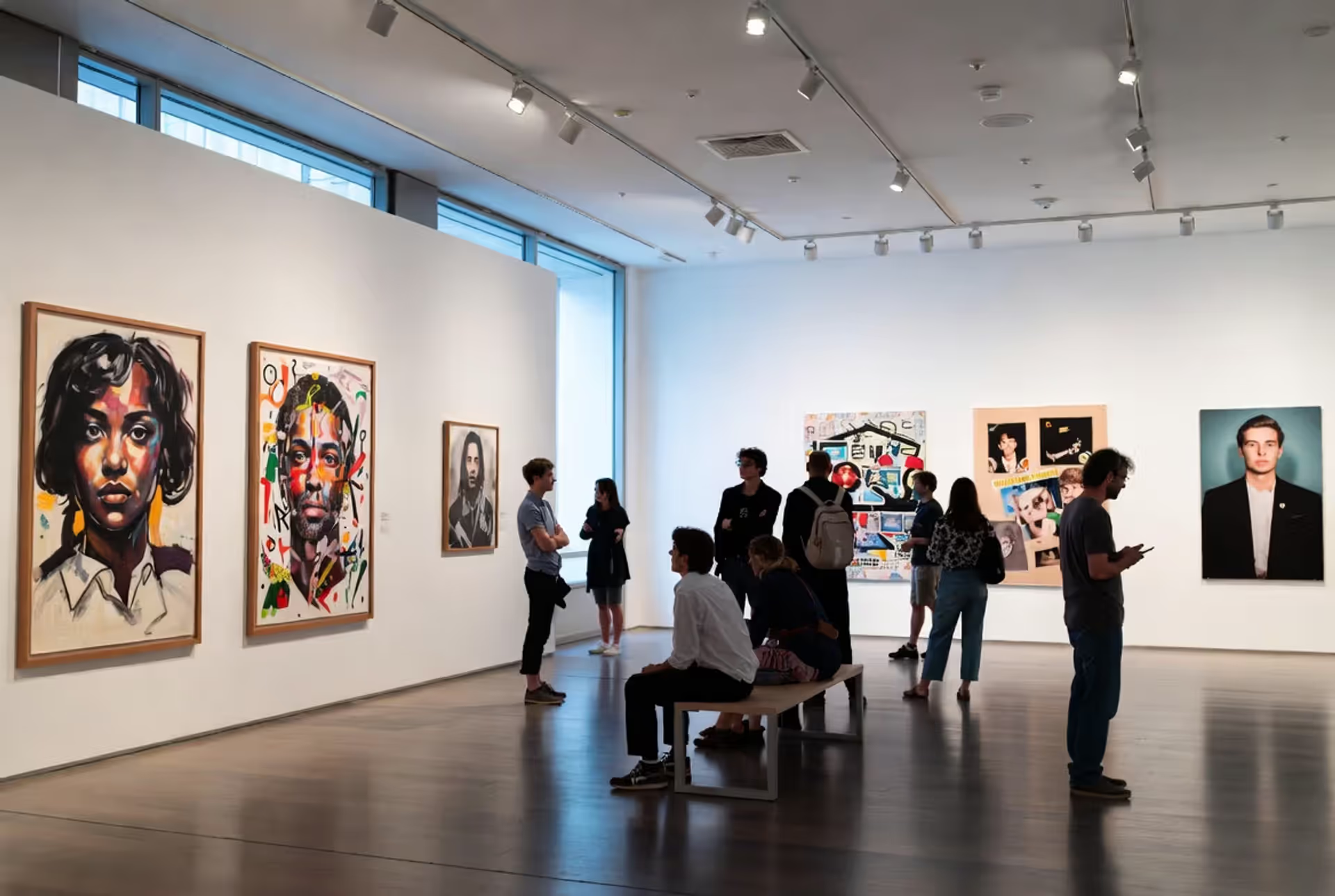
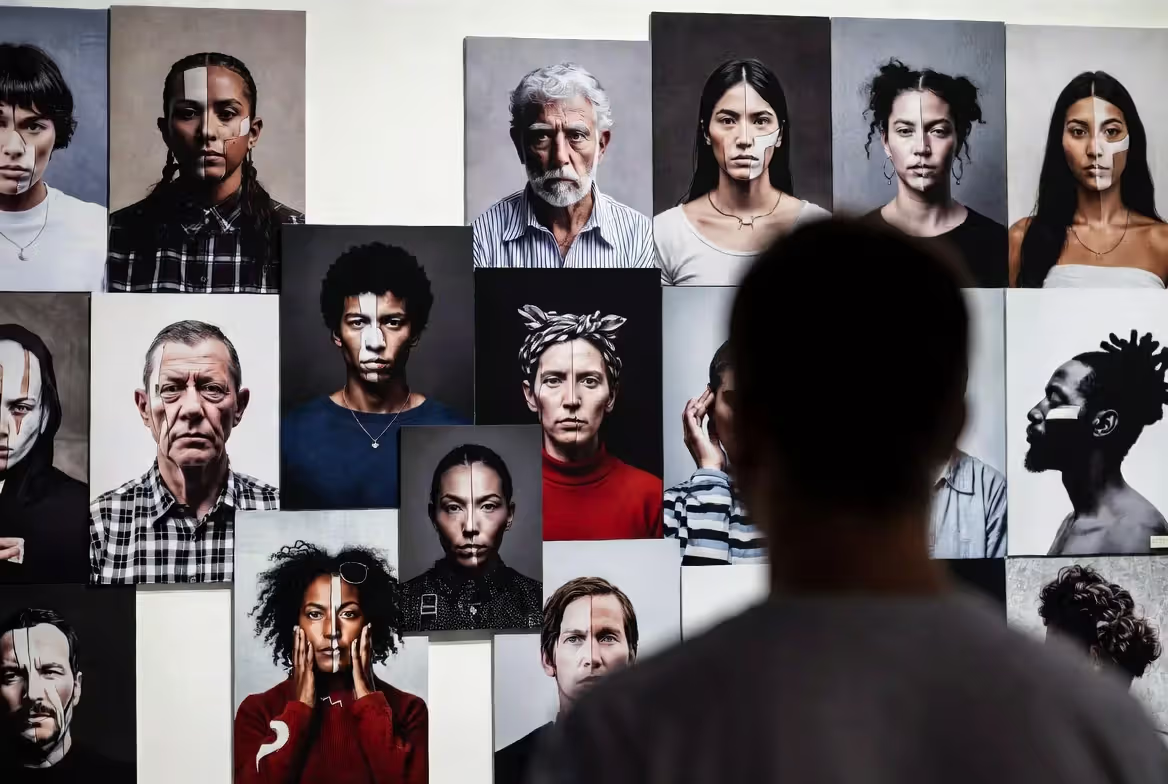
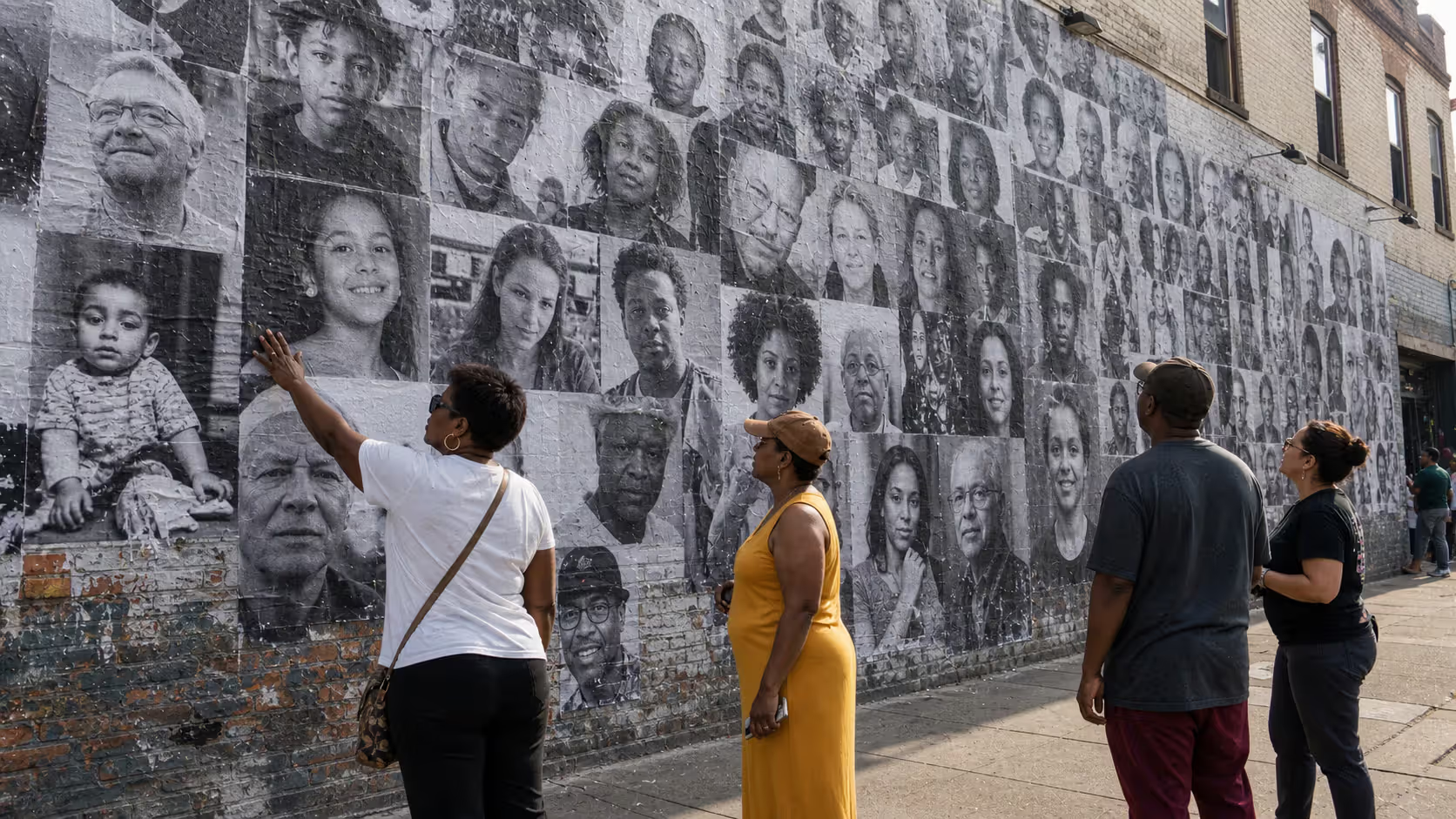
Walk into any contemporary gallery and you'll spot work where the artist isn't just making something beautiful—they're asking "who am I?" out loud. Sometimes it's a 9-foot painting of a Black woman in Renaissance robes. Other times it's a photo series documenting someone's transition. Maybe it's a mural covering an entire city block with portraits of neighborhood elders.
This is identity art. And it's everywhere right now for good reason.
What Is Identity Art and Why Does It Matter
Identity art is visual work examining who someone is—or who they're becoming. Could be about race, gender, where your family came from, your religion, your body, your community. Could be all of those at once.
Here's what makes it different from other art: it's got a specific job to do. Regular landscape painting might explore color and light. Identity work explores you—and uses that exploration to say something that matters about being human.
Think about personal identity in visual art this way. When Zanele Muholi photographs LGBTQ+ South Africans, those images do three things simultaneously. They document real people who rarely appear in media. They challenge viewers' assumptions. And they tell the subjects "you exist, you matter, I see you." That third function—validation—doesn't happen with a still life of apples.
Visual self expression through this kind of work counters a specific problem in 2026. Social media algorithms show us narrow versions of identity. You're either this or that. You fit this box or that one. Artists push back by creating work that says "actually, I'm six contradictory things before breakfast, and that's normal."
A designer in Los Angeles—third-generation Mexican-American—creates posters mixing Aztec patterns with punk rock aesthetics and Silicon Valley tech fonts. That's not confused. That's accurate. That's what life looks like when you contain multitudes.
Subjective identity in art also matters because someone needs to document how we live right now. In 2075, historians will study today's identity-focused artwork to understand 2020s culture. How did people think about gender back then? What did immigrant artists create while detention policies kept changing? The paintings and photographs become evidence.
Author: Olivia Hartwell;
Source: crafterholic.com
How Artists Explore Personal and Cultural Identity
Self-Portraiture Techniques in Contemporary Design
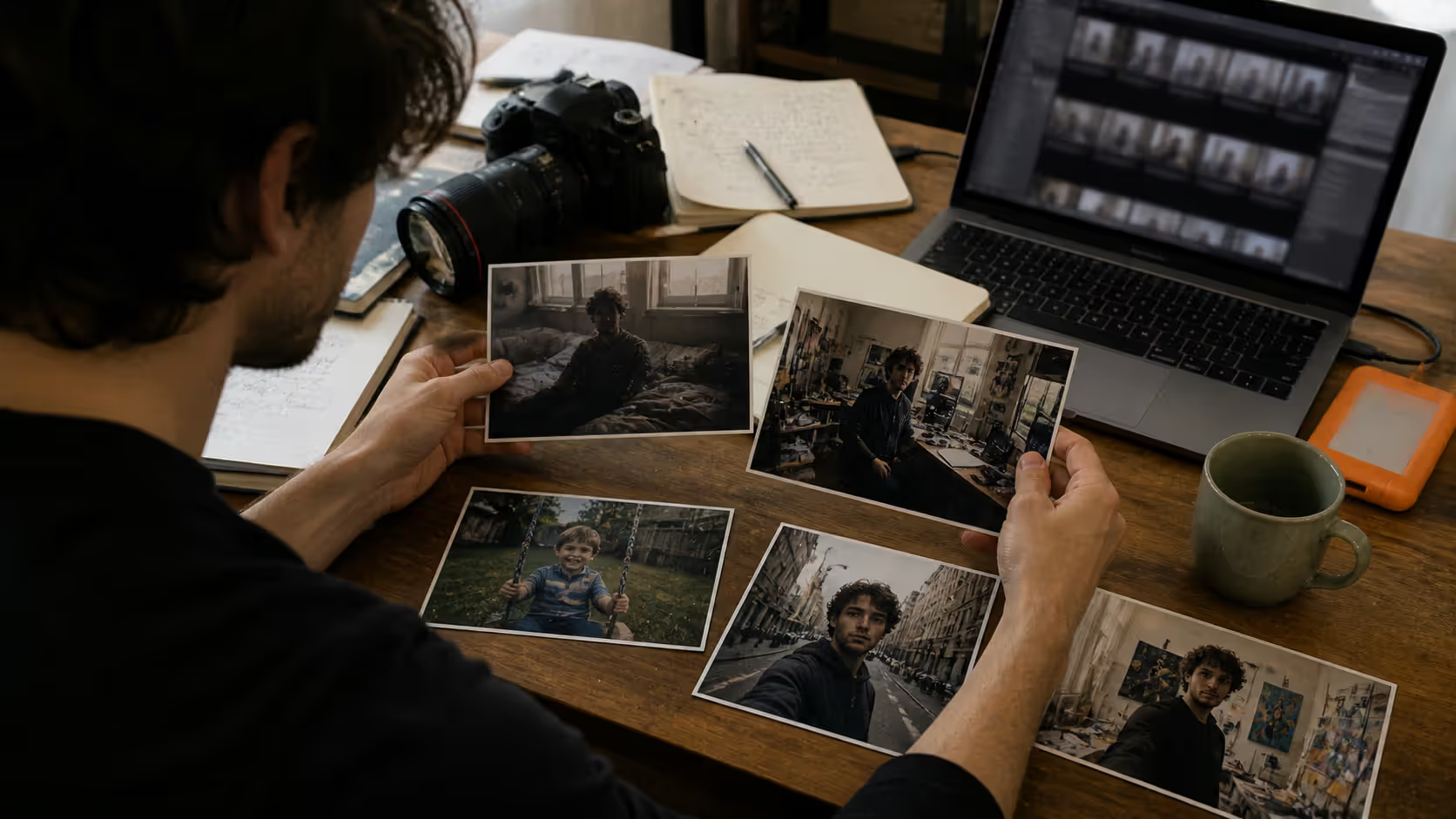
Self-portraiture in design doesn't mean just taking selfies (though some artists absolutely use selfies as raw material). Contemporary approaches treat your own image as a starting point for investigation.
Try this: photograph yourself in five different locations over one week. Your bedroom at 6am. Your workplace at noon. A place you've never been. A place from childhood. A location representing who you want to become. Don't smile or pose—just stand there. When you see all five together, you're looking at how environment shapes self-perception. That's identity work.
Graphic designers often skip their physical appearance entirely. There's a Berlin-based designer who creates self-portraits using only typography. Blackletter Gothic fonts represent her German heritage. Rounded sans-serifs show her personality around friends. Strict geometric type reflects her perfectionism at work. Each "portrait" is just arranged text, but you learn more about her than a photograph would reveal.
Digital layering creates particularly rich possibilities. Scan your birth certificate, passport photo, childhood drawings, screenshots from important text conversations, and your fingerprint. Layer them all semi-transparently in Photoshop. Suddenly you're looking at accumulated identity—all the documents and moments that built who you are, visible simultaneously.
Using Symbols and Narrative to Express Cultural Background
Cultural identity expressed through art gets tricky. You want to reference your heritage without making it feel like a costume or a cliché.
Bad approach: "I'm Irish, so here's a shamrock painting." That's tourism.
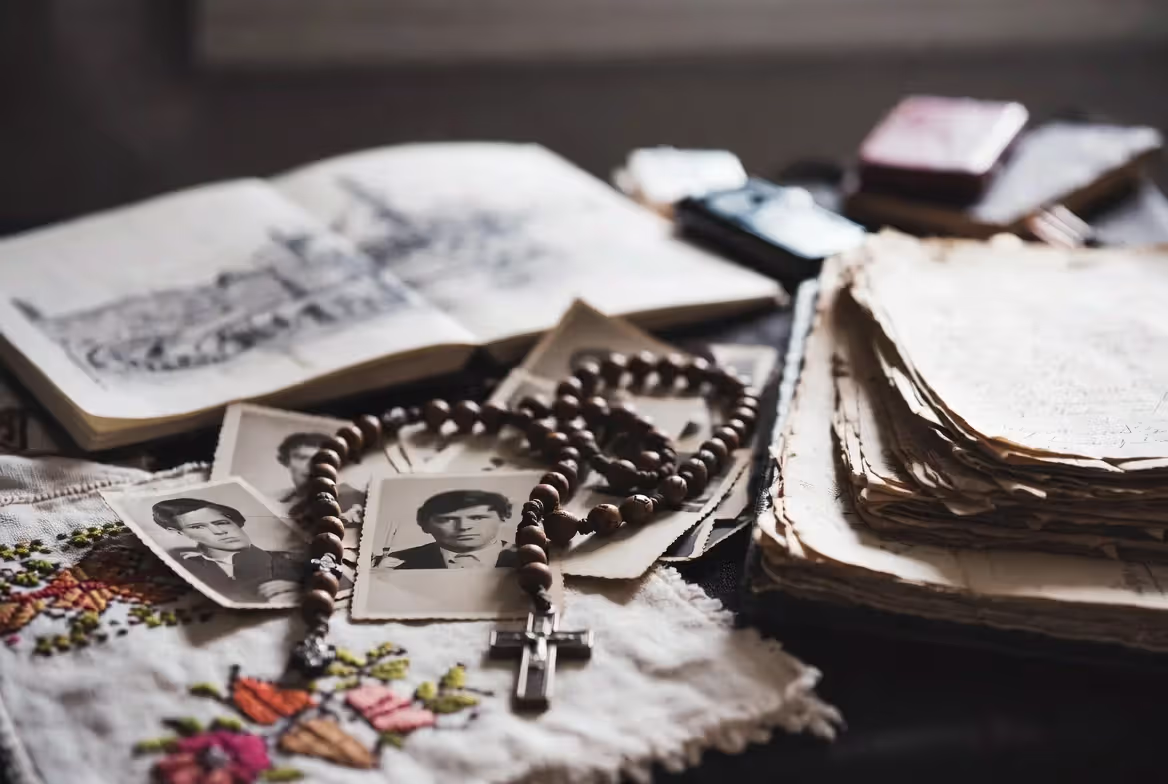
Better approach: "My grandmother kept this specific rosary in her apron pocket for 40 years. The beads wore smooth in particular places where her fingers always held them. I'm going to photograph those exact wear patterns and enlarge them to wall-size, so you can see how prayer literally reshapes objects over time." Now we're somewhere interesting.
Narrative identity in art builds stories across multiple pieces. Consider Shaun Leonardo, who creates drawings and performances about his experience as a first-generation Filipino-American navigating masculinity expectations. One series shows wrestling poses his uncles taught him. Another documents street fights from his teenage years. Together they tell a story about inherited ideas of manhood and his struggle to redefine them.
The most powerful cultural work finds personal angles on broader themes. Instead of "Mexican culture involves Day of the Dead," try "my aunt makes these specific sugar skulls every November, and she taught me when I was eight, and I still can't get the icing roses right, and that failure connects me to tradition as much as success would."
Author: Olivia Hartwell;
Source: crafterholic.com
Community-Based Identity Projects
Community identity in art recognizes that you're not just an individual—you're part of groups that shape you.
JR, the French photographer, plasters enormous portraits of community members on buildings in their own neighborhoods. He photographed women in a Brazilian favela, then pasted their 30-foot-tall faces on hillside houses. Suddenly these women—usually invisible to outsiders—become literally unmissable. The project changed how residents saw themselves and their neighbors.
Participatory approaches work well here. Instead of making art about a community, you make it with them. An artist in Minneapolis gave disposable cameras to Somali refugee teenagers and said "show me your city." The resulting photos revealed a version of Minneapolis that longtime residents had never seen—specific halal shops, basketball courts where Somali and African-American kids played together, a house where ten families cooked communal meals.
Online platforms now enable diaspora communities to build collective identity archives. There's a website where Korean adoptees raised outside Korea share photos of how they connect with heritage—attempts at cooking traditional dishes, screenshots of Korean lesson apps, pictures of their non-Korean families. Individually, these seem small. Together, they map a shared experience of cultural disconnection and reconstruction.
Author: Olivia Hartwell;
Source: crafterholic.com
Common Themes in Identity-Focused Artwork
Portrait and identity theme work often starts with a gap. "I never saw anyone who looked like me depicted this way, so I'll do it myself."
Kehinde Wiley painted that gap. He noticed Old Master paintings showed European aristocrats in heroic poses—fancy clothes, dramatic backgrounds, power radiating from every brushstroke. Where were contemporary Black men painted that way? Nowhere. So he created that work, placing young Black men in positions typically reserved for dead European royalty.
Heritage exploration drives tons of identity work, especially for people whose families immigrated. You grow up between worlds. Too American for your parents' friends back home. Too "ethnic" for some Americans. Your art ends up visualizing that in-between space—creating hybrid images that refuse to pick a side.
Gender and social identity themes have exploded recently because traditional categories collapsed for many people. If you don't fit "man" or "woman" neatly, how do you visualize your experience? Artists use morphing figures, layered images showing the same person in different gender presentations, or abstract work where gender becomes irrelevant.
Displacement and belonging matter intensely right now. Climate change creates refugees. Political instability forces migration. People lose access to homelands. Identity exploration through art often involves reconstructing "home" from memory—creating imagined landscapes that combine features from multiple places, because home isn't a single location anymore.
Intersectionality—how your various identities interact—provides endless creative territory. You're not just Black or just queer or just working-class. You're all of those simultaneously, and they affect each other. Artists might create work where visual elements representing different identity aspects literally overlap and change each other's colors, showing how this actually works in lived experience.
Visual Techniques for Representing Identity
Color choices carry weight in identity work. Sometimes it's obvious—using your country's flag colors. Sometimes it's subtle research. Say you're exploring Indian heritage. You discover traditional Holi festival colors, natural dyes used in specific regions, colors worn during particular ceremonies. You build a palette from those. Now even abstract work carries cultural DNA.
Composition tells power stories. Art history positioned certain people in certain ways for centuries. The powerful: centered, eye-level, taking up space. The marginalized: edges, backgrounds, cropped. Flipping these conventions makes statements. Putting a disabled subject dead-center in heroic scale says "this person matters" without a single word.
Mixed media suits identity's messiness. You can't capture a whole person in one medium. Try combining painting with embroidery using thread from your grandmother's sewing kit. Add collaged family photos. Include found objects—your old ID cards, ticket stubs from significant journeys, fabric from clothes you wore during important moments. Physical materials carry memory in ways pure painting doesn't.
Typography in design-based identity work does heavy lifting. Fonts signal so much—formality, tradition, rebellion, joy. Bilingual artists create especially interesting work here. Make one language dominant and another barely visible, showing how your heritage language occupies less space in daily life than English. Or layer two alphabets together until they become one hybrid script that doesn't exist in real life but perfectly represents your bicultural brain.
Photography offers two main paths. Documentary realism captures identity as actually lived—unposed moments from daily life, your real workspace, genuine community gatherings. Staged photography shows identity as imagined or aspirational—putting yourself in scenarios representing internal reality rather than external circumstances.
Digital versus traditional methods each do different work. Digital tools let you revise endlessly, layer infinitely, create impossible hybrid forms. Traditional methods—painting, sculpture, printmaking—require physical commitment. Some artists find that sustained physical engagement with materials helps process identity questions more deeply than screen-based work. Plenty combine both.
Identity art turns private experience into public evidence: it shows not only who an artist is, but what their culture has made visible or invisible.
— Dr. Maya Ellison, Art Historian
Notable Artists Working with Identity Themes
Kehinde Wiley changed portraiture by borrowing compositions from European masterworks and replacing their subjects with contemporary Black people. His 2018 painting of President Obama broke with every presidential portrait tradition—informal pose, no desk, surrounded by flowers representing Chicago, Kenya, and Hawaii.
He's said that traditional Western art excluded Black subjects from positions of power and beauty, so he corrects that historical record through contemporary work. Every painting asks "what if Black people had always been painted with this dignity?"
Carrie Mae Weems uses photos and text to examine African-American life. Her 1990s "Kitchen Table Series" showed herself at her kitchen table in various scenarios—playing cards, with her daughter, with lovers, alone. Simple domestic scenes became profound examinations of Black women's autonomy, relationships, and self-definition. The work proved that one woman's specific kitchen could contain universal truths about identity.
Zanele Muholi calls themselves a visual activist rather than artist. They photograph LGBTQ+ South Africans, creating an archive of people often erased from official histories. Their "Somnyama Ngonyama" self-portraits show Muholi in various personas with dramatically darkened skin—reclaiming Blackness while confronting racist imagery. Each photo demonstrates how personal identity in visual art can simultaneously serve individual expression and community documentation.
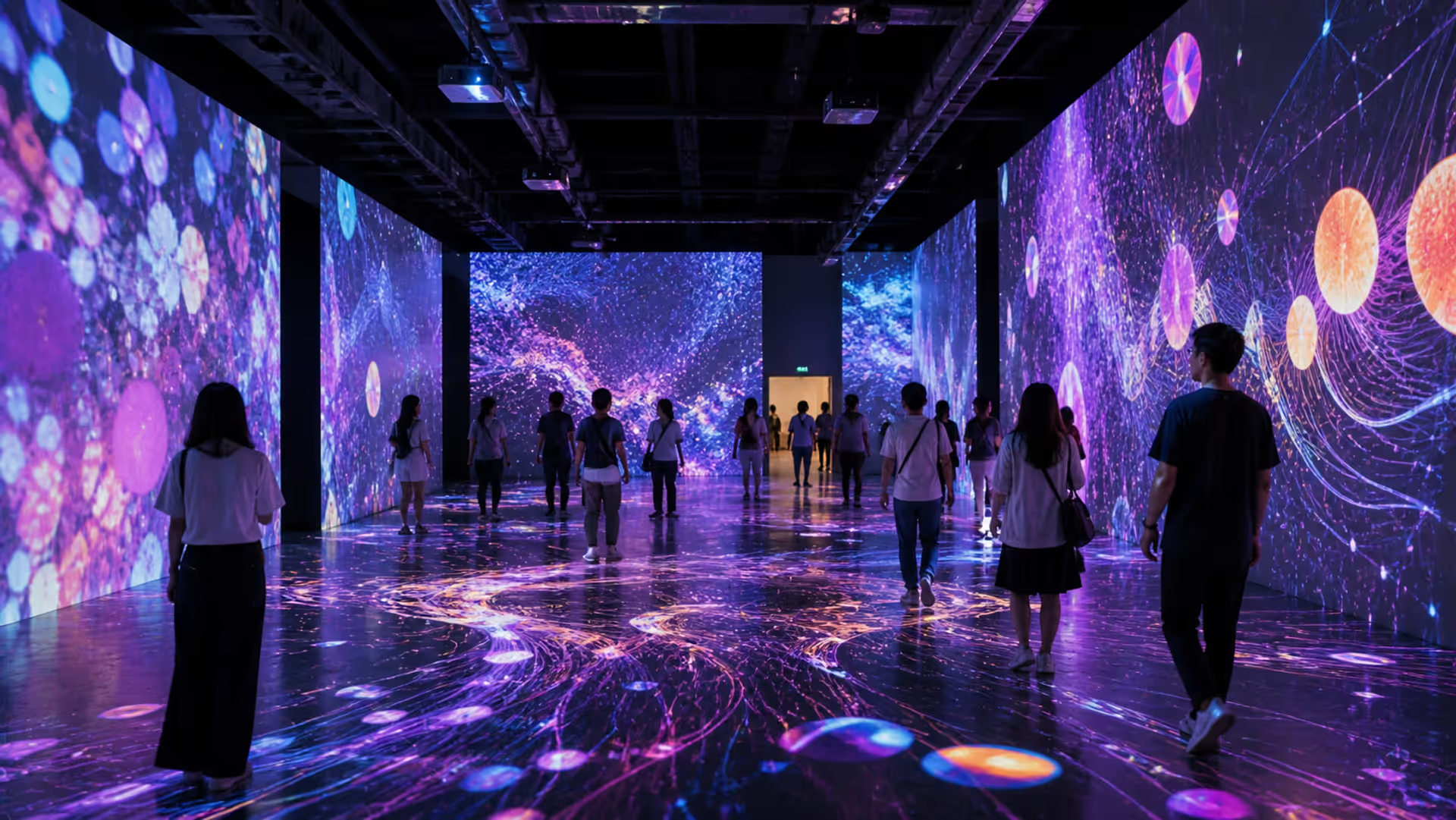
Yayoi Kusama transforms mental health experiences into immersive environments. Her infinity mirror rooms and obsessive polka dots originated from childhood hallucinations. Rather than hiding psychological difference, she makes it into art that millions experience. Walking into her installations, you temporarily enter her perceptual world—a radical kind of empathy building.
Weiwei (the Chinese artist and activist) merges traditional Chinese forms with contemporary political commentary. One 2015 project involved covering a BMW with layers of hand-drawn lines using techniques from traditional calligraphy. Heritage technique meets modern technology—his whole career in one car.
Frida Kahlo painted herself obsessively—not from vanity but from necessity. Her work showed physical pain, Mexican cultural symbols, gender complexity, and emotional truth with zero sentimentality. She proved that extreme specificity (her particular body, her exact cultural moment, her individual suffering) could somehow communicate across all boundaries.
Author: Olivia Hartwell;
Source: crafterholic.com
How to Start Creating Your Own Identity Art
Start by listing objects that matter to your identity. Not symbols you think should matter—things that actually do. A specific toy from childhood. Your grandfather's watch. A street corner where something important happened. A phrase someone kept saying. These concrete details beat abstract concepts every time.
Research means looking inward and outward simultaneously. Exploring cultural heritage? Interview family members before they die—seriously, do this now. Find old photographs. Research traditional art forms from your background. YouTube has tutorials for nearly every cultural craft. Learning even basics of techniques your ancestors used connects you to heritage through your hands.
Examining gender identity? Study how different cultures conceived gender across history. Two-spirit traditions in Indigenous American cultures. Hijra communities in South Asia. Albanian sworn virgins. Your contemporary experience has historical precedents you probably never learned about.
Medium matters less than matching it to your concept. Exploring identity as performance? Use video. Interested in how identity accumulates? Try layered collage or printmaking where each layer represents different influences.
Don't commit to one approach immediately. Sketch twenty quick versions of an idea rather than laboring over one "perfect" piece. Try the same concept in different media—draw it, photograph it, build it from cardboard, create a digital version. Each medium reveals different aspects of your idea.
Visual language develops through practice, not planning. Make work regularly and notice what naturally recurs. Do you keep using specific colors without consciously choosing them? Do certain shapes appear repeatedly? These patterns often reveal your authentic visual vocabulary rather than borrowed aesthetics.
Create series rather than single masterpieces. One piece can't address everything about your identity. Better to make ten works where each explores one facet deeply. Maybe one piece examines your relationship to a heritage language you never fully learned. Another explores how your body doesn't match beauty standards from either culture you belong to. Together they build a fuller picture.
Common mistakes: trying to say everything in one image (results in visual clutter). Using cultural symbols without understanding their specific meanings (feels hollow to insiders). Waiting for inspiration instead of working regularly (identity art requires sustained engagement). Starting with massive ambitious projects (make postcards before murals).
Practical stuff matters. Work small initially—8x10 inches or less. You can experiment without huge time or material investment. Set regular studio time even if it's just ninety minutes weekly. Tuesday evenings, Saturday mornings, whatever—but regular.
Share work-in-progress with people who get what you're trying to do. Their questions reveal where concepts need clarification. Join online communities or local groups focused on identity themes. Feedback from artists with similar concerns beats generic critique.
Comparison of Identity Art Approaches
Approach/Method
Best For
Common Mediums
Example Artists
Difficulty Level
Traditional Self-Portraiture
Examining your physical appearance, aging processes, or how you perceive yourself versus how others see you
Oil or acrylic painting, charcoal or pencil drawing, film or digital photography
Intermediate—requires technical skill but concept is straightforward
Symbolic/Abstract Representation
Exploring internal psychological states, connecting to cultural heritage, or expressing concepts not tied to physical likeness
Mixed media assemblage, digital manipulation, sculpture, installation
Yayoi Kusama, El Anatsui, Wangechi Mutu
Advanced—demands strong conceptual thinking and ability to make abstract ideas visible
Documentary Photography
Capturing authentic daily life, community contexts, or unposed moments that define identity more than staged portraits could
Digital or film photography, photo essays, photojournalism approaches
Dawoud Bey, LaToya Ruby Frazier, Gordon Parks
Beginner to Intermediate—technical basics are accessible but capturing meaningful moments requires practice
Mixed Media Collage
Layering multiple identity aspects, combining historical and contemporary elements, incorporating physical artifacts with personal meaning
Collage with found materials, assemblage, altered books, scrapbooking techniques adapted for fine art
Romare Bearden, Kara Walker, Mickalene Thomas
Beginner—requires no specialized skills, very forgiving medium for experimentation
Digital/Graphic Design
Creating identity-focused work within commercial contexts, exploring typography and color theory, making shareable content
Adobe Creative Suite, Procreate, Figma, web design platforms
Emory Douglas, contemporary BIPOC and LGBTQ+ designers working in branding
Intermediate—software learning curve but increasingly accessible tools available
Community Collaborative Projects
Representing collective rather than individual identity, building community solidarity, including multiple voices in one work
Murals, participatory photography, social practice art, community archives
Judy Baca, Rick Lowe, Theaster Gates, JR
Advanced—requires facilitation skills, community organizing, and artistic vision simultaneously
Frequently Asked Questions About Identity Art
What's the actual difference between identity art and self-portraiture?
Self-portraiture means making images of yourself—your face, body, whatever. Identity art is broader. It explores who you are, which might not involve your appearance at all.
Here's an example. A photographer creates a series showing their face from every angle. That's self-portraiture. Another artist whose family fled Syria creates installations using objects from the refugee journey—a worn suitcase, their daughter's drawings from the camp, soil from Syria preserved in jars. No self-portraits, but intensely about identity.
Self-portraiture is a technique. Identity art is a purpose. You can do self-portraiture without exploring identity (just documenting how you look). And you can explore identity without any self-portraits.
How do artists actually incorporate cultural heritage instead of just slapping on stereotypical symbols?
Go specific, not generic. That's the whole trick.
Bad: "I'm Mexican so here's a sombrero and a cactus." That's a tourist postcard, not identity work.
Better: Research actual traditional art forms from your specific region. Maybe your family came from Oaxaca—study Oaxacan black pottery techniques, textile patterns from that area, traditional Zapotec weaving. Learn the actual techniques if possible. When you adapt those to contemporary work, you're engaging with real heritage rather than generic "Mexican-ness."
Even better: Connect to specific family objects and stories. Your grandfather's specific tools. The particular way your grandmother arranged her altar. The recipe your family makes differently than other families from the same region. That specificity gives your work depth that generic cultural references can't achieve.
Some artists learn ancestral techniques—traditional pottery, weaving, woodblock printing—connecting to heritage through process as much as finished imagery. The act of learning your great-grandmother's embroidery stitches becomes identity work itself.
Can graphic designers actually create identity art in commercial projects, or does "commercial" automatically kill "authentic"?
Commercial work can absolutely incorporate authentic identity exploration—with the right clients and realistic expectations.
Designer of Navajo heritage working with a tribal museum on their visual identity? That's ideal. You're bringing cultural knowledge to an organization that wants it. LGBTQ+ designer creating branding for queer-owned businesses? Similar situation—your identity perspective is exactly what the client needs.
The challenge comes with mainstream commercial work. A corporate client probably doesn't want your deep exploration of gender fluidity in their annual report. That's fine. Save that creative energy for personal projects where you control everything.
Smart approach: maintain a split practice. Commercial work pays bills and sometimes allows identity expression. Personal projects give you complete freedom. Each feeds the other—commercial work builds technical skills you use in personal work; personal work develops unique perspective that makes your commercial work more interesting.
What materials actually work best for identity exploration artwork?
Materials with personal meaning beat expensive art supplies every time.
Found objects from your life carry more weight than anything from an art store. Family photographs, fabric from meaningful clothing, soil from significant places, your old ID cards, letters, ticket stubs—these have built-in emotional resonance.
That said, any material works if used thoughtfully. A $200 set of oil paints doesn't automatically create more meaningful work than 50-cent ballpoint pens. Plenty of powerful identity work happens with printer paper and basic pencils.
Mixed media approaches let you combine meaningful found materials with traditional supplies. You might paint a portrait, then collage in actual fabric from your grandmother's dress, add embroidery using her thread, include photocopies of family documents. Physical materials create tactile memory that pure painting can't achieve.
Start with whatever's accessible. Your smartphone camera is sufficient for photography projects. Free apps like Canva or Photopea allow digital work. Pencils cost almost nothing. The barrier isn't materials—it's willingness to start.
How has digital media actually changed identity representation compared to traditional art?
Digital tools democratized who gets to create and share identity work. You don't need gallery representation or publisher approval anymore. Instagram, TikTok, personal websites—you can reach audiences directly, especially audiences who share your specific identity experiences.
Digital manipulation enables hybrid imagery that mirrors identity's complexity. Layering effects, transparency, morphing transitions—these visualize fluidity in ways traditional painting struggles with. An artist exploring biracial identity can literally blend photographic elements from different cultures until they become inseparable. That's hard to achieve with oil paint.
But digital work faces ephemerality issues. Files corrupt. Platforms disappear—remember Vine? MySpace? Your work can vanish if you don't maintain physical backups. Storage formats change. That Photoshop file from 2005 might not open in 2045.
Many artists solve this with hybrid practices. Create digitally but produce physical prints, books, or objects. You get digital's flexibility plus physical work's permanence.
Digital also enables new participation forms. Communities can contribute to collective identity archives online—uploading stories, images, audio recordings. That kind of mass participation couldn't happen in traditional media.
Do you actually need formal art training to create meaningful identity work?
Formal training helps with technical skills and art historical knowledge, but it's not required for meaningful work. Some of the most powerful identity art comes from self-taught artists or "outsider" artists.
What matters more: honest engagement with your subject and willingness to practice. Your lived experience provides expertise no MFA program can teach. You're the world's leading authority on your own identity.
That said, studying how other artists solved similar problems accelerates your learning. Take community art classes. Watch YouTube tutorials (thousands of free high-quality lessons exist). Find mentors—email artists whose work resonates and ask questions. Many will respond, especially to genuine inquiry.
Read about artists working with identity themes. Not just looking at their work but understanding their process. How did they develop ideas? What mistakes did they make? Learning from others' experience prevents you from repeating every beginner error yourself.
Skills improve through practice regardless of credentials. Make work regularly. A lot of it will be bad initially. That's fine—everyone's early work is rough. You're building visual vocabulary through repetition.
Your perspective matters precisely because it's uniquely yours. Nobody else combines your specific background, experiences, and viewpoint. That's not corny—it's literally true. Creating work that explores your identity adds something to the visual record that wouldn't exist otherwise.
Creating identity art feels uncomfortable sometimes. Good—it should. You're making visible what often stays private, challenging assumptions, sometimes discovering aspects of yourself you hadn't consciously recognized before.
Start small. Photograph five self-portraits in different locations this week. Make a collage using family photos. Draw an object that represents your heritage. Just begin somewhere.
Your smartphone camera works fine. Pencils and printer paper cost a few dollars. The barrier isn't equipment or training—it's deciding your perspective deserves visual form.
Consider this: every artist profiled in this guide started somewhere, usually creating work that felt uncertain or risky. They kept going because the questions mattered more than comfort. Their early attempts probably looked nothing like their later masterpieces.
Your identity art doesn't need museum exhibitions to matter. It matters when it helps you understand yourself better. It matters when someone who shares your experience sees it and feels less alone. It matters when it documents a perspective that official histories ignore.
The work you create this year becomes part of how future people understand life in the 2020s. What did it mean to navigate multiple identities in this decade? How did people visualize belonging and displacement? Your art answers those questions through specific, concrete images rather than abstract theories.
Nobody else will create the exact work you'll create. Your combination of heritage, experience, skills, and perspective is genuinely unique. Not special in some precious way—unique as in unrepeatable, as in when you're gone, that specific viewpoint disappears unless you document it.
So grab whatever materials you've got nearby and start. Make something imperfect. Make something honest. Make something that says "this is who I am right now." You can refine it later. What matters is beginning.
Media arts harnesses electronic technologies and digital tools to create experiences that challenge traditional art forms. From immersive installations to interactive environments, this dynamic field transforms how we perceive and engage with contemporary artistic expression through video, performance, and screen-based work.
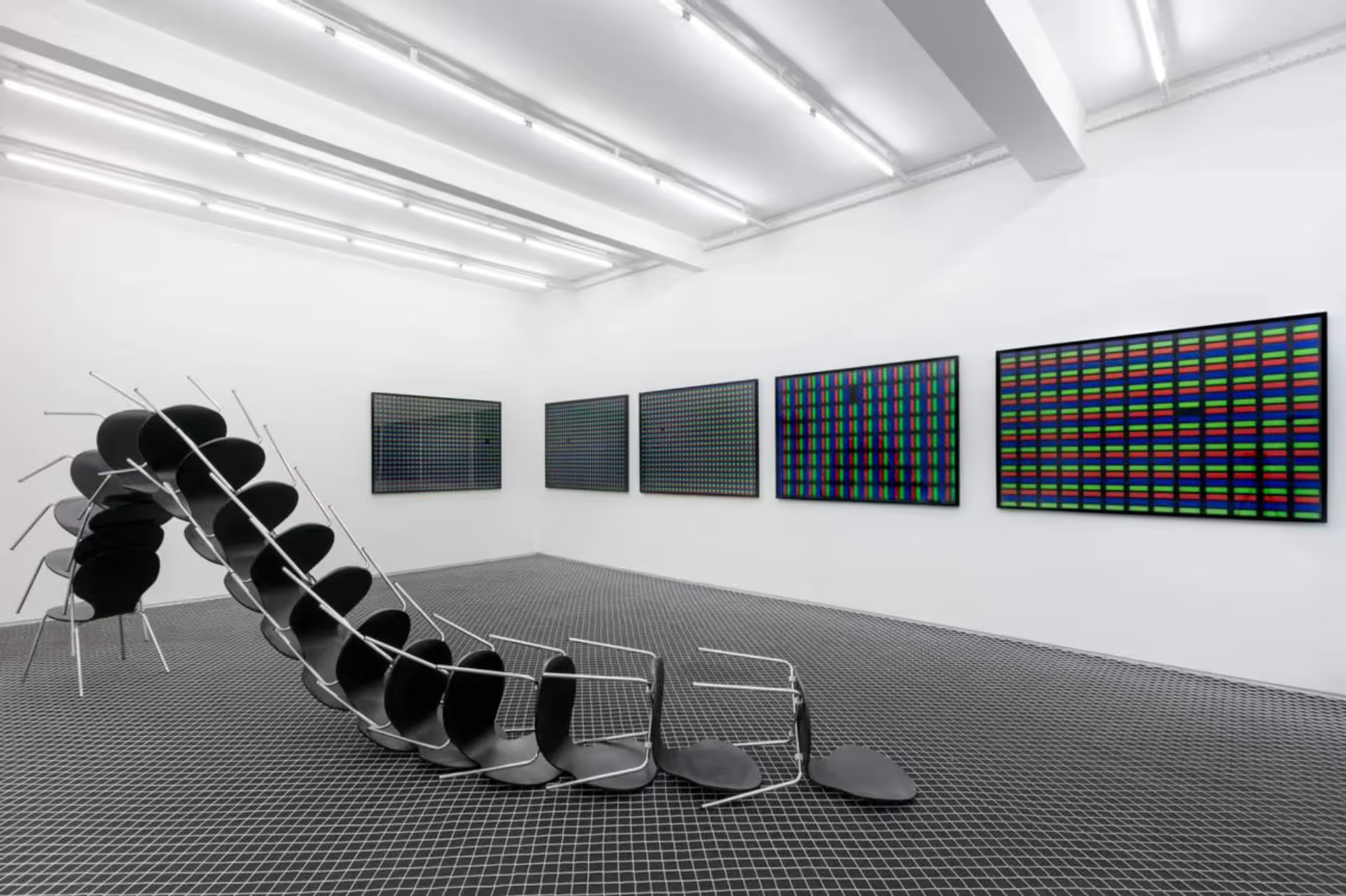
A conceptual artist creates work where the underlying idea holds more importance than the finished physical object. Unlike traditional artists who focus on mastering materials, conceptual artists treat the concept itself as the artwork, with execution serving merely as documentation of the idea.
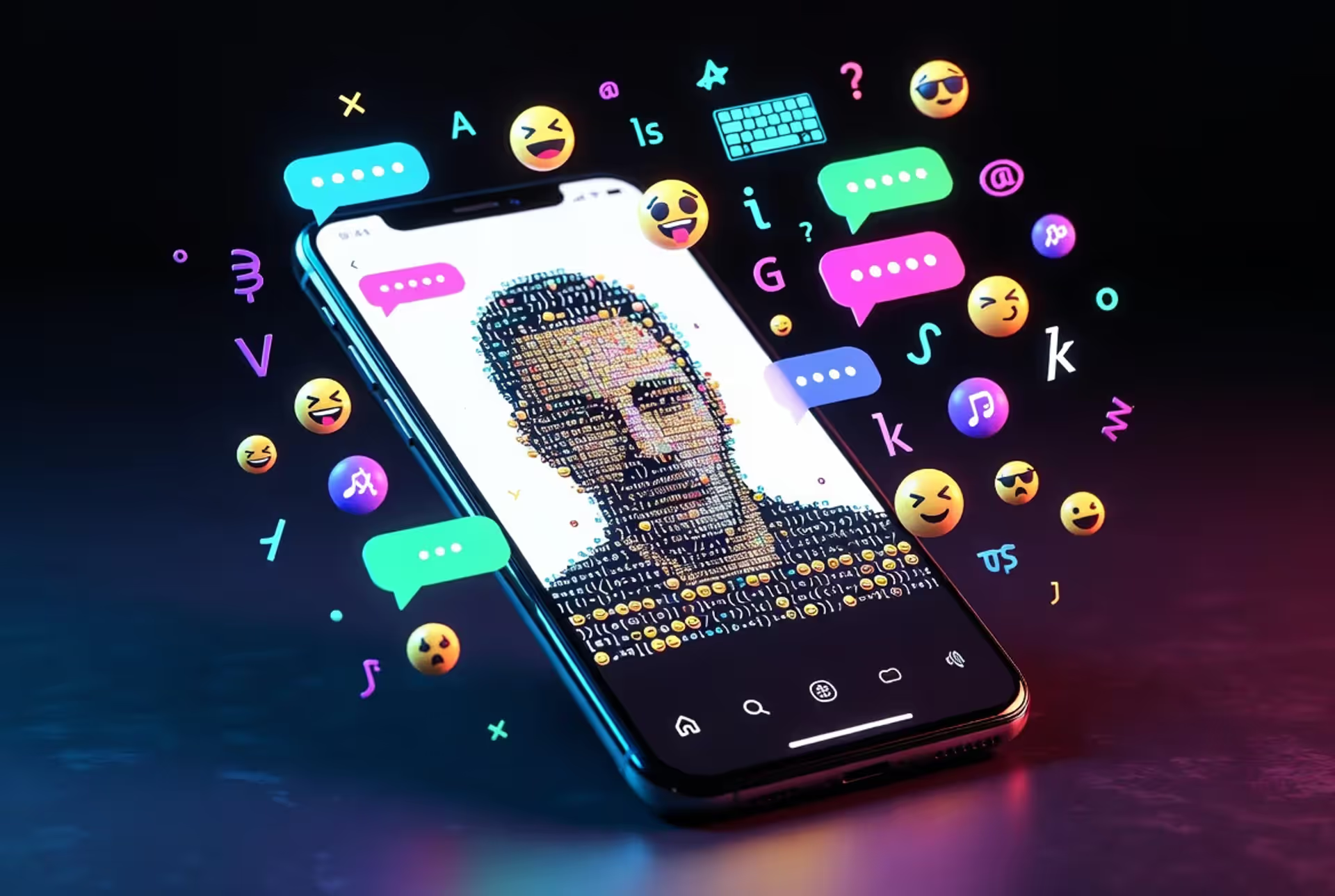
Text message art transforms written language into visual compositions. From ASCII characters to monumental installations, artists use typography, concrete poetry, and calligraphy to create work where words function as both message and image, challenging traditional boundaries between reading and viewing.
Writing about your artwork feels awkward at first. You're translating visual ideas into sentences that don't sound pretentious. Every art student faces this challenge for applications, portfolios, and exhibitions. See real examples and learn the structure that works.
The content on this website is provided for general informational and educational purposes only. It is intended to explain concepts related to digital design, visual art, color theory, art techniques, design principles, and design history.
All information on this website, including articles, guides, and examples, is presented for general educational purposes. Creative outcomes may vary depending on individual skill, tools, and practice.
This website does not provide professional design services or guarantee results, and the information presented should not be used as a substitute for formal education or professional consultation.
The website and its authors are not responsible for any errors or omissions, or for any outcomes resulting from decisions made based on the information provided on this website.