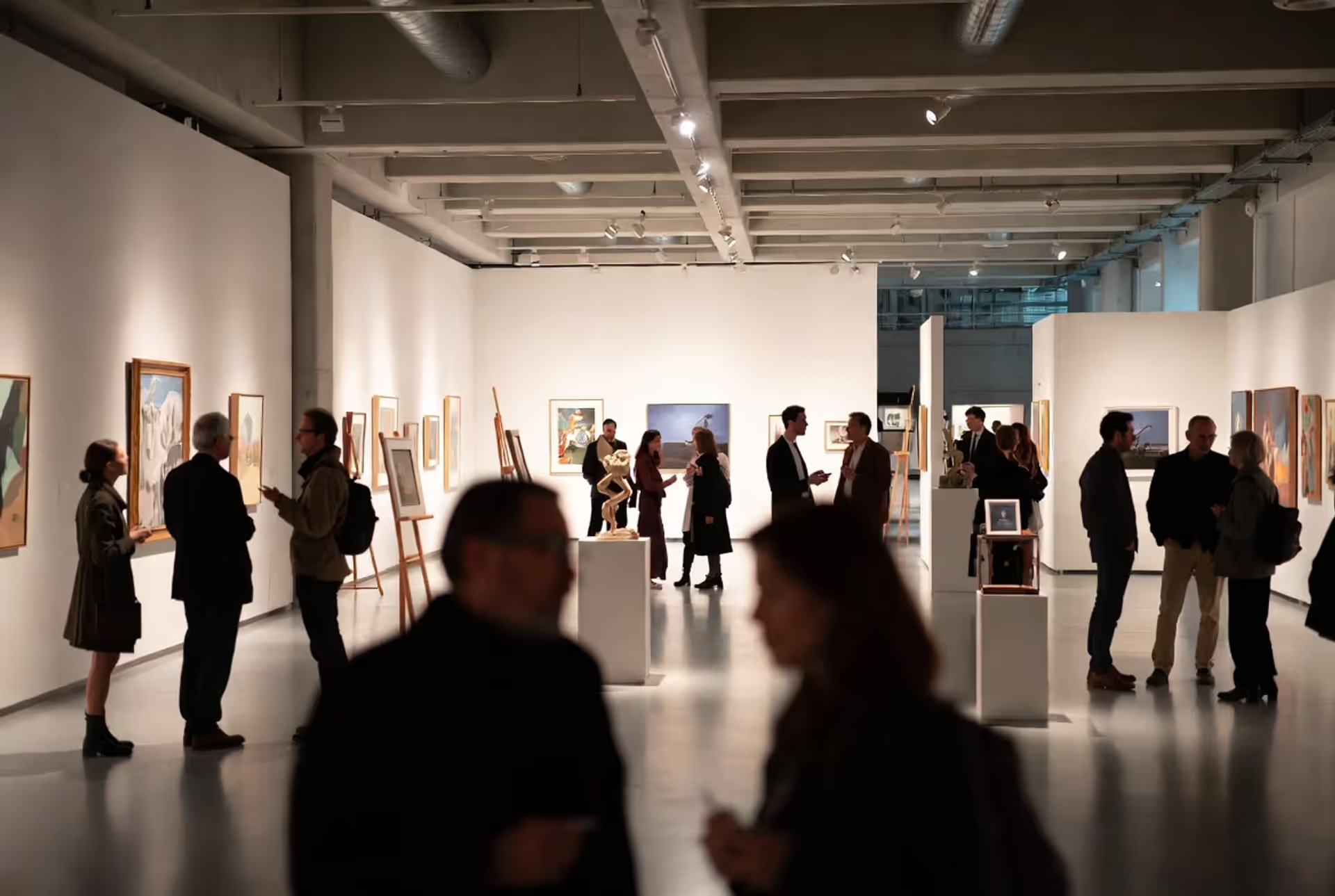
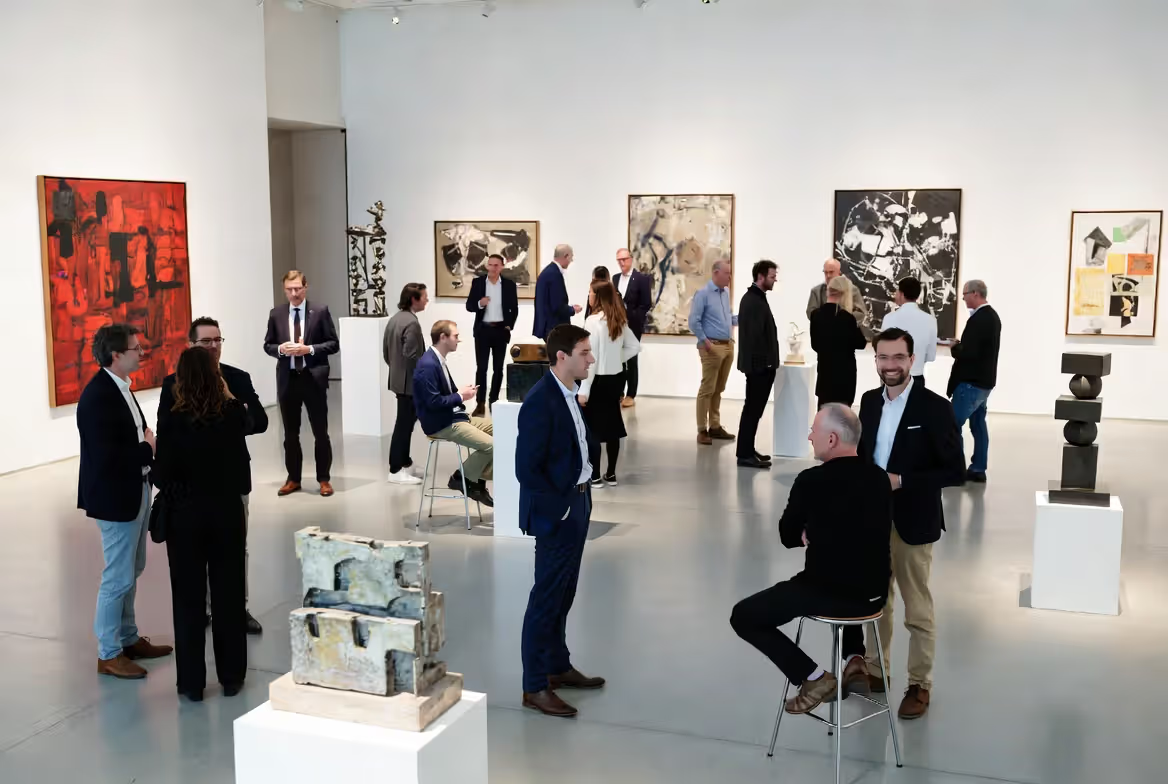
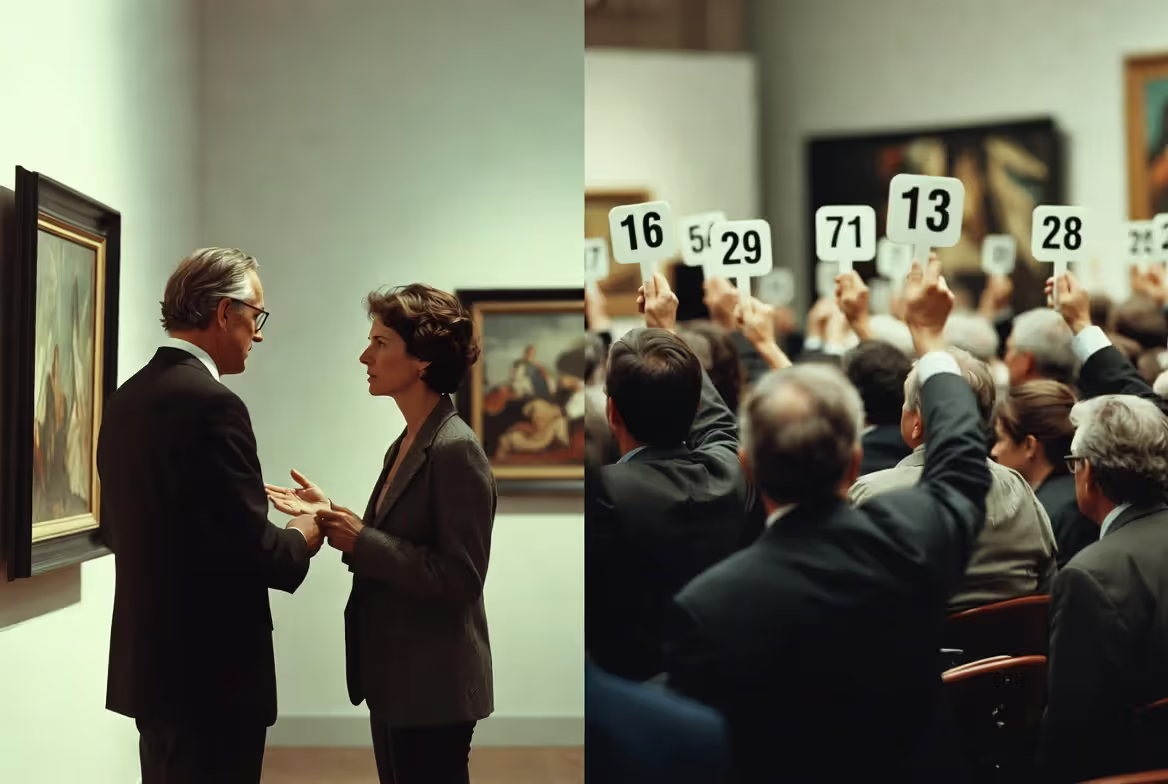
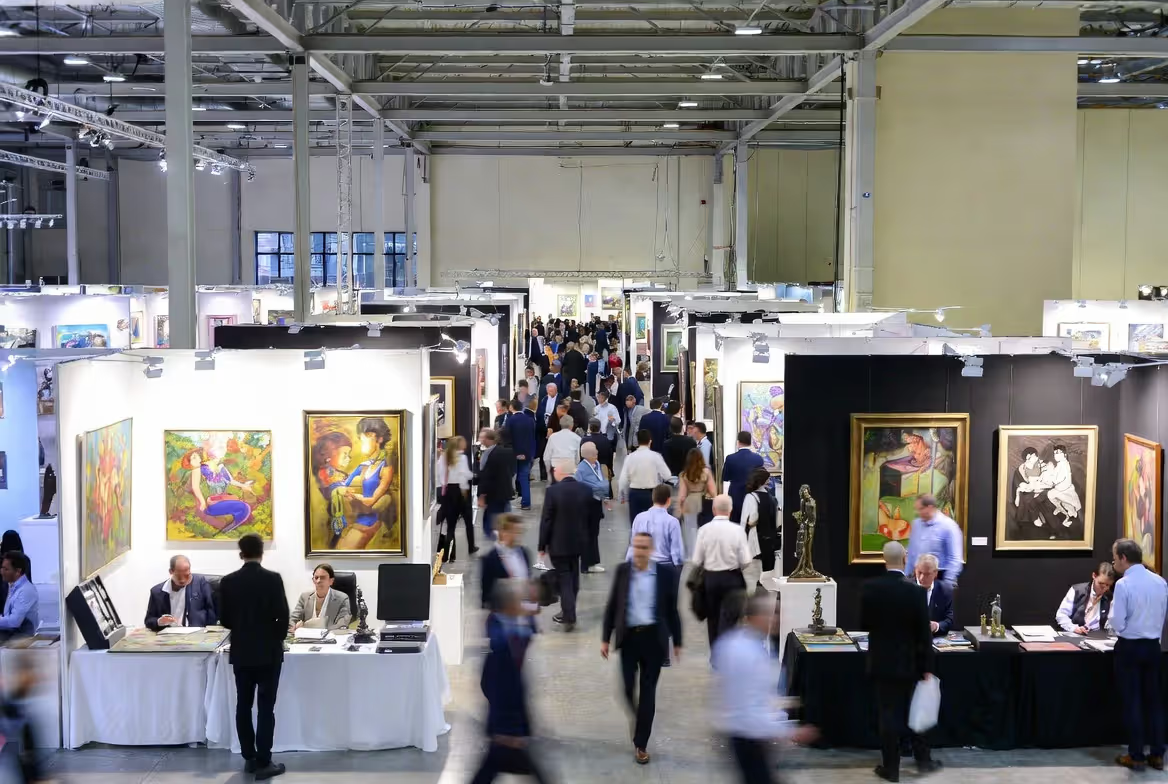
Walk into any major art fair and you'll see the same choreography: collectors clutching catalogues, gallerists on phones arranging viewings, advisors shepherding clients between booths. Behind this visible marketplace sits a less obvious infrastructure—one where influence matters as much as money, and where a museum curator's Instagram follow can mean more than a six-figure sale.
The directory of the art world isn't something you can download or purchase. It's a living network of commercial galleries, nonprofit museums, auction houses, art fairs, critics, curators, and collectors whose overlapping relationships determine which artists get seen, which works appreciate in value, and which careers gain momentum versus stalling out.
Understanding how these players interact matters whether you're buying your first $2,000 print or building a multimillion-dollar collection. The system rewards insiders who know which galleries have waiting lists, which curators are rising stars, and which fair booths sold out before opening day. This guide maps that territory.
What Is the Art World and How Is It Structured?
Think of the art world ecosystem as three overlapping circles: commercial, institutional, and critical. They feed each other constantly.
Commercial players sell art. Galleries represent living artists and take 50% commissions. Auction houses resell works and charge buyers an extra 25% on top of hammer prices. Art fairs rent booth space to galleries for $75,000 a pop. Everyone's chasing the same collectors, but each occupies a different position in an artist's career trajectory.
Institutional players validate art. Museums rarely buy directly from artists—they acquire through galleries, auctions, or accept donations. A solo show at the Whitney or Tate Modern confers historical importance that no commercial gallery can match. Biennials like Venice introduce artists to international audiences simultaneously. kunsthalles experiment with emerging voices. These nonprofits don't profit from resales, but their endorsements drive commercial values upward.
Critical players shape taste. Curators select who gets exhibited. Critics writing for Artforum or Frieze influence how work gets interpreted. Advisors guide collectors toward strategic purchases. Academics write catalogue essays that cement artists into art history. Instagram accounts with 200,000 followers now rival traditional publications for visibility.
Here's what makes the art world structure explained difficult: these sectors blur constantly. Museum trustees collect the same artists their institutions exhibit. Galleries sponsor biennial programming. Auction house private sales compete with gallery inventory. Advisors receive undisclosed commissions from galleries while claiming to represent buyer interests.
The system runs on accumulated endorsements. An MFA grad shows in a group exhibition (critical attention), gets gallery representation (commercial access), receives positive reviews (more critical validation), joins a museum group show (institutional recognition), then lands a solo museum exhibition (major validation). Each step requires different gatekeepers saying yes.
The art world isn't a meritocracy—it's a series of endorsements. Each institution validates the previous one, creating a chain of legitimacy that eventually translates to market value.
— Sarah Thornton, Sociologist and Author
Skip a step and careers often stall. An artist who sells commercially without critical or institutional validation gets labeled "market-driven"—code for lacks serious merit. Conversely, an artist with museum shows but no sales struggles to sustain studio practice. You need all three sectors aligned.
The Commercial Gallery System and How It Works
Galleries don't buy inventory upfront. They operate on consignment—taking work from artists, exhibiting it, and splitting sales 50/50 (sometimes 60/40 for younger galleries or emerging artists). If nothing sells, nobody gets paid. This shared risk shapes how galleries operate.
Author: Marcus Ellery;
Source: crafterholic.com
A midsize gallery in Chelsea or Mayfair spends $40,000-$80,000 monthly on rent alone. Add staff salaries, shipping, insurance, marketing, website maintenance, and art fair participation (easily $150,000 per major fair including booth fees, transport, hotels, installation). Revenue comes entirely from commissions on sales, making每exhibition a financial gamble.
Smart galleries play long games. They price artists conservatively, placing works with museum-donating collectors rather than flippers. They limit available inventory to maintain scarcity. They strategically time when artists join group shows versus solo exhibitions. They cultivate relationships with advisors who influence multiple collectors.
How the art market works at the gallery level depends heavily on collector relationships built over decades. A top gallery director knows which collector donated to MoMA last year (and wants the tax deduction again), which Hong Kong buyer prefers large-scale photography, which Silicon Valley founder collects emerging women painters. This intelligence matters more than public pricing.
Primary vs. Secondary Market Galleries
The primary market means new work sold for the first time. A gallery representing a 35-year-old painter prices her new canvases at $25,000 based on her CV, previous sales, medium, and size. That price reflects where the gallery positions her career, not pure market demand. Aggressive galleries push prices up fast; conservative ones grow slowly.
Secondary market dealing involves reselling works already owned once. If that same $25,000 painting appears at auction five years later and sells for $60,000, that's secondary market activity reflecting actual demand. Or it sells for $15,000, signaling the artist was overpriced initially or interest cooled.
Some galleries only do secondary dealing—buying estates, reselling blue-chip works, or trading between collectors. Mnuchin Gallery or Acquavella focus on Picasso, Rothko, and other deceased artists where authenticity expertise and inventory access matter more than artist development. These dealers operate more like commodity traders than artist representatives.
Others run hybrid programs. Gagosian represents living artists like Jenny Saville while also dealing heavily in Basquiat, Warhol, and other secondary inventory. This dual approach provides revenue stability—if primary sales slow, secondary dealing continues.
The distinction matters legally and ethically. Primary galleries owe fiduciary duties to represented artists. They can't secretly resell an artist's work at auction for profit while claiming inventory scarcity. Secondary dealers have no such obligations—they buy low, sell high, and owe allegiance only to themselves and buyers.
Author: Marcus Ellery;
Source: crafterholic.com
How Artists Get Gallery Representation
Forget cold emails to Gagosian. Gallery representation follows predictable paths, and unsolicited submissions almost never work at established programs.
Gallerists discover artists through studio visits, often triggered by MFA thesis shows (Columbia, Yale, UCLA produce disproportionate gallery representation), residency exhibitions (Skowhegan, Delfina, Rijksakademie), or curator recommendations. Group show participation in credible nonprofit spaces also generates visibility.
Some galleries review portfolios, but the hit rate runs under 1%. David Zwirner receives roughly 10,000 submissions annually and might sign one artist from that pile. Most new additions come through active searching—a director seeing something compelling at an art school critique, following an artist's Instagram after a curator mentioned their name, or attending an open studio recommended by another gallery artist.
The process favors artists with existing momentum. Galleries want evidence you can sustain production, won't waste their time, and already have some institutional validation. First solo shows often happen at nonprofit spaces or smaller commercial galleries before blue-chip programs get interested.
Representation contracts specify exclusivity (geographic or total), commission splits, exhibition frequency, studio visit rights, and termination terms. Exclusive representation means you can't sell work directly or through other galleries in defined territories. In return, the gallery commits to regular exhibitions, art fair participation, and active promotion.
Moving between galleries happens constantly but requires finesse. Artists who gallery-hop too frequently get reputations as difficult or disloyal. Strategic moves at career inflection points—after a major museum show, when outgrowing a smaller program, or when a gallery shifts focus—are expected. Acrimonious splits damage everyone.
Author: Marcus Ellery;
Source: crafterholic.com
Museums, Institutions, and Their Role in the Art Market
Museums can't profit from selling their collections (with rare exceptions), but their acquisition decisions reshape commercial markets overnight. When MoMA bought a Christopher Wool painting for $850,000 in 2013, his auction prices doubled within two years. Institutional validation signals historical significance independent from commercial hype.
Public museums—the Met, Tate, Centre Pompidou—receive government funding, private donations, and endowment income. Acquisition committees comprising curators, trustees, and sometimes outside advisors evaluate potential purchases against budgets that rarely exceed $5-10 million annually for contemporary art. They prioritize filling collection gaps, supporting underrepresented artists, and acquiring works that will matter in fifty years.
Private institutions operate differently. Eli Broad's foundation or the Rubell Museum have focused mandates and can move faster than bureaucratic public institutions. They've reshaped contemporary collecting by aggressively pursuing emerging artists, building purpose-designed exhibition spaces, and opening collections to public viewing while maintaining private control.
Museum exhibitions carry weight that commercial galleries cannot match. A solo show at the Whitney, Hammer, or Serpentine provides career validation separate from market performance. Museums also publish scholarly catalogues that become permanent reference materials—the catalogue raisonné establishing an artist's historical importance long after commercial interest fades.
Here's where conflicts get interesting. Museum trustees often collect the same artists their institutions exhibit. A trustee buys twenty works by an emerging artist for $50,000 each, donates five to the museum (getting tax deductions at appreciated fair market value), and watches the remaining fifteen appreciate as the museum exhibition drives demand. Recusal policies exist but enforcement varies.
The feedback loop works like this: Galleries develop artists and create initial markets. Museums validate through exhibitions and acquisitions. This validation increases collector demand, allowing galleries to raise prices and attract stronger artists. Collectors donate works to museums for tax benefits, completing the cycle. Everyone benefits except artists, who've already sold the work and see no upside from appreciation.
Museums influence value indirectly but powerfully. They can't flip works for profit, but trustees, donors, and advisors absolutely can. This creates incentive structures where museum programming decisions carry commercial implications that theoretically shouldn't exist but absolutely do.
Auction Houses and How They Fit Into the Art Market
Christie's and Sotheby's together handle roughly $8-10 billion in annual art sales, creating public price records that shape market perceptions across the board. Unlike private gallery sales (where pricing stays confidential), auction results get published globally within hours.
The consignment process starts when a seller—collector, estate, or institution—approaches an auction house with works to sell. Specialists provide estimates, suggest reserves (minimum prices below which works won't sell), and negotiate terms. Seller's commissions typically run 2% for major consignments, sometimes zero for guaranteed blockbuster estates.
Buyers pay premiums on top of hammer prices: 25% on the first $600,000, 20% from $600,000 to $6 million, then 13.5% above $6 million. Buy a painting for a $1 million hammer price and you're actually paying $1.22 million. The seller receives roughly $980,000 after a 2% commission. That $240,000 spread funds the auction house's entire operation.
Guarantees became standard for major consignments after 2008. The auction house or a third-party guarantor promises the seller a minimum price regardless of bidding results. If the work sells above the guarantee, profits get split per pre-negotiated terms—often 60/40 or 50/50 above a certain threshold. If it doesn't sell or sells below guarantee, the guarantor owns it at the guarantee price.
These guarantees reduce seller risk but can badly distort market signals. Sotheby's guaranteed $500 million of art in 2015, took losses on several major works, and spooked shareholders. When auction houses overpay for guarantees, they're essentially speculating with balance sheet capital—great when markets rise, catastrophic during corrections.
Auction results impact pricing everywhere. A Basquiat selling for $110 million at Sotheby's resets the artist's market ceiling, prompting galleries to raise asking prices for comparable works. Conversely, when twenty works by the same artist fail to sell ("bought in") during a single evening sale, galleries panic and collectors who bought recently face underwater positions.
The relationship between auction houses in art and primary galleries stays complicated. Galleries prefer works don't appear at auction within five to ten years of initial sale—it suggests buyers are flipping for profit rather than collecting seriously. When new work floods auctions, it signals market weakness or speculation. Auction houses try managing this by rejecting too-fresh consignments, but money talks.
Author: Marcus Ellery;
Source: crafterholic.com
Art Fairs and Their Impact on the Contemporary Art Market
Art Basel Miami Beach 2023 attracted 80,000 visitors over four days. They walked miles of aisles viewing inventory from 283 galleries representing 38 countries. Millions changed hands in the VIP preview hours before public admission.
Art fairs explained simply: temporary marketplaces compressing months of gallery foot traffic into concentrated events. Galleries pay $50,000-$150,000 for booths (Art Basel and Frieze command top prices), then spend another $100,000+ on shipping, insurance, installation labor, staff travel, hotels, and client entertainment. A single fair costs $200,000-$300,000 all-in for most exhibiting galleries.
Why spend that much? Because fairs deliver international collectors galleries couldn't reach otherwise. A Singapore collector can see fifty New York galleries in two days without flying to Manhattan. A London advisor can preview emerging Latin American artists without visiting Mexico City. This concentrated access benefits everyone—galleries sell more, collectors survey broadly, and emerging artists gain exposure.
The urgency matters too. Fair environments create FOMO (fear of missing out). Works sell to other collectors within hours. Deliberation shrinks from weeks to minutes. This scarcity psychology drives decision-making differently than leisurely gallery visits where collectors can think it over.
Contemporary art market structure now revolves around the fair calendar: Art Basel (June in Basel, December in Miami Beach), Frieze (October in London, May in New York), TEFAF Maastricht (March), plus dozens of secondary fairs. Galleries plan exhibition schedules around these deadlines. Artists time studio production to fair cycles. Collectors book travel patterns annually.
This intensification has increased market velocity dramatically. Work that once took six months to sell now moves in six hours. But it's also raised sustainability concerns—both environmental (thousands flying to Switzerland for four days) and economic (smaller galleries can't afford participating in six major fairs annually).
Satellite fairs proliferate around major events. During Art Basel Miami Beach, you'll find NADA, Untitled, Scope, Pulse, and a dozen more operating simultaneously. This creates tiered ecosystems where emerging galleries access collector traffic they couldn't attract independently, though at the risk of overwhelming everyone with too many options.
Art fairs also homogenize programming. Galleries show similar work across multiple fairs to appeal to international audiences, reducing regional distinctiveness. You'll see the same large-scale abstract paintings in Basel, Hong Kong, and New York because that's what globally mobile collectors buy. Challenging, difficult work often stays in gallery back rooms.
Author: Marcus Ellery;
Source: crafterholic.com
Art Criticism, Curation, and Gatekeepers
A positive review in Artforum still matters. So does getting followed on Instagram by a major curator. Both represent gatekeeping—the filtering mechanisms determining which artists gain visibility and how their work gets interpreted.
Critics writing for specialized publications provide analysis that influences curators, collectors, and market positioning. A thoughtful 1,200-word review in frieze or Art in America introduces artists to audiences who'll never visit their galleries. Conversely, critical silence—or worse, dismissive reviews—can stall careers before they start.
Curators working in museums, biennials, or independent projects select which artists get exhibited, write contextualizing wall texts, and build thematic narratives. Inclusion in the Whitney Biennial, Venice Biennale, or Documenta launches careers by introducing artists to international audiences simultaneously—collectors, museum directors, and other curators all pay attention.
Art advisors serve as intermediaries between collectors and markets. They charge retainers ($5,000-$20,000 monthly), hourly fees ($300-$500), or percentage commissions (5-15% of purchases). The best advisors maintain relationships across galleries, auction houses, and private sales channels, accessing inventory before public availability. They know which dealer has an available Gerhard Richter abstraction, which collector's divorcing and selling discreetly, which estate hasn't announced its representation yet.
Publications create discourse and visibility. A feature article with installation shots introduces artists beyond exhibition visitors. Digital media has expanded reach—Instagram accounts like @contemporaryartdaily or @newmuseum reach hundreds of thousands, rivaling traditional print circulation. Credibility varies wildly though—some accounts function as serious critical platforms while others just aggregate content.
Here's the problem: gatekeepers maintain standards but also perpetuate exclusions. The art world historically favored white male artists from elite MFA programs with gallery connections. Recent years brought increased diversity focus, but structural barriers remain. Knowing which curator to email, which advisor to cultivate, which publication to pitch—this intelligence distributes unevenly.
Legitimation requires multiple endorsements. An artist might get reviewed positively (critical validation), included in a museum group show (institutional recognition), featured in the Venice Biennale (major international exposure), then receive a solo museum exhibition (career milestone). Each step needs different gatekeepers approving. The filtering theoretically identifies significant artists but also reflects gatekeepers' biases, educational backgrounds, and social networks.
Art criticism and curation shape markets even when critics and curators claim independence from commercial concerns. A curator's decision to include an artist in a biennial increases their gallery prices immediately. Critics writing dismissively about market-driven artists nonetheless influence which market-driven artists succeed. Everyone's connected, and pretending otherwise just obscures how influence actually flows.
How Collecting Art Works in Today's Market
Start small. Seriously. Don't walk into your first art fair with $100,000 burning a hole in your pocket.
New collectors benefit from buying prints, editions, or works by emerging artists priced under $5,000-$10,000. This allows learning without catastrophic mistakes. You'll discover what you actually want to live with (versus what seemed impressive in a booth), how shipping and installation work, and which gallery relationships feel genuine versus transactional.
Visit galleries during exhibitions, not just fairs. Attend openings—free wine, artist talks, and you'll meet other collectors, curators, and gallery staff in casual settings. Read exhibition reviews in Artforum, frieze, Hyperallergic. Follow artists, curators, and galleries on Instagram. Build knowledge gradually.
Working directly with galleries offers advantages over auctions for newer collectors. Galleries provide context about artists' practices, careers, and trajectories. They offer payment plans (interest-free installments over 6-12 months). Some allow exchanges if you change your mind within thirty days. You're building relationships that grant access to waiting lists when artists gain heat.
Advisors become valuable as budgets and sophistication grow. They help navigate authenticity concerns (fake Basquiats proliferate), negotiate prices (published gallery prices aren't always final), manage logistics (shipping a nine-foot sculpture internationally requires expertise), and develop coherent collecting strategies. But expect fees—nothing's free.
Building meaningful collections requires discipline. Focused collections around specific themes (Latin American women photographers, post-internet sculpture, German expressionist prints) tend to appreciate better than random accumulations. Collectors should consider storage requirements, insurance costs, conservation needs, and eventual disposition plans before buying.
Climate-controlled storage runs $75-$200 per square foot annually in major cities. Works on paper need archival framing. Oil paintings require periodic conservation. Bronze sculptures need humidity control. These aren't one-time purchases—they're ongoing relationships requiring care and expense.
Insurance for fine art requires specialized policies covering full replacement value, transit, and exhibition loans. Premiums typically cost 0.5-1.5% of insured value annually. A $500,000 collection costs $2,500-$7,500 yearly to insure. You'll need documentation: provenance records, condition reports, authenticity certificates, and professional appraisals updated every 3-5 years.
Tax considerations shape collecting strategies significantly. In the US, collectors can deduct charitable donations of appreciated art at fair market value, subject to income limitations (usually 30% of AGI for long-term capital gain property). Selling works triggers capital gains taxes on appreciation—28% federal rate for collectibles versus 20% for most other investments. Estate planning becomes critical for significant collections—some collectors establish private foundations managing holdings while gaining tax benefits.
The contemporary art market structure rewards patient collectors who build relationships, educate themselves, and resist flipping. Artists and galleries remember who bought early and supported careers versus who dumped work at auction for quick profits. Reputation matters in relationship-driven markets. Act like a speculator and you'll get treated like one—frozen out of waiting lists, ignored for studio visits, last to hear about available inventory.
Temporary marketplace aggregation; industry networking
$30k-$150k booth rental fees; sponsorships; VIP program fees
Concentrated international exposure; rapid sales generation; trend identification; emerging artist discovery
Private Institutions
Focused collecting; experimental programming; public access
Founder endowments; private family funding; limited government support
Alternative validation outside museum system; risk-taking exhibitions; emerging voice support
Frequently Asked Questions About the Art World
What's the difference between a gallery and a museum?
Galleries are for-profit businesses selling art and representing artists. They earn money through sales commissions—typically 50% of the sale price. Museums are nonprofit institutions focused on preserving, exhibiting, and educating about art. They acquire works through purchases (using donation funds), gifts from collectors, or bequests from estates. Museums don't sell from their permanent collections to generate revenue. The main distinction: galleries create markets for living artists while museums provide historical validation that outlasts commercial trends.
How do auction houses make money?
Buyer's premiums are the primary revenue source. These are percentages added on top of the hammer price: usually 25% on amounts up to $600,000, 20% from $600,000 to $6 million, and 13.5% above that. So if you win a bid at $1 million, you actually pay $1.22 million total. Auction houses also charge sellers commissions (2-10% depending on the consignment's value) and earn from ancillary services like financing, appraisals, private treaty sales, and guarantee arrangements where they share profits when works exceed guaranteed minimums.
Do I need an art advisor to start collecting?
No. Most beginning collectors do better visiting galleries regularly, attending openings, reading exhibition reviews, and building direct relationships with gallerists who can educate you about artists and their practices. Advisors become valuable once you're spending $100,000+ annually, dealing with authentication concerns, accessing inventory that's not publicly available, or developing focused collection strategies. Fees vary—some charge $300-$500 hourly, others take 5-15% commissions on purchases. Make sure you understand how your advisor gets compensated before hiring them.
What is the primary art market vs. the secondary market?
Primary market means buying new work directly from artists or their representing galleries for the first time. Galleries set these prices based on the artist's CV, previous sales, medium, and size. Secondary market involves reselling works that have been purchased once already—either through auction houses or dealers specializing in resales. Secondary prices reflect actual market demand rather than gallery pricing strategies. When secondary prices exceed primary, it signals strong collector interest. When they fall below, it suggests the artist was initially overpriced or demand has weakened.
How do artists get represented by galleries?
Gallery representation rarely happens through cold email submissions. Gallerists discover artists through MFA thesis exhibitions (particularly Yale, Columbia, UCLA), residency programs (Skowhegan, Rijksakademie, Delfina), curator recommendations, or by attending nonprofit gallery exhibitions. They're looking for consistent studio practice, conceptual coherence, and evidence the artist can sustain production long-term. Most successful paths involve building visibility through group shows at credible nonprofit spaces, getting critical attention from publications, and often working with smaller galleries first before approaching blue-chip programs.
What role do art fairs play in the market?
Art fairs compress what would normally take galleries months of foot traffic into concentrated four-to-six-day events. They allow galleries to reach international collectors who wouldn't visit their physical locations and generate significant sales volume quickly—often $1-5 million per fair for successful exhibitors. Fairs also shape the market calendar since galleries plan exhibition schedules around major events like Art Basel, Frieze, and TEFAF. For collectors, fairs offer efficient ways to survey market trends, compare galleries, and discover emerging artists, though the environment creates urgency that can lead to rushed purchasing decisions.
The directory of the art world operates through accumulated endorsements rather than transparent pricing or standardized transactions. Commercial galleries develop artists and create initial markets. Museums provide legitimation and historical validation. Auction houses offer price discovery and liquidity. Art fairs concentrate marketplace activity. Critics, curators, and advisors shape discourse and access.
Success here—whether collecting, creating, or observing—requires recognizing how these sectors reinforce each other constantly. Artists need gallery representation to access collectors, critical attention to gain museum interest, and museum validation to achieve secondary market strength. Collectors benefit from gallery relationships, advisor expertise when budgets grow, and understanding market mechanics to build collections that appreciate both aesthetically and financially.
The art world's opacity frustrates newcomers initially. Why won't galleries post prices online? Why do some collectors get studio visits while others get ignored? Why does Instagram follower count sometimes matter more than MFA credentials? These aren't bugs—they're features of a relationship-driven system where information asymmetry creates value.
This same opacity creates opportunities for those willing to invest time. Unlike commodity markets where information distributes widely, art market intelligence flows through networks. Attending openings regularly, reading specialized publications, visiting studios, cultivating gallery relationships—these activities provide advantages money alone can't buy. A collector who spent three years building relationships before making significant purchases will access better inventory than someone showing up with $5 million but zero credibility.
Digital platforms, NFTs, changing collector demographics, and generational wealth transfer are reshaping market mechanics. But the fundamental structure persists: art gains value through accumulated endorsements from trusted institutions and individuals. A commercial sale alone doesn't establish importance. A museum acquisition alone doesn't create market demand. You need multiple validators across commercial, institutional, and critical sectors agreeing that an artist matters.
Understanding this directory—who holds power, how they interact, what their incentives are—remains essential for meaningful participation. The art world rewards insiders, but becoming an insider just requires patience, curiosity, and showing up consistently. Start there.
Media arts harnesses electronic technologies and digital tools to create experiences that challenge traditional art forms. From immersive installations to interactive environments, this dynamic field transforms how we perceive and engage with contemporary artistic expression through video, performance, and screen-based work.
A conceptual artist creates work where the underlying idea holds more importance than the finished physical object. Unlike traditional artists who focus on mastering materials, conceptual artists treat the concept itself as the artwork, with execution serving merely as documentation of the idea.
Text message art transforms written language into visual compositions. From ASCII characters to monumental installations, artists use typography, concrete poetry, and calligraphy to create work where words function as both message and image, challenging traditional boundaries between reading and viewing.
Writing about your artwork feels awkward at first. You're translating visual ideas into sentences that don't sound pretentious. Every art student faces this challenge for applications, portfolios, and exhibitions. See real examples and learn the structure that works.
The content on this website is provided for general informational and educational purposes only. It is intended to explain concepts related to digital design, visual art, color theory, art techniques, design principles, and design history.
All information on this website, including articles, guides, and examples, is presented for general educational purposes. Creative outcomes may vary depending on individual skill, tools, and practice.
This website does not provide professional design services or guarantee results, and the information presented should not be used as a substitute for formal education or professional consultation.
The website and its authors are not responsible for any errors or omissions, or for any outcomes resulting from decisions made based on the information provided on this website.